Part of the Answer Engine Optimization Hub
Generative engine optimization (GEO) is the practice of improving how generative AI models like ChatGPT, Gemini and Perplexity describe and recommend your brand across the answers they generate. Where SEO optimises for a ranking and AEO optimises for a single quoted passage, GEO optimises for your overall presence in AI answers.
What is generative engine optimization (GEO)?
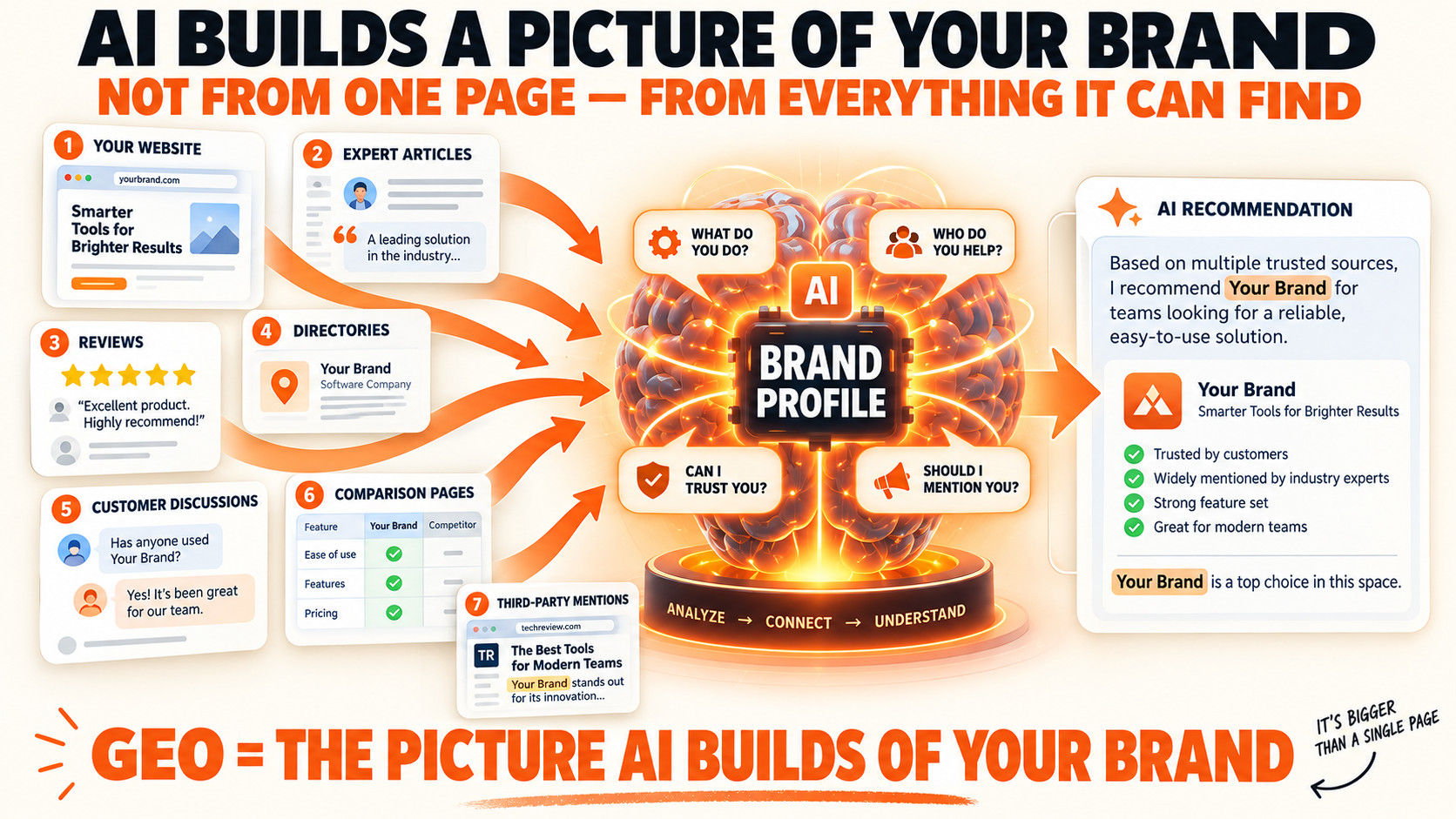
GEO is about being known, and described accurately, by the AI models people now ask instead of searching. When someone asks ChatGPT to recommend a tool in your category, or asks Perplexity what your company does, GEO is what decides whether you get named, ignored, or described wrongly.
It works at the level of your brand and its reputation across the whole web, not a single page. The models build their picture of you from everywhere they read: your own site, third-party articles, reviews, directories, forums and the wider web they train on and retrieve from. GEO is the work of making that picture accurate, consistent and positive.
Is GEO the same as geo-targeting in marketing?
No, and this is worth clearing up. In older marketing language, “geo” meant geographic targeting, showing different ads or content based on someone’s location. That is a completely different thing. In the context of AI search, GEO means generative engine optimization: getting represented well by generative AI. This guide is about the second meaning.
How is GEO different from AEO and SEO?
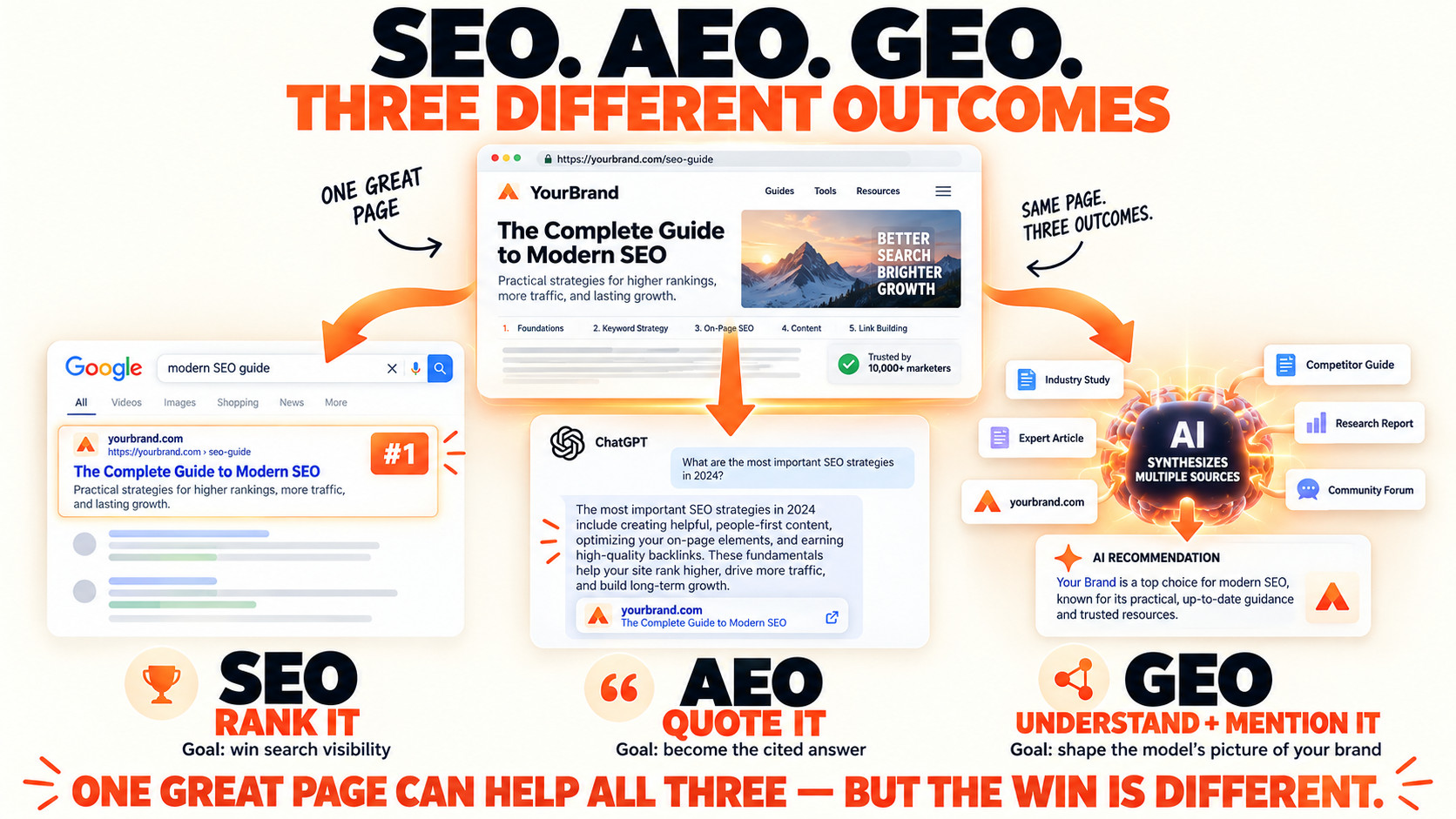
The three overlap, but they optimise for different outcomes. SEO earns a ranking in the list of links. AEO earns a specific passage of yours being quoted as the answer to a specific question. GEO earns your brand being named and described correctly across many answers. Strong SEO and AEO feed GEO, because the more your content ranks and gets quoted, the more the models see you and trust you.
If you want the full breakdown of where each one fits, read AEO vs GEO vs SEO.
- Goal: be named and described correctly by generative AI
- Level: your brand and entity, not one page
- Built from: your site, plus mentions, reviews and citations across the web
- Measured by: whether AI assistants name you, and get you right
Where AI models look when deciding who to mention
How do generative engines decide who to mention?
Nobody outside the labs has the exact formula, but the pattern is consistent. Generative engines lean toward brands and sources that are mentioned often, described consistently, and backed by signals of trust: real authorship, citations, coverage on sites the model already respects, and a clear, unambiguous identity. If the web tells a clear and repeated story about who you are and what you do, the model repeats it. If the story is thin or contradictory, the model guesses, or leaves you out.
That is why GEO is not a one-page trick. It is the compounding result of being genuinely present and consistent wherever the models look.
How do you do GEO?
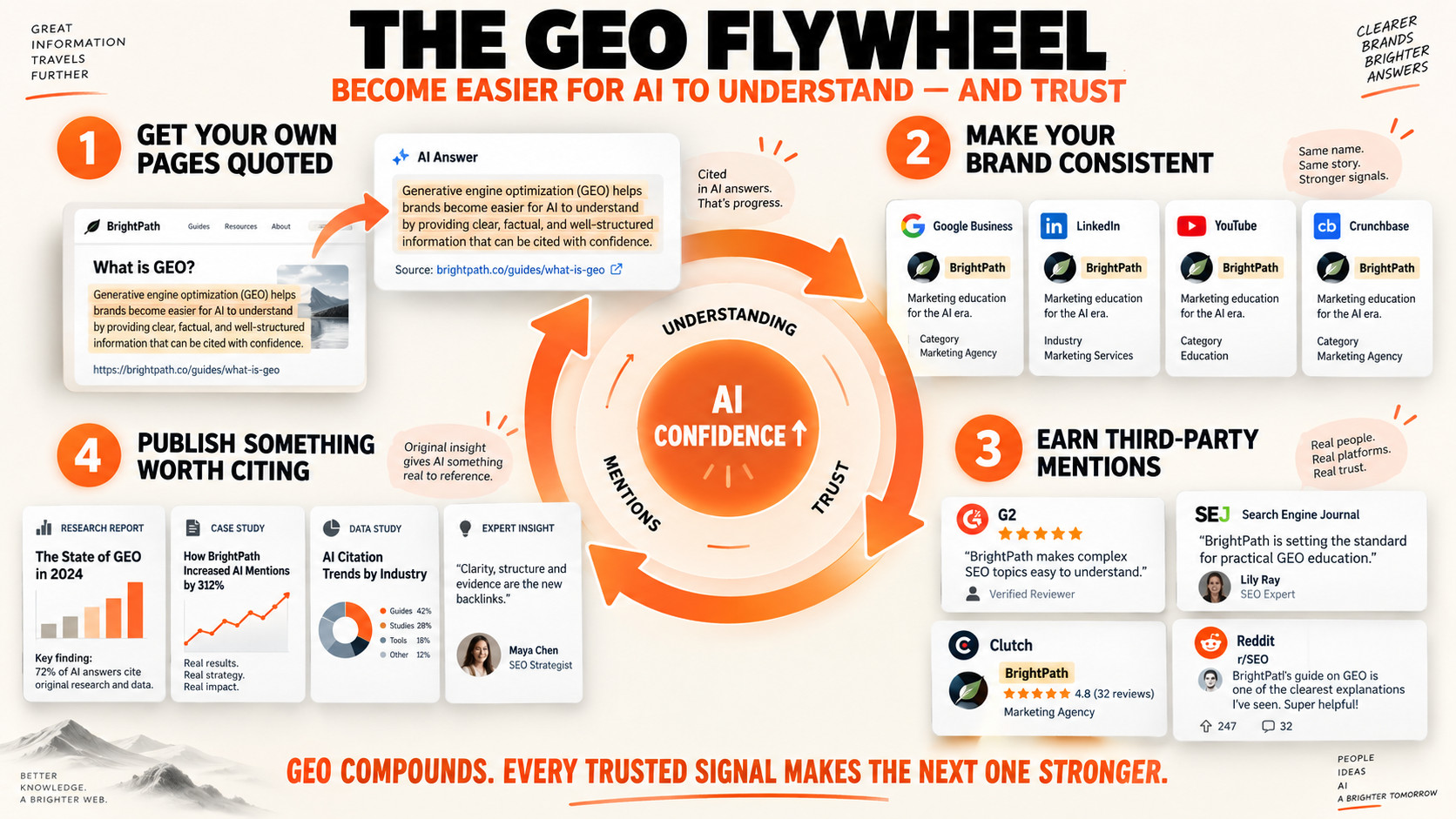
In practice, GEO is mostly good AEO done widely, plus attention to your brand’s presence off your own site:
- Get your own pages quoted. Make your key pages answer-first and citable so the engines pull from them. The AEO Readiness Checker scores this per page.
- Be consistent about who you are. Use the same name, description and category everywhere. A clear entity is easy for a model to summarise.
- Earn mentions on sites the models trust. Coverage, citations and genuine third-party references do more for GEO than anything on your own domain.
- Give the models something worth citing. Original data, real tests and clear explanations get referenced far more than restated common knowledge.
All of the tools that measure and improve this are on the AEO tools page, free to try.
How do you measure GEO?
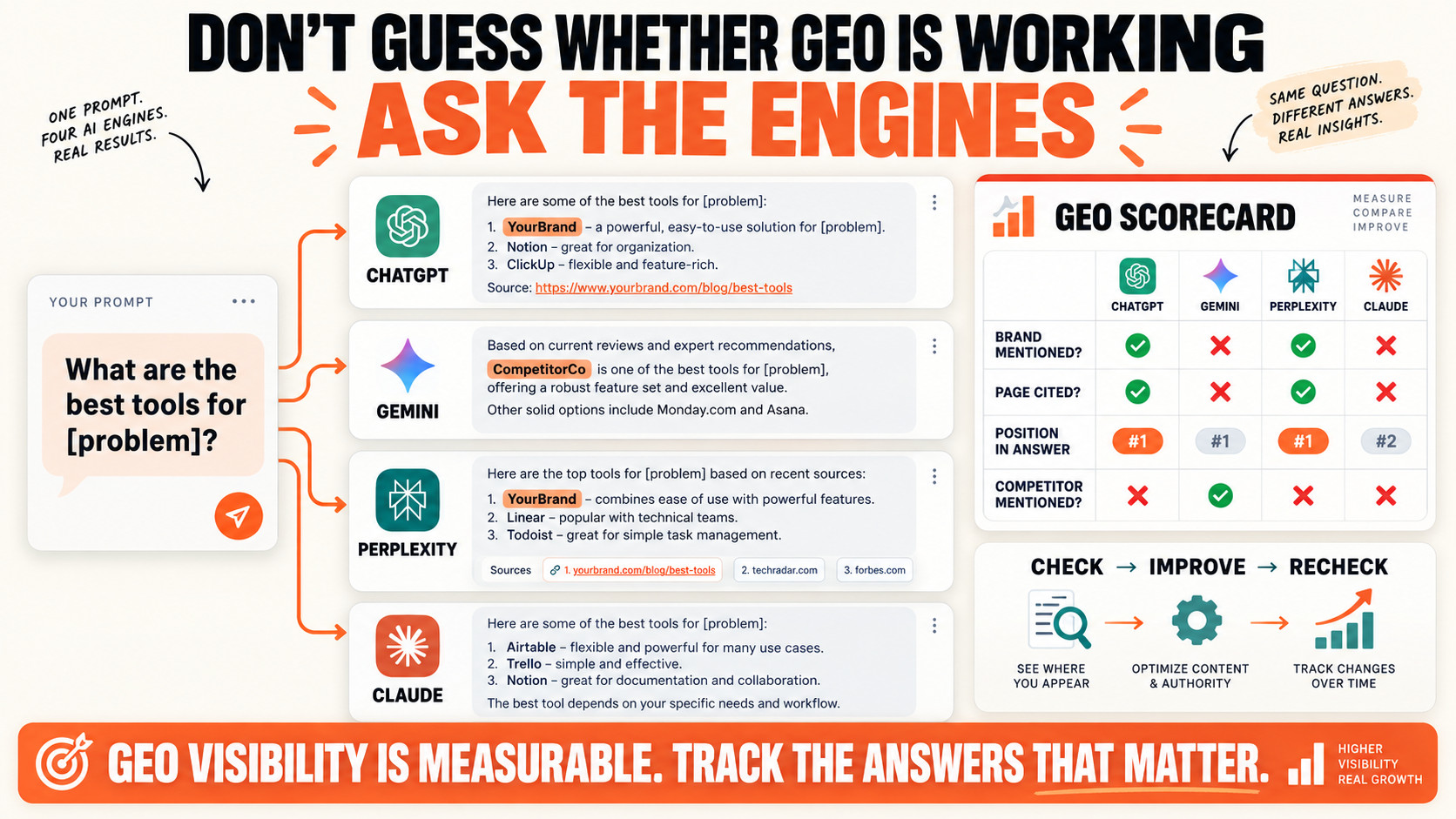
You measure GEO by asking the engines directly. Run the prompts that matter to you, the ones a real buyer would type, and see whether the AI names you, names a competitor, or describes you incorrectly. The AEO Citation Checker does this across ChatGPT, Gemini or Claude, so you can track whether your GEO is improving over time rather than guessing.
Frequently asked questions
What does GEO stand for?
In AI search, GEO stands for generative engine optimization: optimising how generative AI models represent your brand in their answers. In older marketing usage it can also mean geographic targeting, which is unrelated.
Is GEO the same as AEO?
They overlap but are not identical. AEO is about getting a specific page quoted as the answer to a question. GEO is broader: how AI describes your brand across many answers. Good AEO tends to improve GEO over time.
Is GEO worth doing for a small business?
Yes, and it is often easier for a small, focused business than a sprawling one, because a clear, consistent identity is exactly what generative engines find easy to summarise. Start by making sure the AI describes you correctly, then work on being cited more widely.
How long does GEO take to show results?
It compounds rather than switching on. As more of your content gets quoted and more trusted sites mention you, the models see you more often and describe you more accurately. Checking your citations regularly is the way to see it moving.
More in the Answer Engine Optimization Hub.
Intent SEO. Score every post for search intent and whether an AI can actually quote you, right inside the WordPress editor.
See Intent SEO →