Part of the Answer Engine Optimization Hub
Answer engine optimization (AEO) is the practice of structuring your content so AI answer engines like ChatGPT, Perplexity, Google AI Overviews and Gemini can quote it directly and cite you as the source. Where SEO wins you a ranking in the list of links, AEO wins you the answer itself, the part most people now read instead of clicking.
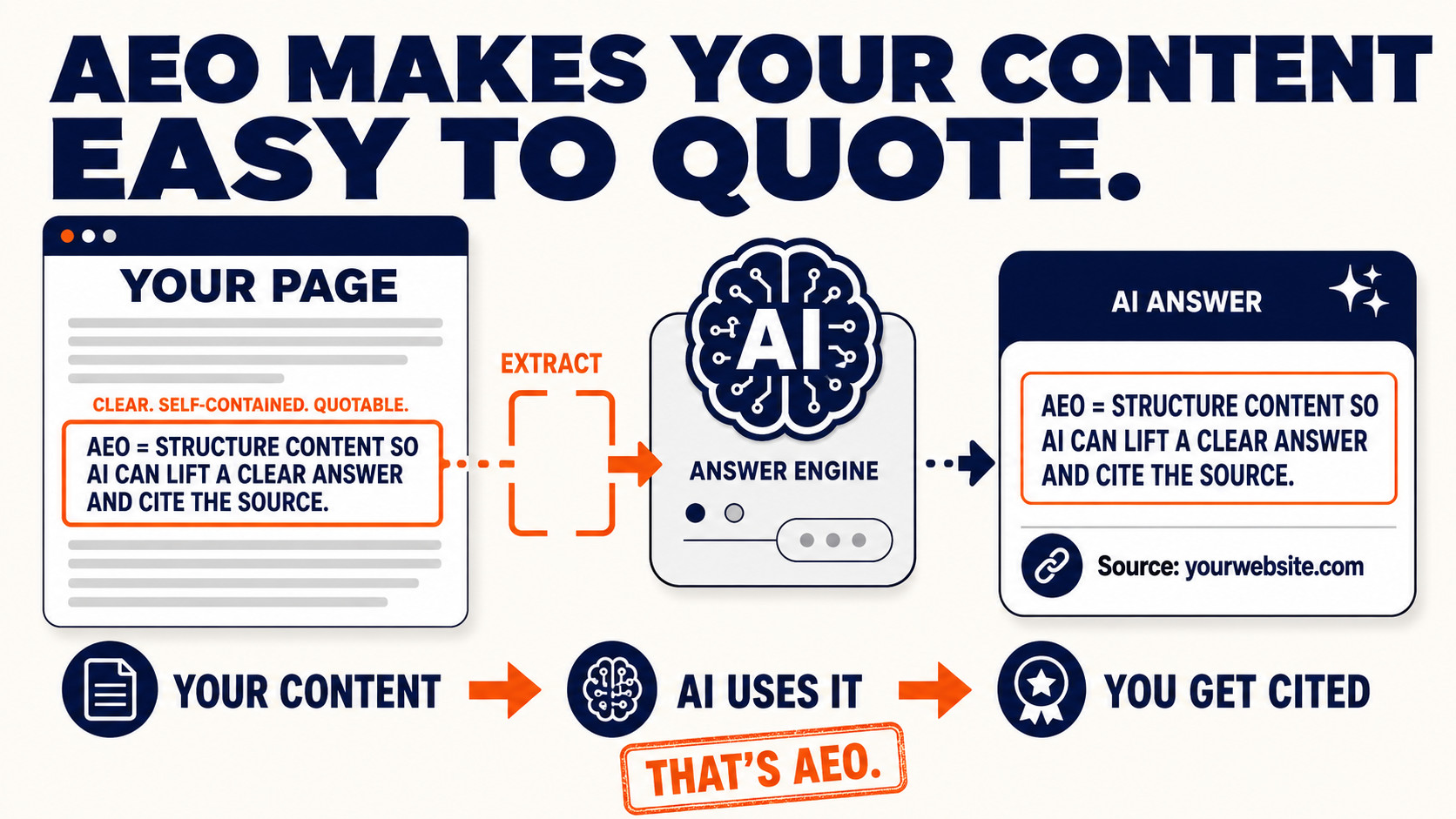
What is answer engine optimization (AEO)?
AEO is making your content easy for an AI to lift out and attribute to you. When someone asks a question and an answer engine writes a response, it pulls sentences and facts from sources it trusts and can quote cleanly. AEO is the work of being one of those sources.
It happens at the level of a page and a question. For a given query, either your content is structured so the engine can quote it, or it is not. That is different from ranking, and it is why a page can sit modestly in the traditional results and still be the one an AI quotes, or the other way round.
Why does AEO matter now?
Because the click is no longer the only prize. A growing share of searches are answered on the results page or inside an AI assistant, and the person reads the answer without visiting anyone. If your content is not structured to be quoted, you can be the best page on the topic and still be invisible in that answer. AEO is how you show up where the reading now happens.
How is AEO different from SEO?
SEO optimises for a ranking position. AEO optimises for being quoted as the answer. They share a foundation, since the same quality, structure and trust that help a page rank also help it get quoted, but the payoff lands in a different place. There is also a third, broader idea, generative engine optimization, which is about how AI describes your brand overall. For the full breakdown, read AEO vs GEO vs SEO, and for GEO specifically, What is GEO.
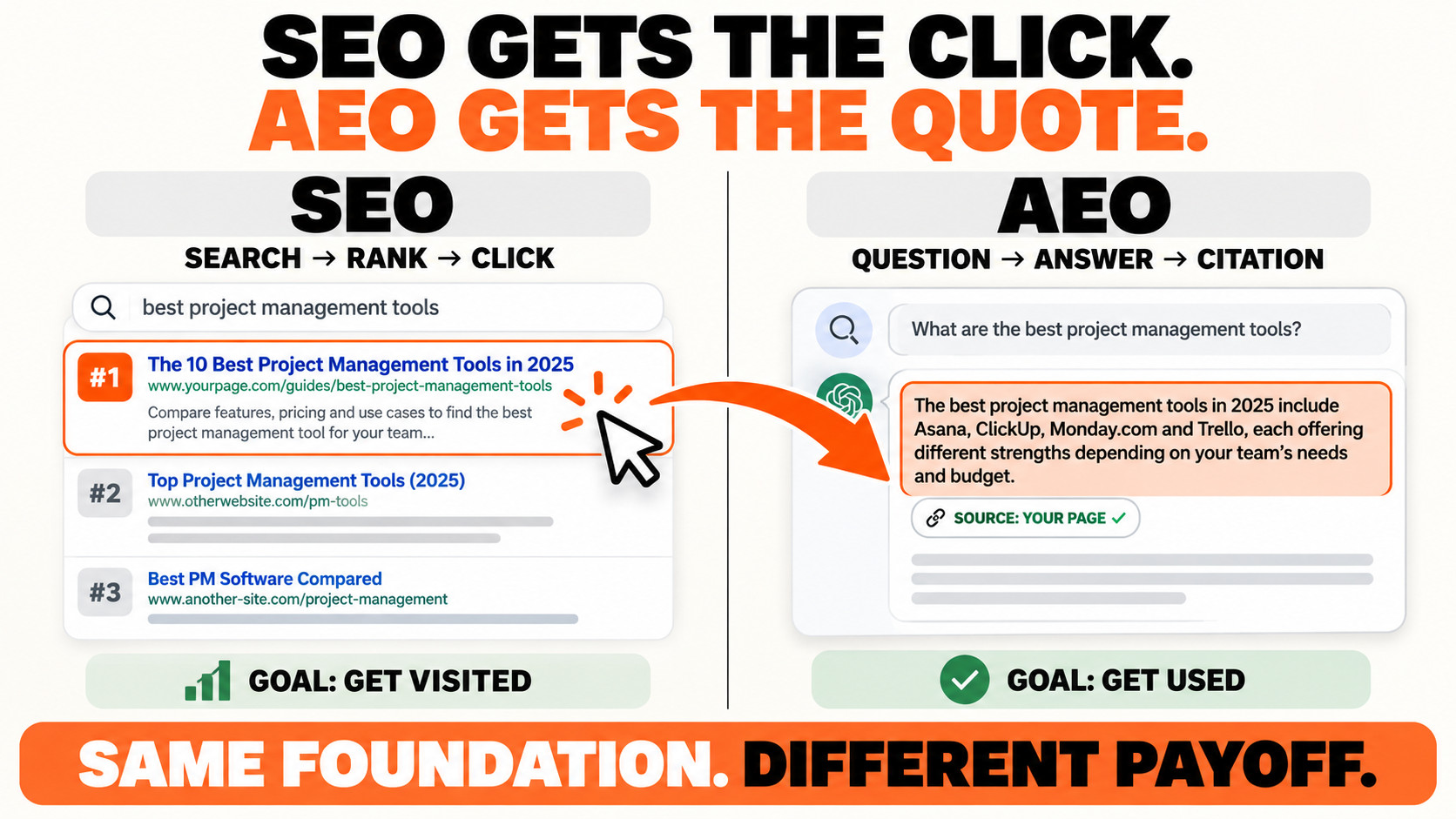
What makes content quotable by AI?
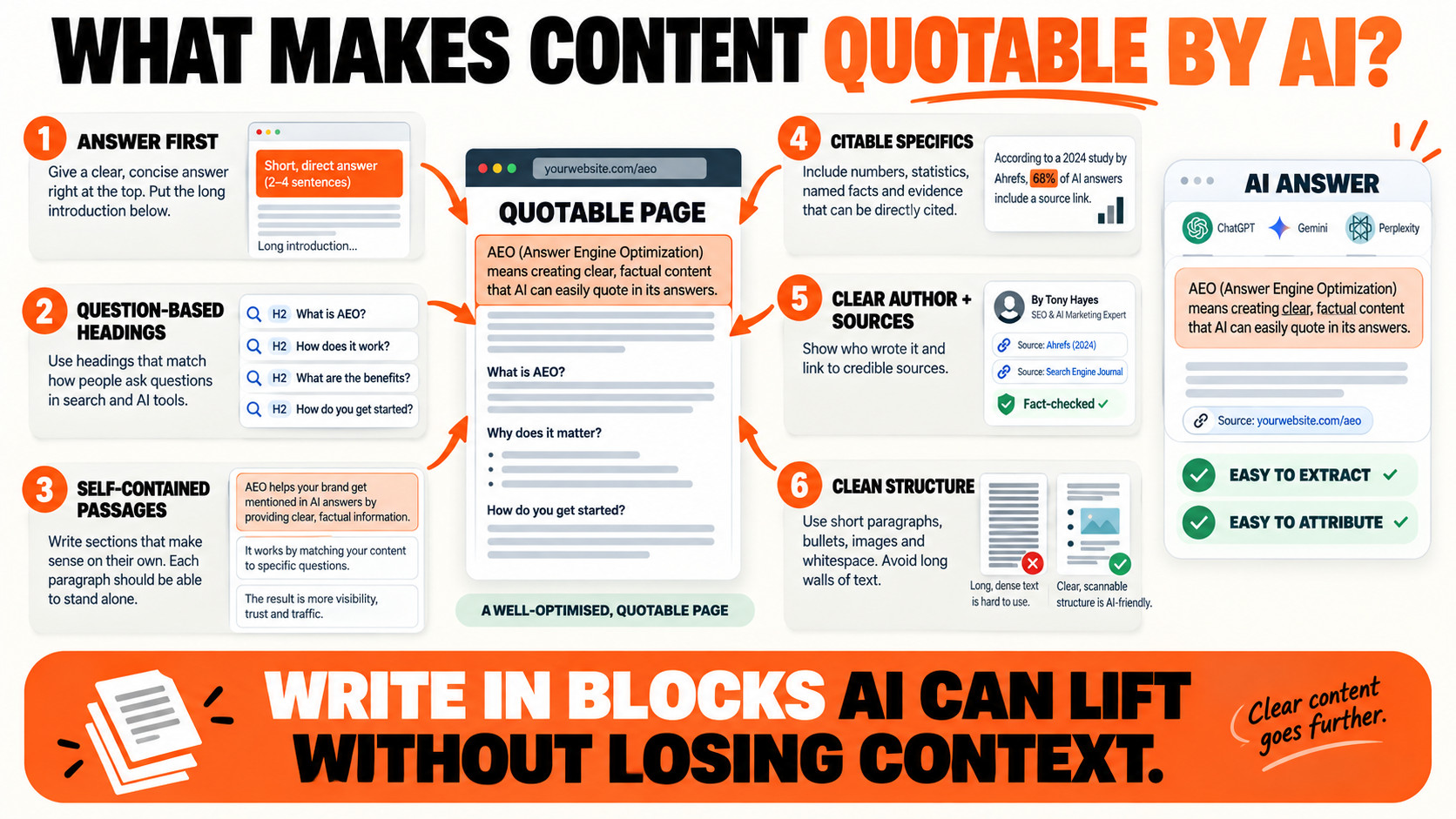
AEO is not a mystery once you know what the engines look for. A quotable page tends to do these things:
- Answers first. The direct answer sits in the opening lines, before the build-up, so an engine can lift it whole.
- Uses question-shaped headings. Headings that match how people actually ask, so the engine can map a query to a section.
- Has self-contained passages. Each key paragraph makes sense on its own, without needing the sentence before it. That is what survives being pulled out of context.
- Carries citable specifics. Real numbers, named facts and clear claims are far more quotable than vague generalities.
- Shows who wrote it. A visible, credible author and clear sourcing make an engine more comfortable quoting you.
- Is clean to read. Short paragraphs, plain language and clear structure, not walls of text.
You do not have to eyeball this. The AEO Readiness Checker scores a page against these signals and rewrites your opener to be more liftable.
How do you do AEO?
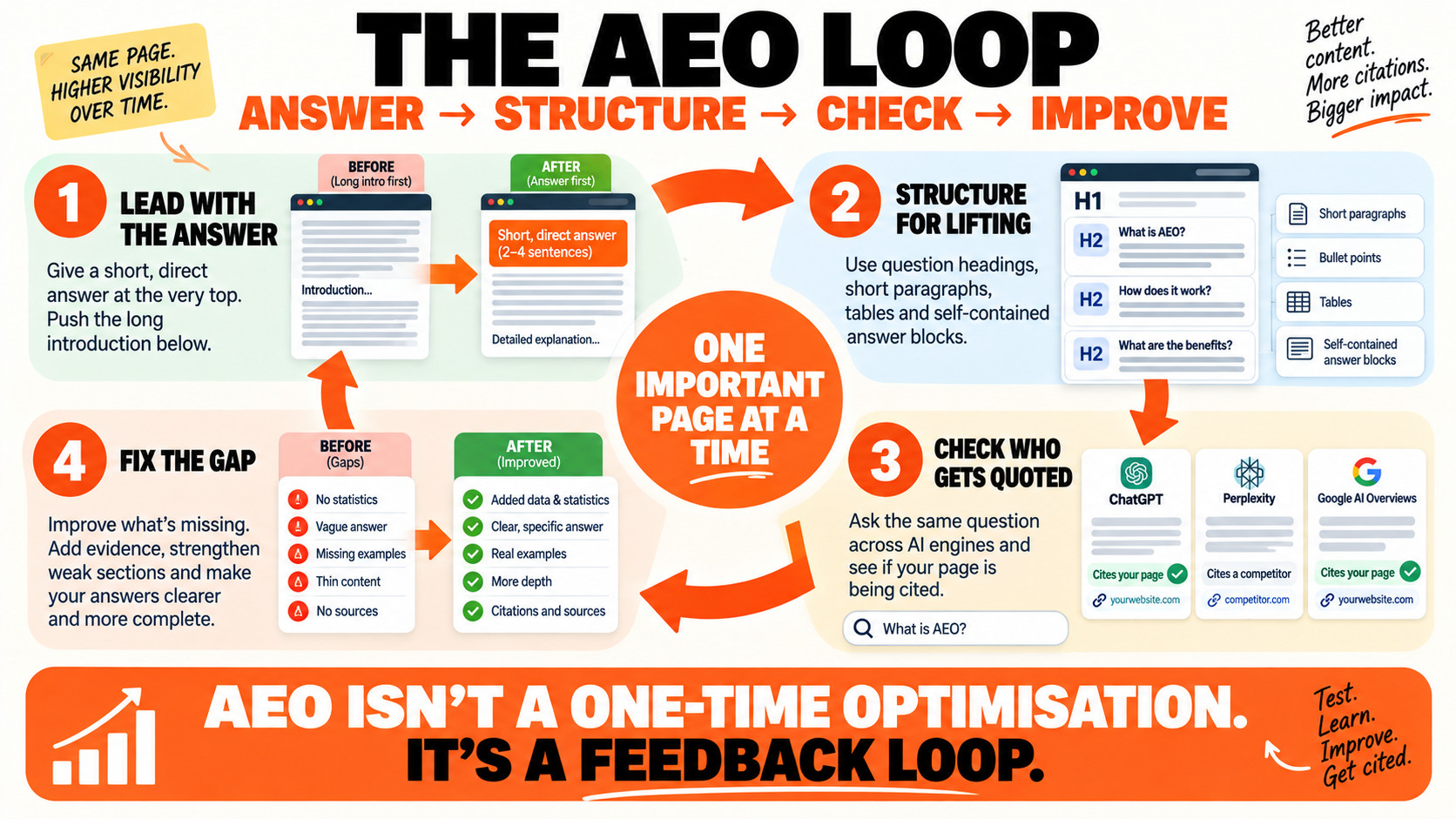
In practice it is a short loop you run per page:
- Lead with the answer. Put a direct, self-contained answer up top, then expand underneath it.
- Structure for lifting. Question headings, short quotable passages, citable data and a clear author. An on-page analysis catches the basics, and a FAQ adds snippet-friendly question and answer pairs.
- Check who gets quoted. Run the prompts you care about through the AEO Citation Checker to see whether the engines name you or a competitor, then close the gap.
- Repeat on the pages that matter. Start with your most important pages rather than trying to fix everything at once.
All of these are free to try, and the full set is on the AEO tools page.
How do you know if your AEO is working?
Watch for your pages appearing in AI Overviews, Perplexity answers and featured snippets, and check whether AI assistants quote you for the questions that matter to your business. A citation check gives you that answer directly, so you can see progress rather than guess at it.
Frequently asked questions
What does AEO stand for?
AEO stands for answer engine optimization: structuring your content so AI answer engines can quote it directly and cite you as the source.
Is AEO replacing SEO?
No. SEO is the foundation AEO builds on. The same content quality, structure and authority that help a page rank also help it get quoted. What is changing is that ranking is no longer the only payoff, so you optimise for being cited as well as clicked.
Do I need special tools for AEO?
You do not need them, but they save time. A readiness checker scores whether a page is quotable and suggests fixes, and a citation checker shows whether AI already cites you. Both are free to try on the tools page.
Which pages should I optimise for AEO first?
Start with the handful of pages that actually matter to your business, the ones tied to a buying decision or a question you want to own, and make each one answer-first and quotable before widening out.
More in the Answer Engine Optimization Hub.
Intent SEO. Score every post for search intent and whether an AI can actually quote you, right inside the WordPress editor.
See Intent SEO →