Part of the Answer Engine Optimization Hub
To get cited by Google AI Overviews, earn a strong organic presence for the query, then structure the page so Google can lift a clean, self-contained answer from it. AI Overviews draw heavily from pages that already rank and that answer the specific question directly, so the work is classic SEO for eligibility, plus answer-first structure for the citation itself.
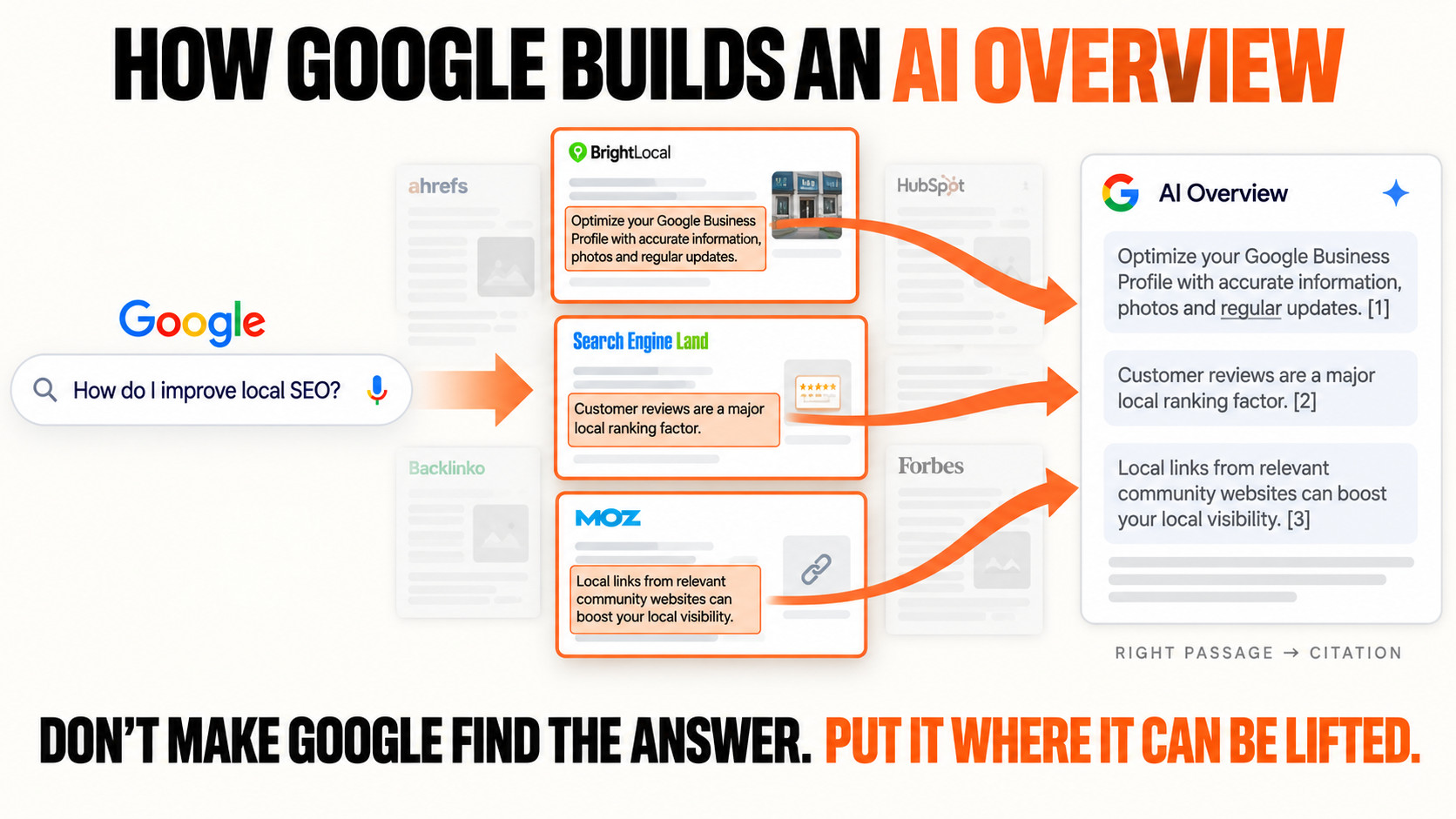
What are Google AI Overviews?
AI Overviews are the AI-generated answers Google shows at the top of many search results. Instead of only a list of links, Google writes a short synthesised answer and cites a handful of sources next to it. Those cited sources are the prize. Being named there puts you above the traditional results, inside the answer the searcher reads first.
Unlike a standalone chatbot, AI Overviews sit on top of Google Search, so they lean on Google’s existing understanding of who ranks for what. That single fact shapes the whole strategy.
How does Google choose sources for AI Overviews?
Google has been clear that AI Overviews are built on its core search systems, and the observed pattern backs that up. The sources it cites are usually pages that already rank on the first page for the query or a close variant, and that contain a passage which answers the question cleanly. In other words, ranking makes you eligible, and structure gets you quoted.
There is a second pattern worth knowing. AI Overviews often pull from several sources at once and favour pages that answer a specific sub-question well, not just broad authority pages. That is good news for a focused site, because you can win the citation for a precise question even when a giant outranks you for the head term.
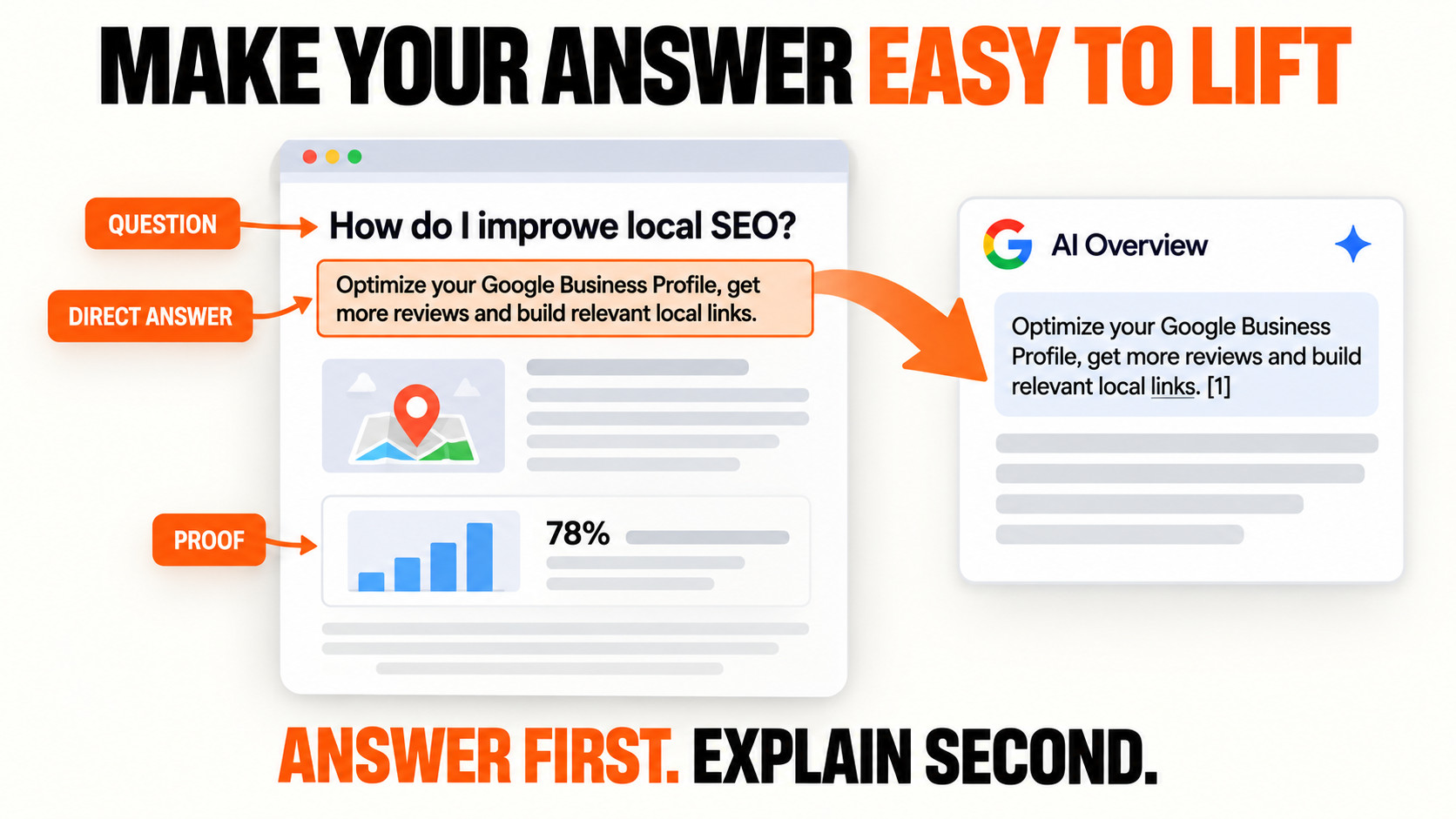
How to get your page cited in AI Overviews
The work splits cleanly into being eligible and being quotable.
- Rank for the query first. If you are nowhere on page one, AI Overviews are unlikely to pull you. Solid on-page SEO and genuine relevance are the entry ticket. An on-page analysis catches the fundamentals.
- Target the specific question. Build the page around the exact question behind the search, not just the keyword, so there is a precise answer for Google to lift.
- Answer in the opening lines. Put a direct, self-contained answer near the top. AI Overviews lift passages, and a buried answer gives them nothing to take.
- Use question-shaped headings. Let Google map the query to the section that answers it, and cover the obvious follow-up questions in their own sections.
- Add citable specifics. Real numbers, named facts and clear claims make your passage the more quotable option when Google is choosing between similar pages.
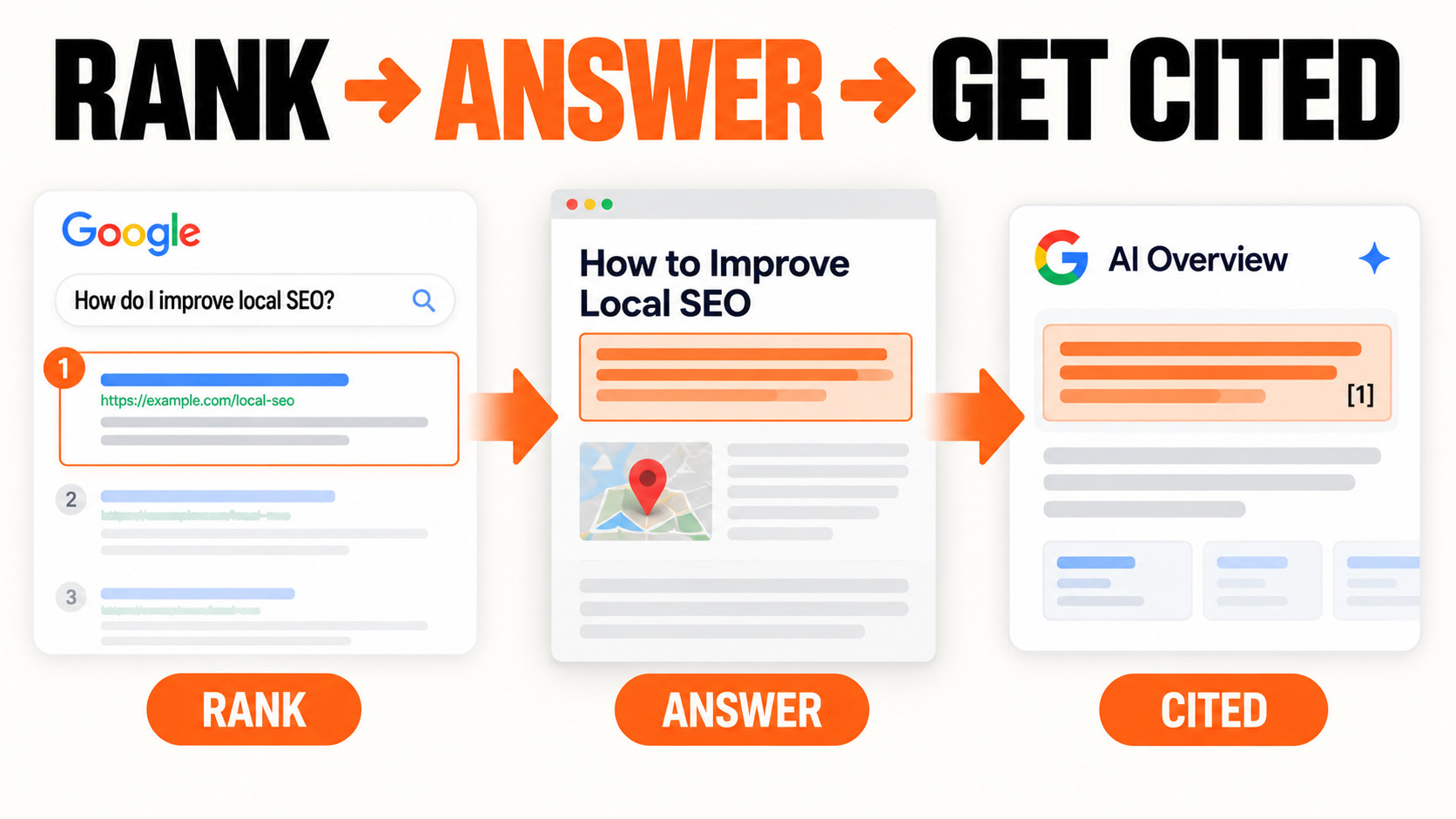
The AEO Readiness Checker scores a page against these liftability signals and rewrites your opener, and the FAQ Builder adds the snippet-friendly question and answer pairs that AI Overviews often draw on.
How do you check if you appear in AI Overviews?
Search your target questions and look at whether an AI Overview appears and who it cites. Then go wider and run the prompts through the AEO Citation Checker to see, across the major engines, whether you or a competitor owns the answer. Where a competitor is cited and you are not, compare the two pages against the checklist above and close the gap.
Do AI Overviews reduce your traffic?
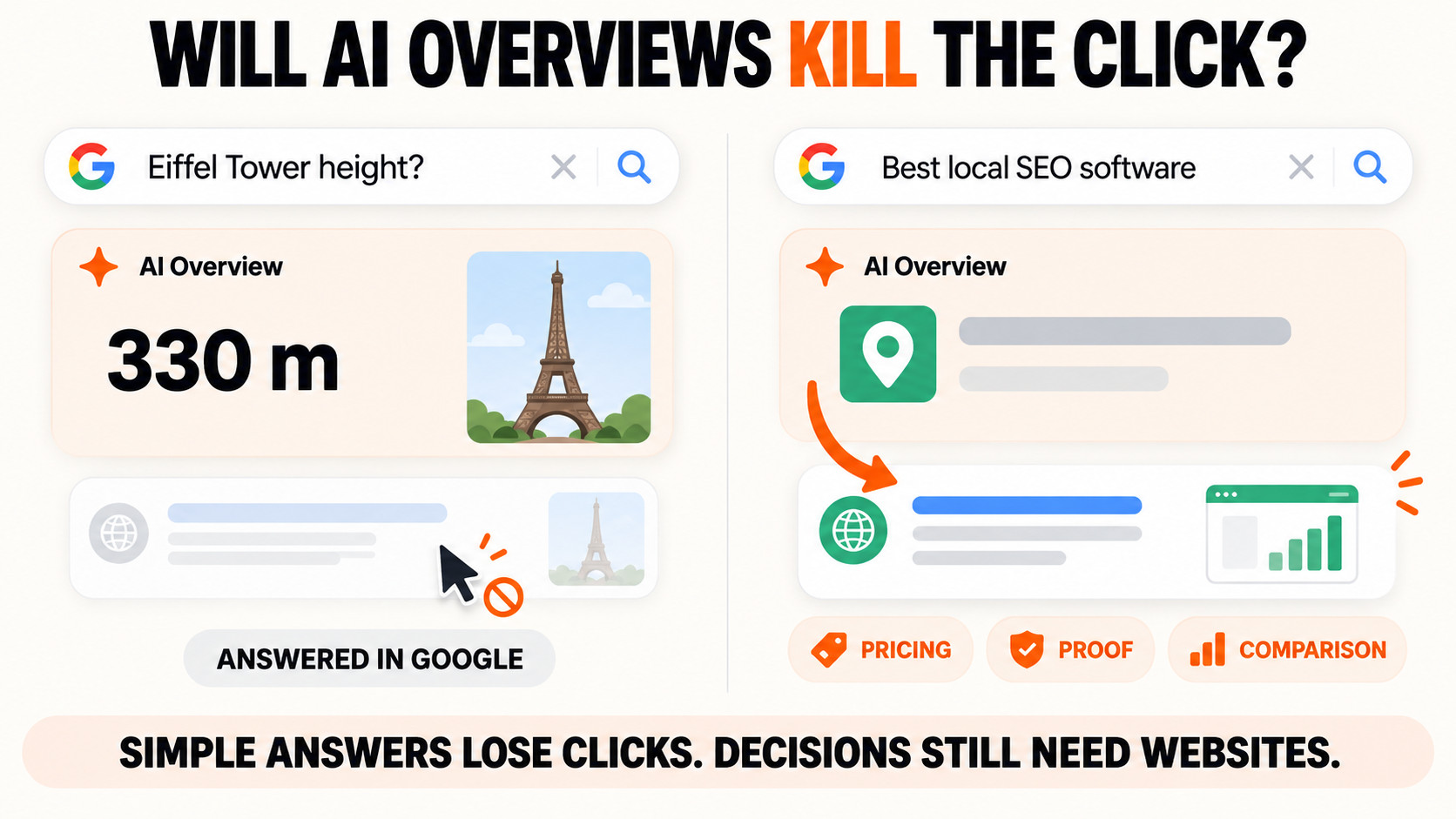
They can change it. When Google answers the question outright, fewer people click through for simple informational queries, which is exactly why being the cited source matters more than a plain ranking. The move is to be inside the answer, and to focus your commercial pages on questions where the searcher still needs to act, compare or buy after reading the overview. That is where the click survives.
Where to go next
Getting cited in AI Overviews is one engine among several. To see the whole picture and get a plan, run the AI Search Strategy Scorecard, and to make any page more quotable, work through the AEO content checklist. The same structure that wins AI Overviews also helps you get cited by ChatGPT.
Frequently asked questions
Do I need to rank on page one to appear in AI Overviews?
Usually, yes. AI Overviews lean on Google’s core ranking systems, so pages that already rank well for the query are far more likely to be pulled. Ranking is the eligibility, structure is what earns the citation.
Can a small site get cited in AI Overviews?
Yes. AI Overviews often cite the page that answers a specific sub-question best, not only the biggest brand. A focused page can win the citation for a precise question even against larger competitors.
Is optimising for AI Overviews different from normal SEO?
It builds on SEO rather than replacing it. You still need to rank, but you also structure the page to be lifted: answer-first openers, question headings and citable specifics. It is SEO plus answer engine optimization.
How do I track my AI Overview citations over time?
Run your key questions regularly and record whether an overview appears and who it names, or use a citation checker to monitor it across engines so you can see progress rather than guessing.
More in the Answer Engine Optimization Hub.
Intent SEO. Score every post for search intent and whether an AI can actually quote you, right inside the WordPress editor.
See Intent SEO →