Part of the Answer Engine Optimization Hub
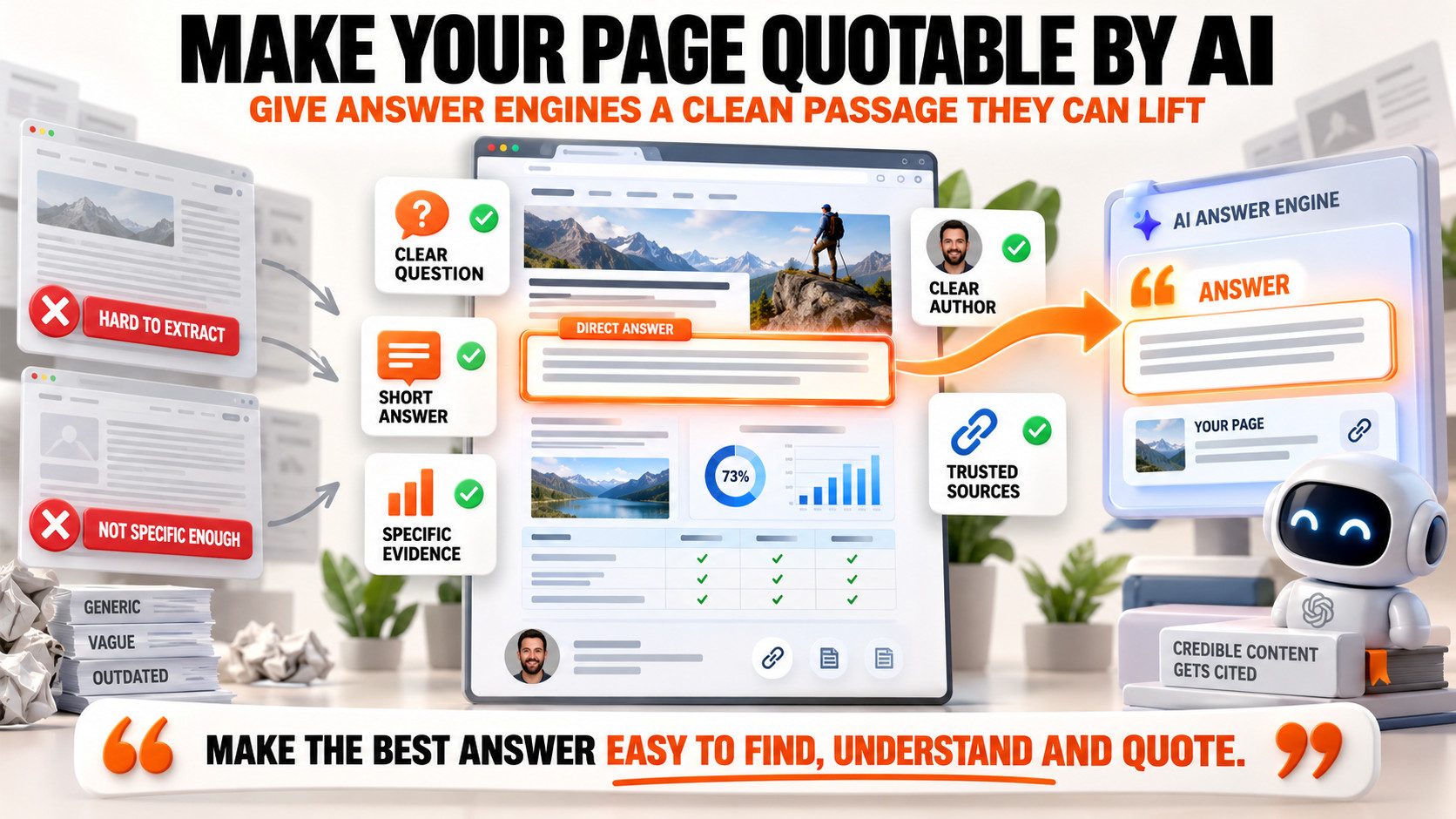
An AEO content checklist is the short list of checks that make a page easy for an AI answer engine to quote: it answers one clear question, leads with a self-contained answer, uses question-shaped headings, carries specifics only you can state, shows a real author, and is reachable by the systems that fetch live pages. Run it on a page before and after you publish, and you turn a good article into a quotable one.
Why you need an AEO content checklist
Most content is written to be read top to bottom by a person. Content that gets quoted by AI is written to be lifted out in pieces by a machine, then trusted enough to attribute. Those are different jobs, and the second one is easy to miss when you are focused on the writing. A checklist keeps you honest, because the difference between a page an AI quotes and one it ignores is usually a handful of structural choices, not the quality of the prose.
This is the checklist I run. It is short on purpose. If you want the reasoning behind it, read what AEO is first, then use this page as the working list.
Before you write: pick a question you can own
AEO starts before the first sentence, with what the page is even about. A page aimed at one specific question is far easier to quote than a sprawling guide that half-answers ten.
- One page, one question. Build the page around a single question a real person would ask, and make that question the title.
- Pick a question with a weak current answer. You get quoted fastest where the existing answers are thin or generic, not where a definitive source already owns it.
- Confirm it is a question, not just a keyword. Answer engines respond to questions. If your target is a bare keyword, phrase the real question behind it.
A tool like Intent SEO scores a draft by search intent and citation-readiness rather than exact-match keywords, which is the judgement this step is asking you to make.
As you write: structure it to be lifted
This is the heart of the checklist. The goal is that any section can be pulled out on its own and still answer the question cleanly.
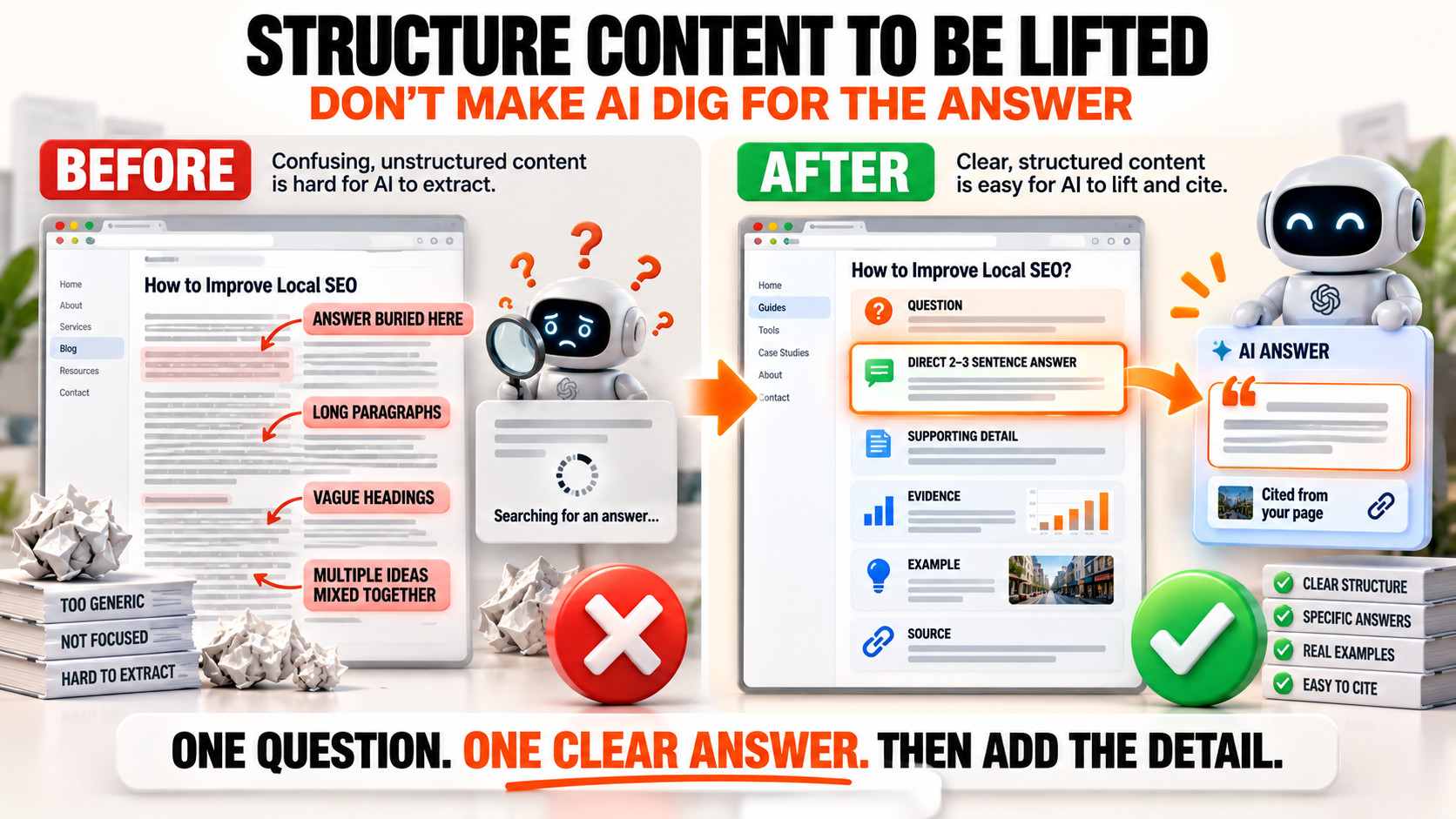
- Answer in the first two sentences. Put the direct, self-contained answer at the very top, before the build-up, so an engine can lift it whole.
- Use question-shaped headings. Write headings the way people ask, so the model can map a query straight to the section that answers it.
- Make each passage self-contained. Every key paragraph should make sense without the sentence before it. That is what survives being pulled out of context.
- Keep it clean to read. Short paragraphs, plain language, no walls of text. Hard-to-parse pages get skipped.
- Add snippet-friendly question and answer pairs. A short FAQ gives the engine tidy, liftable units. The FAQ Builder generates these in a couple of minutes.
Add the specifics only you have
Structure gets you eligible to be quoted. Specifics get you chosen over another source that is just as tidy. This is the single biggest lever on the whole list.
- Include at least one number or fact that is yours. A figure from your own data, a result you actually saw, a tested example. An AI cannot regurgitate first-hand data it has never seen.
- Name real examples. Specific tools, cases and situations beat vague generalities every time.
- Make claims checkable. Clear, verifiable statements are safer for a model to quote than hedged ones.
Before you publish: the technical checks
None of the above matters if the systems that fetch live pages cannot reach yours, or if the page does not show who stands behind it.
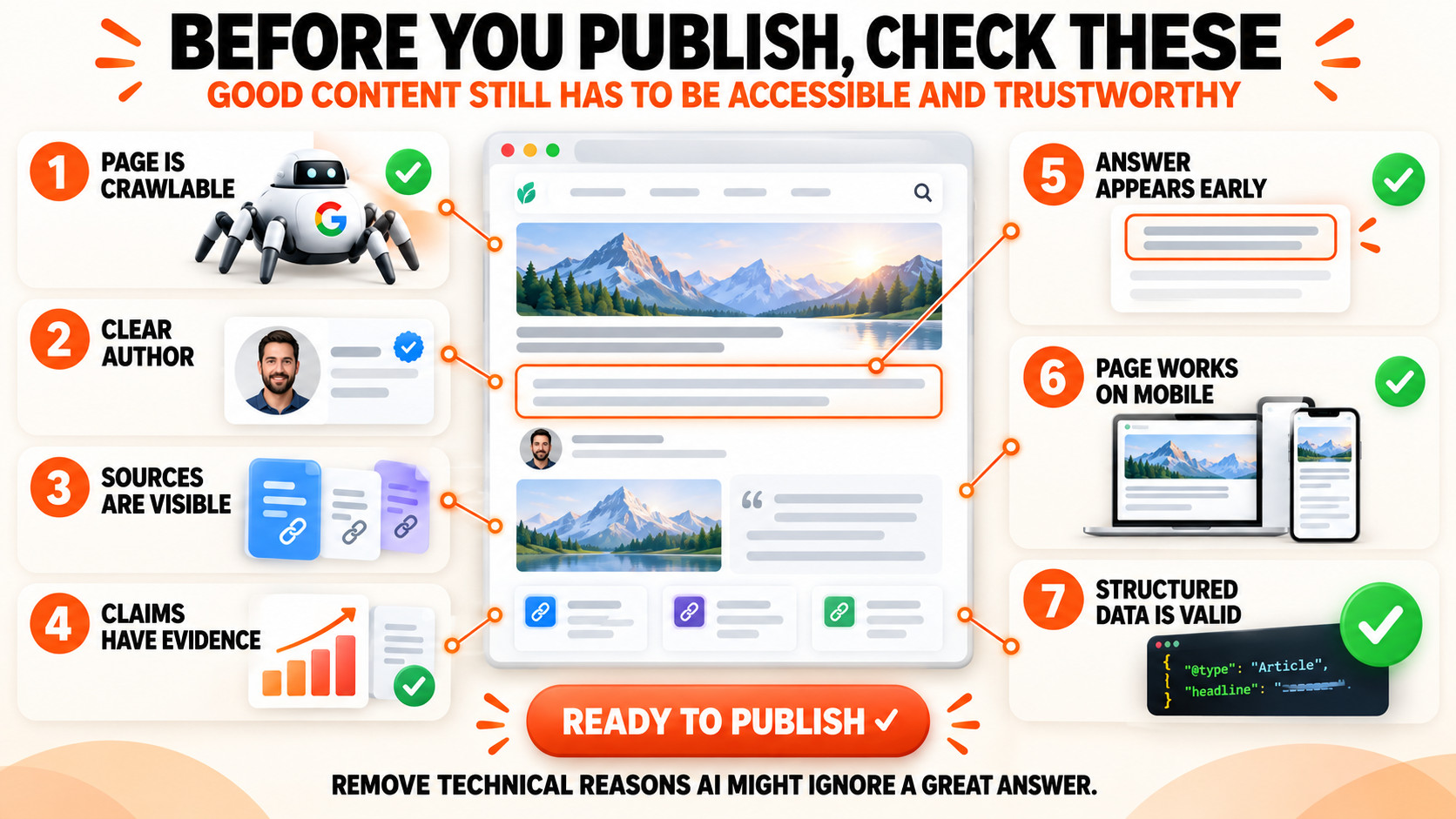
- Confirm the page is crawlable. Grounded AI answers come from content the answer engines can actually retrieve. Make sure nothing is blocking the fetchers you want to be seen by.
- Show a real author. A visible, credible author and clear sourcing make an engine more comfortable citing you.
- Keep facts consistent with the rest of your site. Contradictions across your own pages make you a riskier source to quote.
- Run an on-page pass. The On-Page SEO Analyzer catches structure and readability issues, and the AEO Readiness Checker scores the page against these signals and rewrites your opener to be more liftable.
After publishing: check whether it worked
The checklist does not end at publish. The only real measure of AEO is whether the engines quote you.
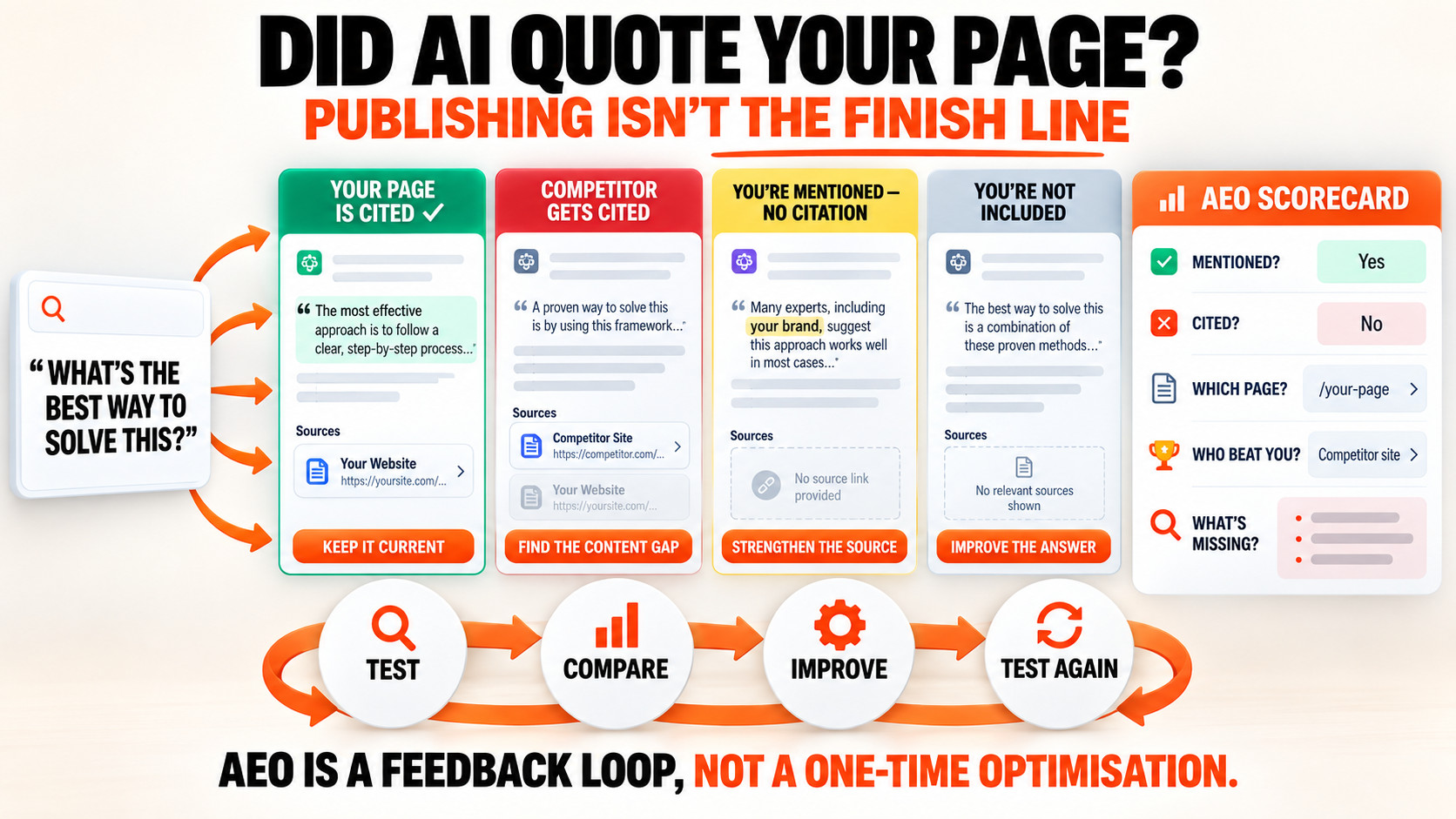
- Run the prompts that matter. Ask the questions a real buyer or reader would, and see whether the AI names you, a competitor, or nobody. The AEO Citation Checker does this across the major engines.
- Close the gap and re-check. Where a competitor owns an answer you should own, improve the page against this list and check again.
- Start with the pages that matter. Fix your most important pages first rather than trying to do everything at once.
Where to go next
This checklist covers a single page. To see which strategies will move your AI visibility the most across the whole site, and get a prioritised plan, run the AI Search Strategy Scorecard. Every tool here is free to try, and the full set is on the AEO tools page.
Frequently asked questions
What is the most important item on an AEO checklist?
Leading with a self-contained answer in the opening lines. If an engine cannot lift a clean answer from the top of the page, the rest of the checklist cannot save it. Adding a specific only you can state is the close second.
How long should an AEO-optimised page be?
Long enough to answer the question fully and no longer. Length is not the signal, liftability is. A short page that answers one question cleanly beats a long one that buries the answer.
Do I need to add schema to every page for AEO?
No. Schema helps a machine parse a page but does not make thin content quotable. The one piece worth adding for most pages is FAQ schema, which turns question and answer pairs into tidy, liftable units.
How often should I run this checklist?
On every new page before you publish, and again on your most important existing pages when you review them. Pair it with a citation check so you are measuring the outcome, not just ticking boxes.
More in the Answer Engine Optimization Hub.
Intent SEO. Score every post for search intent and whether an AI can actually quote you, right inside the WordPress editor.
See Intent SEO →