Part of the Answer Engine Optimization Hub
To get cited by ChatGPT, publish a page that answers a specific question directly in its opening lines, structure it so a single passage can be lifted out and still make sense, back it with real specifics an author is willing to put their name to, and make sure it is reachable by the systems ChatGPT uses to browse the live web. You are not gaming a ranking. You are being the cleanest, most trustworthy source of an answer it needs.
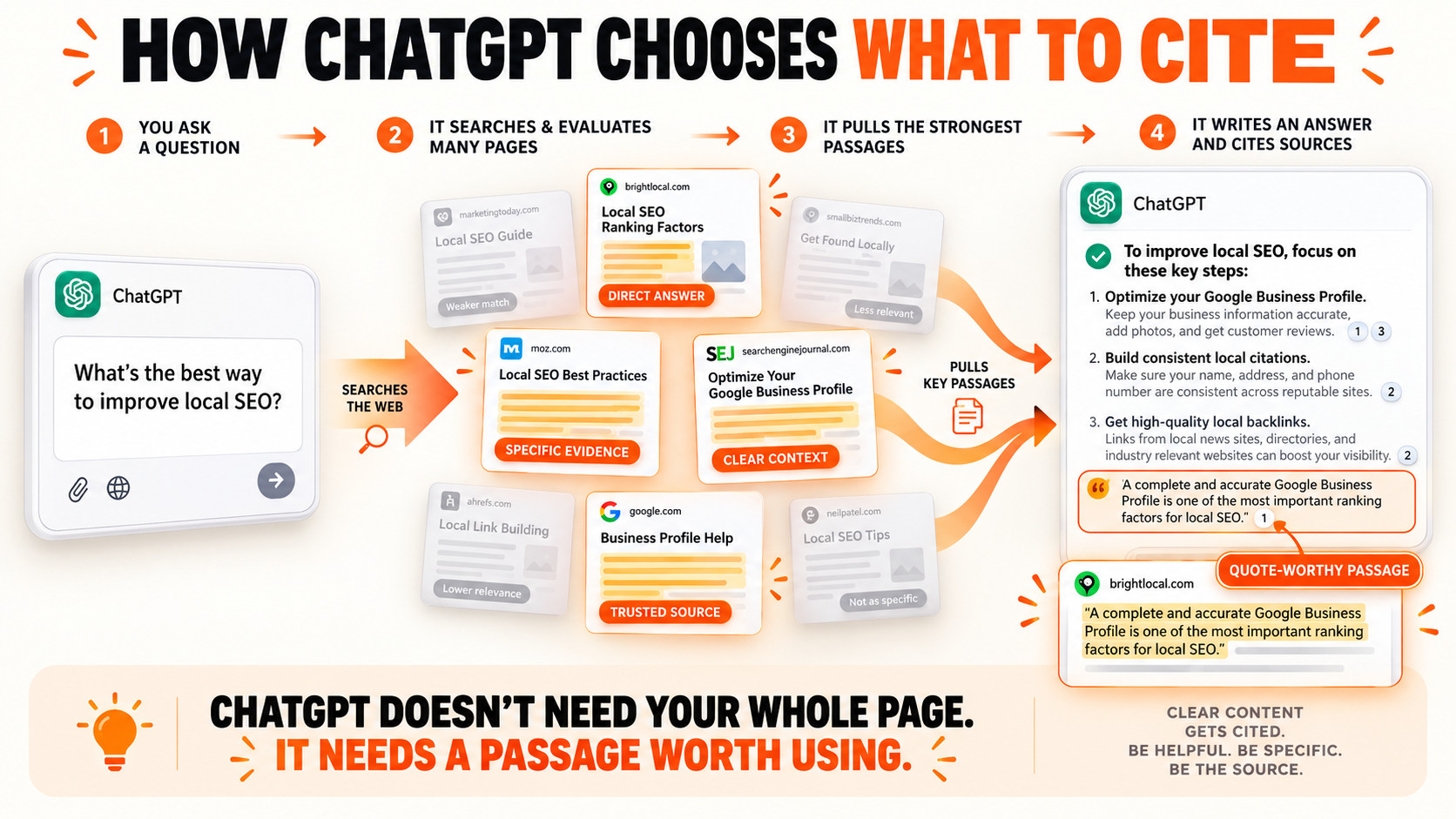
Why getting cited by ChatGPT matters
When ChatGPT answers a question, it increasingly does it by pulling from live sources and naming them, either through its own browsing or through search-grounded answers. Being one of those named sources is worth more than a traditional ranking, because the person often reads the answer and acts on it without visiting a single blue link. A citation is your name inside the answer itself, which is where the attention and the trust now sit.
The good news for a smaller site is that ChatGPT does not pick sources by domain size alone. It picks the source that answers the specific question most cleanly and credibly. That is a bar you can clear on a single well-built page, which is the whole point of answer engine optimization. If you are new to the idea, start with what AEO is, then come back here for the ChatGPT specifics.
How does ChatGPT decide what to cite?
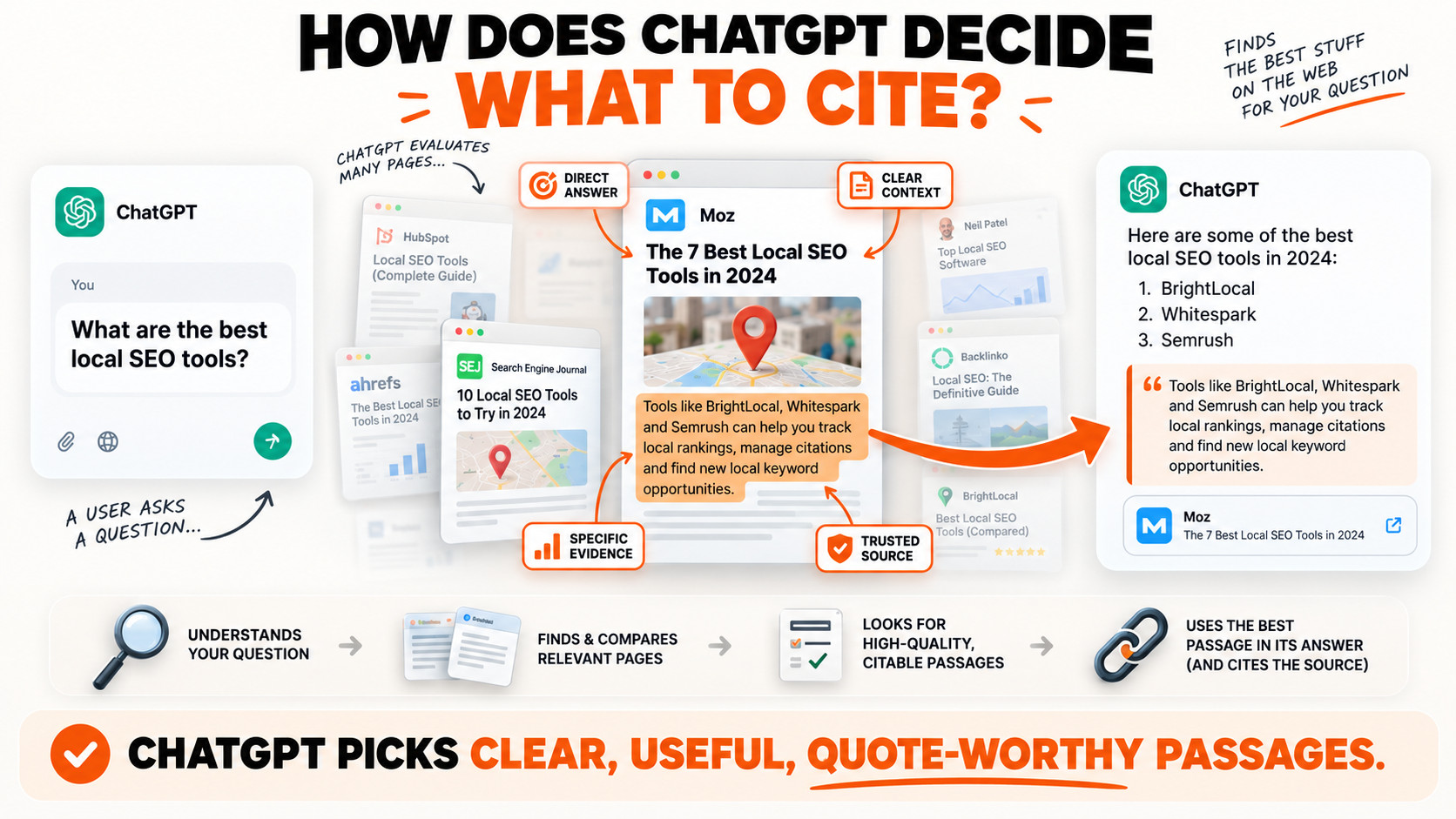
Nobody outside OpenAI has the exact formula, but the behaviour is consistent enough to work with. ChatGPT tends to cite a page when three things are true at once.
First, it can reach the page. Grounded answers come from content that its browsing and search partners can actually crawl and retrieve. A page blocked from those systems cannot be cited no matter how good it is.
Second, it can lift a clean answer from the page. If the answer to the question is buried three paragraphs down, wrapped in throat-clearing, or split across the page, the model has nothing tidy to quote. If a self-contained sentence or short passage answers the question outright, it has exactly what it needs.
Third, it trusts the source enough to attach its name to it. Real authorship, specific and checkable claims, and consistency with what other trusted sources say all make the model more comfortable citing you rather than a safer, blander source.
What a ChatGPT-citable page looks like
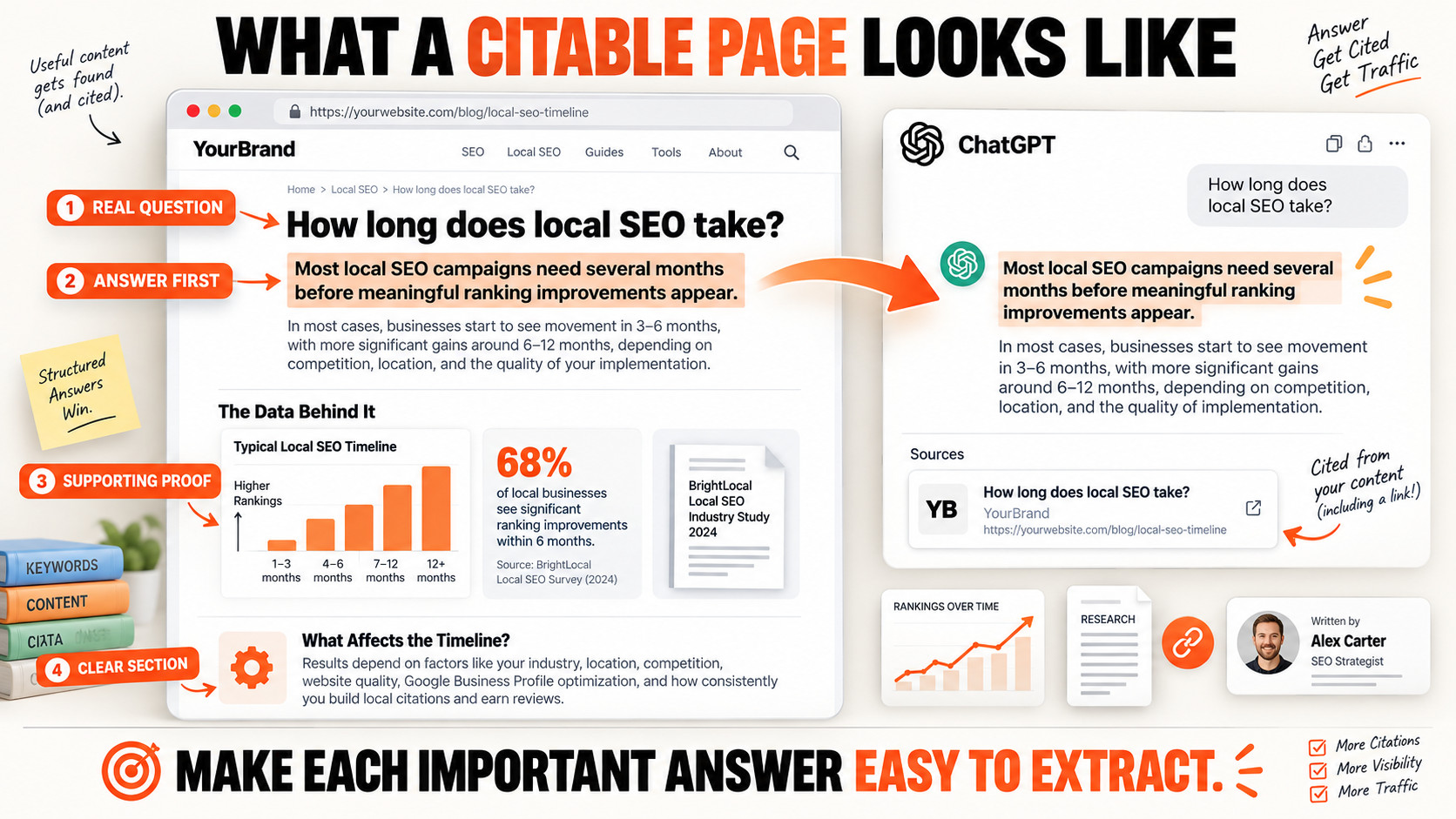
Put those three together and a citable page has a recognisable shape. Before you write, this is the target.
- It answers one clear question. A page built around a single question the model actually gets asked is far easier to cite than a sprawling guide that touches ten.
- The answer is up top and self-contained. The direct answer sits in the opening lines and makes sense on its own, so it survives being pulled out of context.
- It carries specifics only you can state cleanly. Real numbers, named examples, first-hand results. Specificity is what makes one source more quotable than another saying the same vague thing.
- It shows who wrote it. A visible, credible author and clear sourcing lower the risk of the model quoting you.
- It is clean and reachable. Short paragraphs, question-shaped headings, and no technical block stopping the page being crawled and retrieved.
You do not have to judge this by eye. The AEO Readiness Checker scores a page against these signals and rewrites your opening to be more liftable.
How to structure a page ChatGPT will quote
In practice it is a short, repeatable loop you run per page.
- Start from a real question. Write the page around a question a person would actually type or ask, and make that question the title and the opening line. One page, one question.
- Answer it in the first two sentences. Give the direct, self-contained answer immediately, then expand underneath. Lead with the payoff, not the preamble. An on-page analysis catches the basics of structure and readability.
- Break the rest into question-shaped sections. Use headings that match how people ask, so the model can map a query to the exact section that answers it. Add snippet-friendly question and answer pairs with a FAQ.
- Add specifics an AI cannot invent. A number from your own data, a named example, a result you actually saw. This is the single biggest lever on whether you get quoted rather than a competitor.
- Make it reachable and attributable. Confirm the page is crawlable, put a real author on it, and keep the facts consistent with the rest of your site.
How do you check if ChatGPT already cites you?
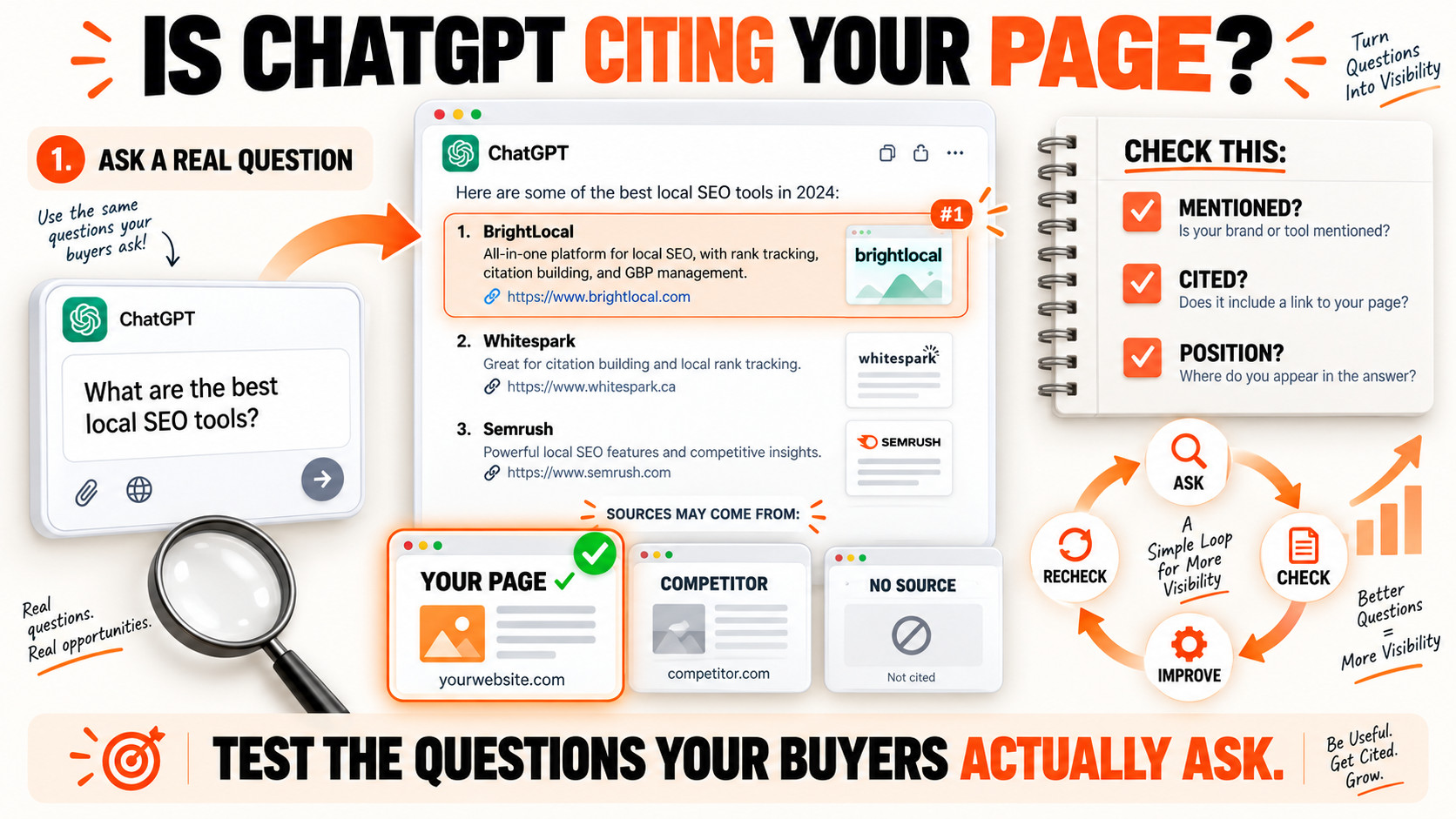
Guessing is the slow way. Run the prompts you care about, the ones a real buyer or reader would ask, and see whether ChatGPT names you, a competitor, or nobody. The AEO Citation Checker does exactly this, so you can see where you already appear and where a competitor owns the answer you should own. Then you close the gap on the pages that matter and re-check, rather than guessing at progress.
How long does it take to get cited?
It is not instant, and it is not a switch you flip. A grounded answer engine has to discover the page, decide it is trustworthy, and then choose it over other sources when the question comes up. Well-structured pages on topics where the current answers are weak tend to get picked up fastest, which is why it pays to start with the questions your competitors answer badly. Track it with a citation check rather than watching rankings, because the citation is the outcome you actually want.
Where to go next
Getting cited by ChatGPT is one move inside a bigger picture. To see which of the AI search strategies will move the needle most for your site, and get a plan, run the AI Search Strategy Scorecard. Every tool mentioned here is free to try, and the full set is on the AEO tools page.
Frequently asked questions
Does ChatGPT actually cite sources?
Yes. When ChatGPT answers using live or search-grounded information it names and links the sources it drew from. Getting your page into that set of named sources is the goal of optimising for it.
Do I need a high-authority domain to get cited by ChatGPT?
No. Domain size helps, but ChatGPT cites the source that answers a specific question most cleanly and credibly, which a single well-built page can do. A focused page on a narrow question often beats a bigger site that answers it vaguely.
Will blocking AI crawlers stop me being cited?
It can. Grounded answers come from content the answer engine can reach. If you block the systems that fetch live pages, you remove yourself from the pool of citable sources, so check that you are not accidentally blocking the fetchers you want to be seen by.
How is getting cited by ChatGPT different from ranking on Google?
Ranking earns you a position in a list of links. Getting cited earns your content a place inside the answer itself, quoted and attributed. The foundations overlap, but you are optimising for being quoted rather than only for being listed.
More in the Answer Engine Optimization Hub.
Intent SEO. Score every post for search intent and whether an AI can actually quote you, right inside the WordPress editor.
See Intent SEO →