Part of the Answer Engine Optimization Hub
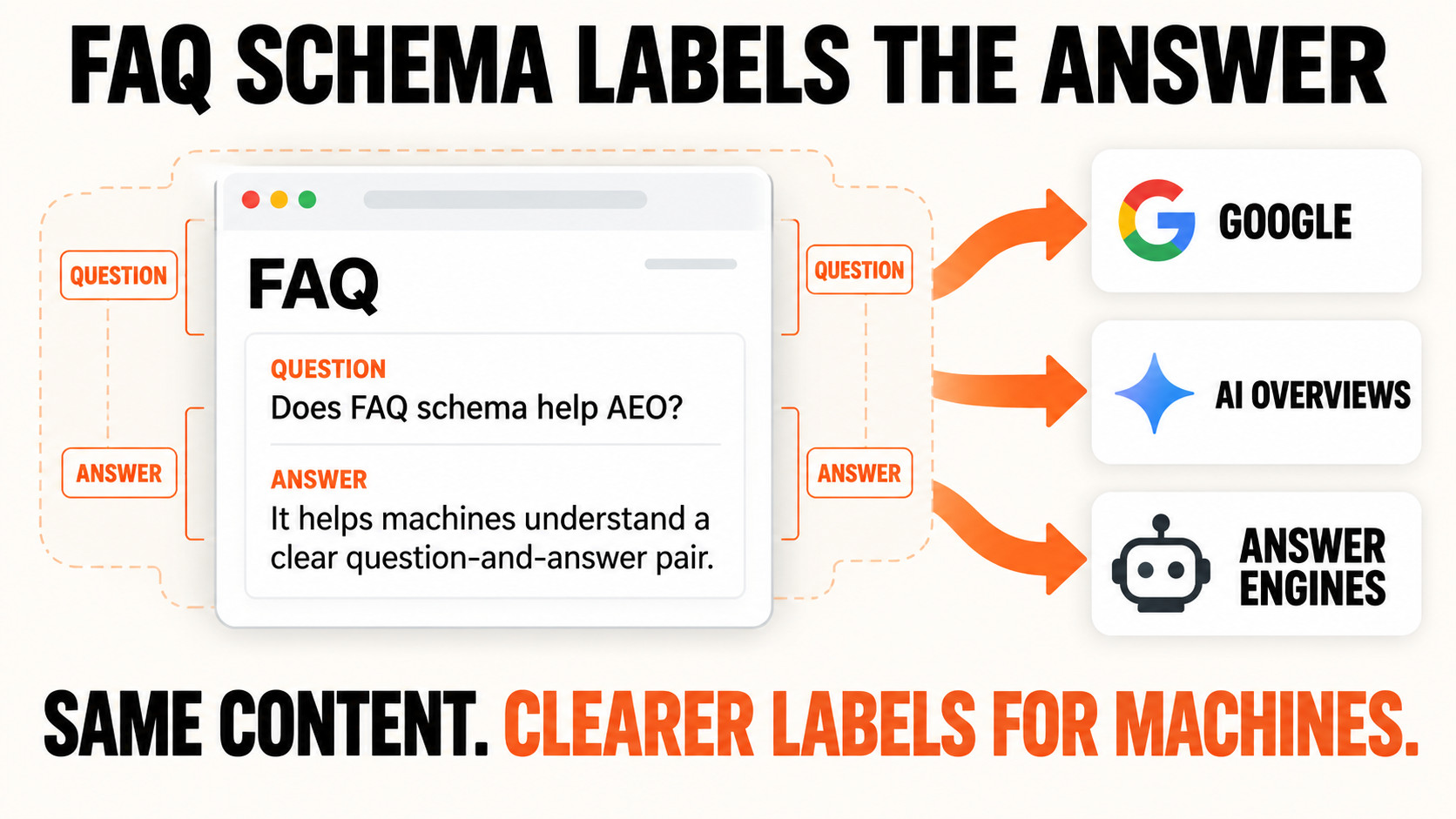
FAQ schema is a piece of structured data that labels a block of questions and answers on your page so machines can read them as distinct question and answer pairs. Google no longer shows FAQ rich results for most sites, so it will not win you stars in the search results. Its real value now is different: it hands answer engines clean, self-contained answer units they can lift and quote, which is exactly what AEO is about.
What is FAQ schema?
FAQ schema is a small block of code, usually JSON-LD, that sits on a page and tells any machine reading it “these are questions, and these are their answers.” It does not change what a human sees. It is a label for the content you already have, written in a format search engines and AI systems understand without guessing.
A minimal version looks like this:
{
  "@context": "https://schema.org",
  "@type": "FAQPage",
  "mainEntity": [{
    "@type": "Question",
    "name": "What is FAQ schema?",
    "acceptedAnswer": {
      "@type": "Answer",
      "text": "FAQ schema is structured data that marks up a set of questions and answers so machines can read them as distinct pairs."
    }
  }]
}
Does FAQ schema still work in 2026?
This is where you need the honest version. Back when it launched, FAQ schema could earn you an expanded rich result in Google, your questions shown as dropdowns right in the listing. In 2023 Google rolled that back to only a small set of authoritative health and government sites. For almost everyone else, adding FAQ schema no longer changes how your listing looks.
So if someone sells you FAQ schema as a way to get rich snippets, they are working from an old playbook. The rich-result era is over for most sites. That does not make the markup worthless. It changes what it is for.
How does FAQ schema help AEO?
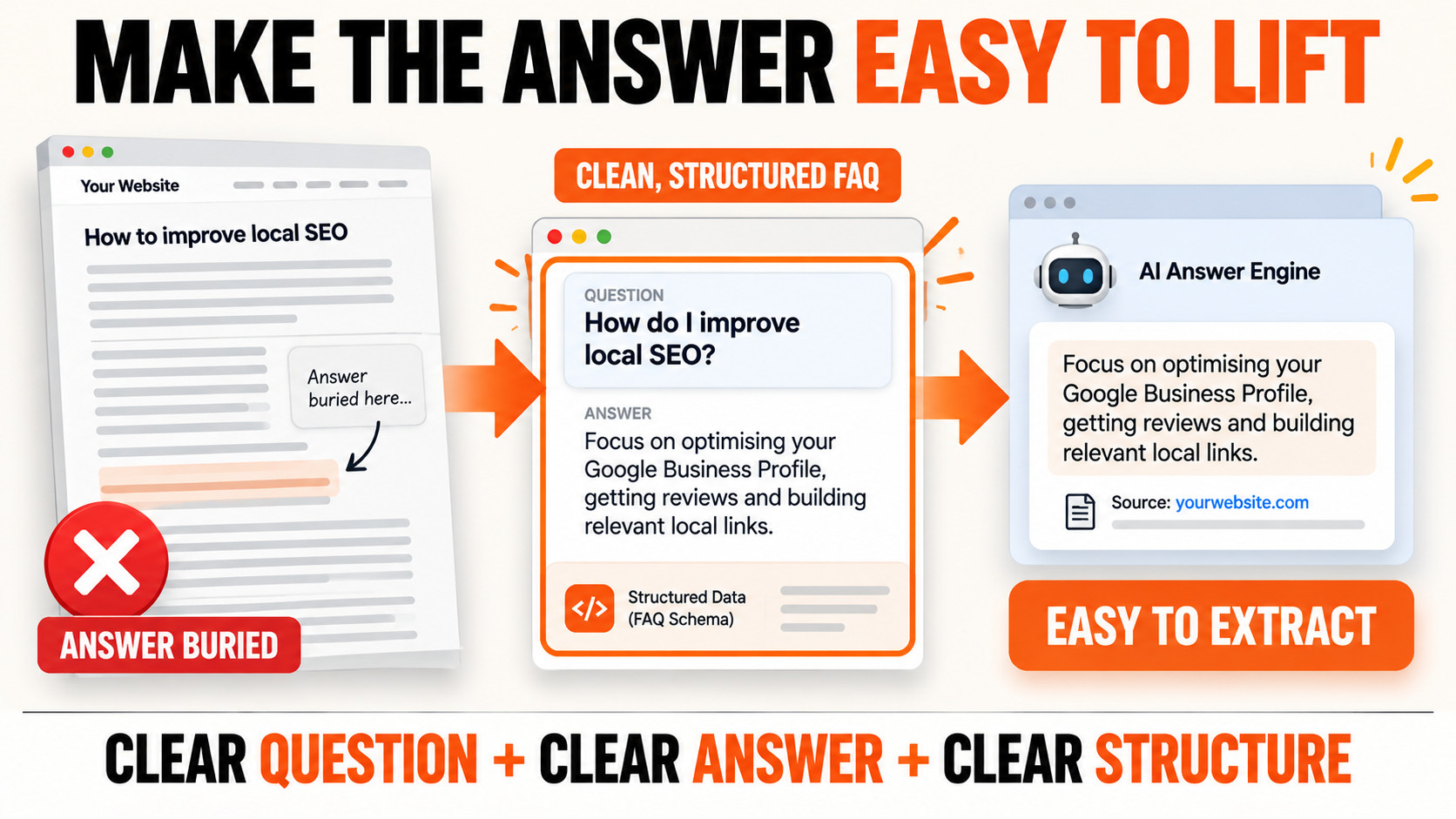
The value moved from the search listing to the answer. Answer engines like ChatGPT, Perplexity and Google AI Overviews are looking for clean, self-contained answers they can lift and attribute. A question and answer pair is already in that shape: a specific question, and a short answer that stands on its own. FAQ schema makes those pairs explicit and machine-readable, which is a small nudge toward being the source that gets quoted.
It is not a magic bullet, and it will not make thin content quotable. In my own ranking of AI search strategies schema sits in the lower tier for exactly this reason: useful, worth doing once, but wildly oversold. The right move is to add it where it fits, get it right, and spend your real effort on the things that actually decide citations.
How do you add FAQ schema to a page?
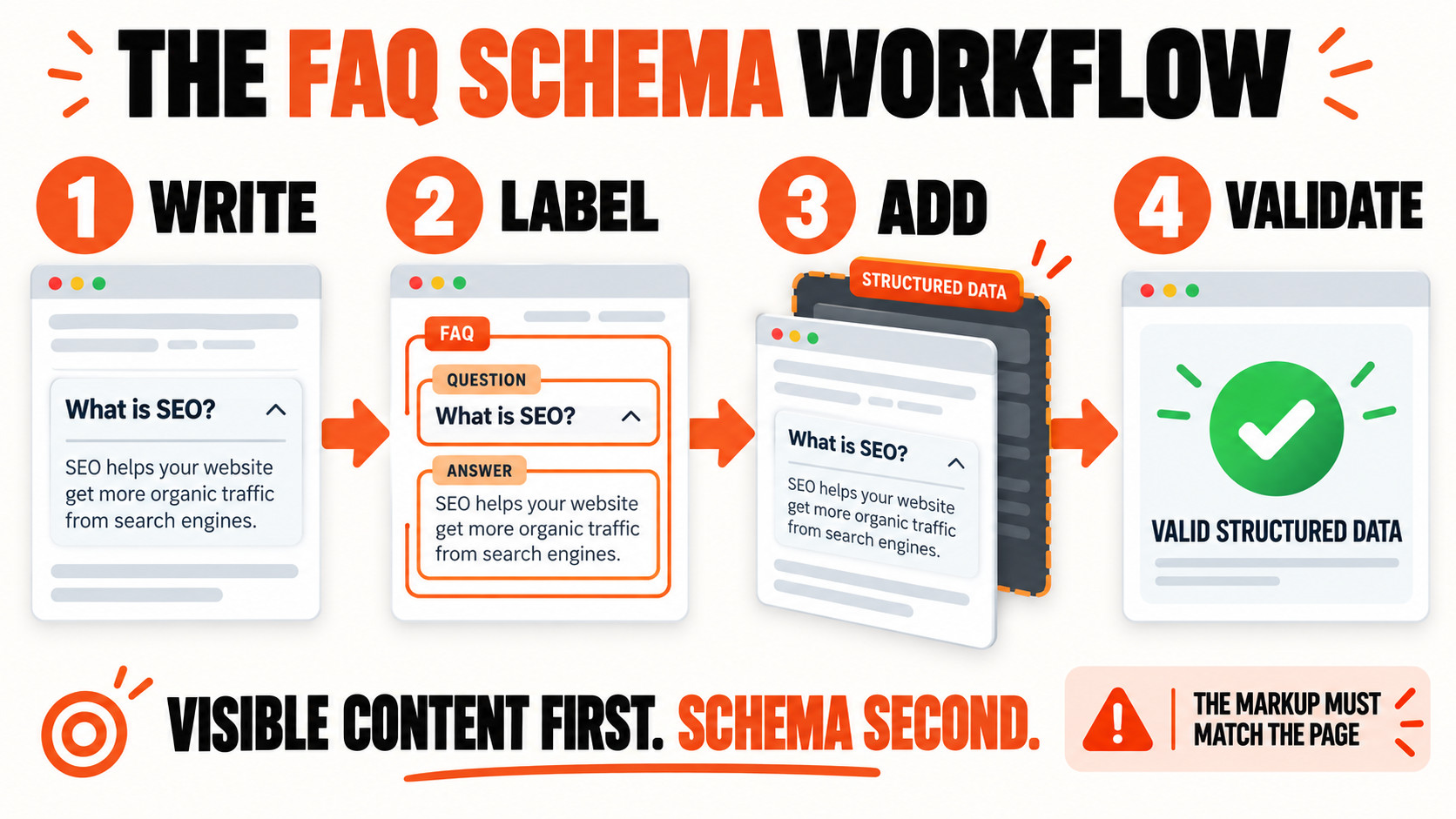
You do not need to hand-write the code. The reliable loop is short.
- Write real questions and answers first. Use questions people actually ask, with answers that make sense on their own. The markup only labels good content, it does not create it.
- Generate the JSON-LD. The free FAQ Builder turns your questions and answers into valid FAQ schema you can paste straight onto the page, no coding.
- Place it on the page. Add the JSON-LD to the page that shows the same questions and answers to readers. The markup and the visible content must match.
- Validate it. Run the page through a schema validator to confirm the structured data is read without errors.
Common FAQ schema mistakes to avoid
Most of the problems come from treating the markup as a trick rather than a label.
- Marking up questions that are not on the page. The schema must describe content a reader can actually see. Hidden or invented questions break the rule.
- Stuffing keywords into the questions. Write them the way a person asks. Awkward keyword-shaped questions read badly to humans and machines alike.
- Expecting rich results. For most sites those are gone. Add the schema for its AEO value, not for stars in the listing.
- Adding it to every page reflexively. Use it where a genuine question and answer set exists, not as a blanket that dilutes the signal.
Where to go next
FAQ schema is one small, cheap win inside a much bigger picture. To see the strategies that actually move your AI visibility, and get a plan for them, run the AI Search Strategy Scorecard. To make the surrounding content quotable, work through the AEO content checklist. Every tool here is free to try, and the full set is on the AEO tools page.
Frequently asked questions
Is FAQ schema worth adding in 2026?
Yes, but for the right reason. It no longer earns rich results for most sites, so add it for its AEO value: it gives answer engines clean question and answer pairs to lift. Get it right once and move on, rather than treating it as a ranking lever.
What is the difference between FAQ schema and an FAQ section?
An FAQ section is the visible questions and answers a reader sees. FAQ schema is the invisible code that labels them for machines. You want both: real questions on the page, and the markup describing them.
Can FAQ schema hurt my site?
Only if you misuse it, for example marking up questions that are not visible on the page or stuffing them with keywords. Used honestly to label a real FAQ, it is safe and low-effort.
How do I generate FAQ schema without coding?
Use a generator. The free FAQ Builder takes your questions and answers and outputs valid JSON-LD you paste onto the page, so you never touch the code by hand.
More in the Answer Engine Optimization Hub.
Intent SEO. Score every post for search intent and whether an AI can actually quote you, right inside the WordPress editor.
See Intent SEO →