Keyword Research › Keyword Research Fundamentals
SEO and Ads
Build one keyword plan for organic pages and paid campaigns by matching each search phrase to its intent and destination. The key is to decide what job the phrase needs to do before you choose a page or ad.
One search phrase can lead to 2 different jobs: an organic page that answers the query and a paid campaign that puts an offer in front of the searcher.
Keyword research for SEO and online advertising helps you decide which phrases fit each job. Match a phrase to what the searcher wants, then choose the right destination: an organic page, a paid campaign, or both.
Here’s the plan we’ll follow:
- Set the audience, offer, and goal before collecting phrases.
- Find keyword ideas in the language people use when they search.
- Group phrases by intent and match them to a destination.
- Adapt the map for SEO pages and paid campaigns.
- Review results and update the plan as you learn.
I’m Tony Hayes. I’ve been building marketing software since 2011, and today I build everything with AI, without writing code myself. I’m the creator of NicheBlasta, JV Swaps, and the Aha Studio AI workers.
Let’s build a map that gives every phrase a clear job.
The keyword research plan
| Step | What you do |
|---|---|
| 1 | Set the audience, offer, and goal |
| 2 | Find ideas from real searches |
| 3 | Group keywords by intent and destination |
| 4 | Adapt the plan for SEO and paid campaigns |
| 5 | Review results and update the map |
Find this useful? Add us as a preferred source on Google and more of what we publish will show up in your results.
Step 1: Set the audience, offer, and goal
Start with what the business provides: a product, a service, or information. Then write down what the audience needs and the questions they’re likely to search on Google.
That gives your research a clear direction. You’re looking for phrases that connect what you offer with what people want to know or do.
Set a goal for each kind of visit.
An organic page might explain a topic and help it rank in search. A paid campaign might generate a lead or promote a specific offer. Both need a clear goal before you use a research tool or other tools to find suitable phrases.
The same phrase can fit both plans, but the page and campaign may need different content. For example, an information page should answer the searcher’s question, while an ad should lead to a destination that supports the offer.
When we understand the audience, offer, and goal, we can judge each phrase by the visit it could bring. That keeps the research tied to useful pages and campaigns, rather than a list of searches with no clear purpose.
For broader foundational advice, read my practical guide to SEO and keyword research. It covers the groundwork behind choosing phrases and planning content.
Step 2: Find keyword ideas from real searches
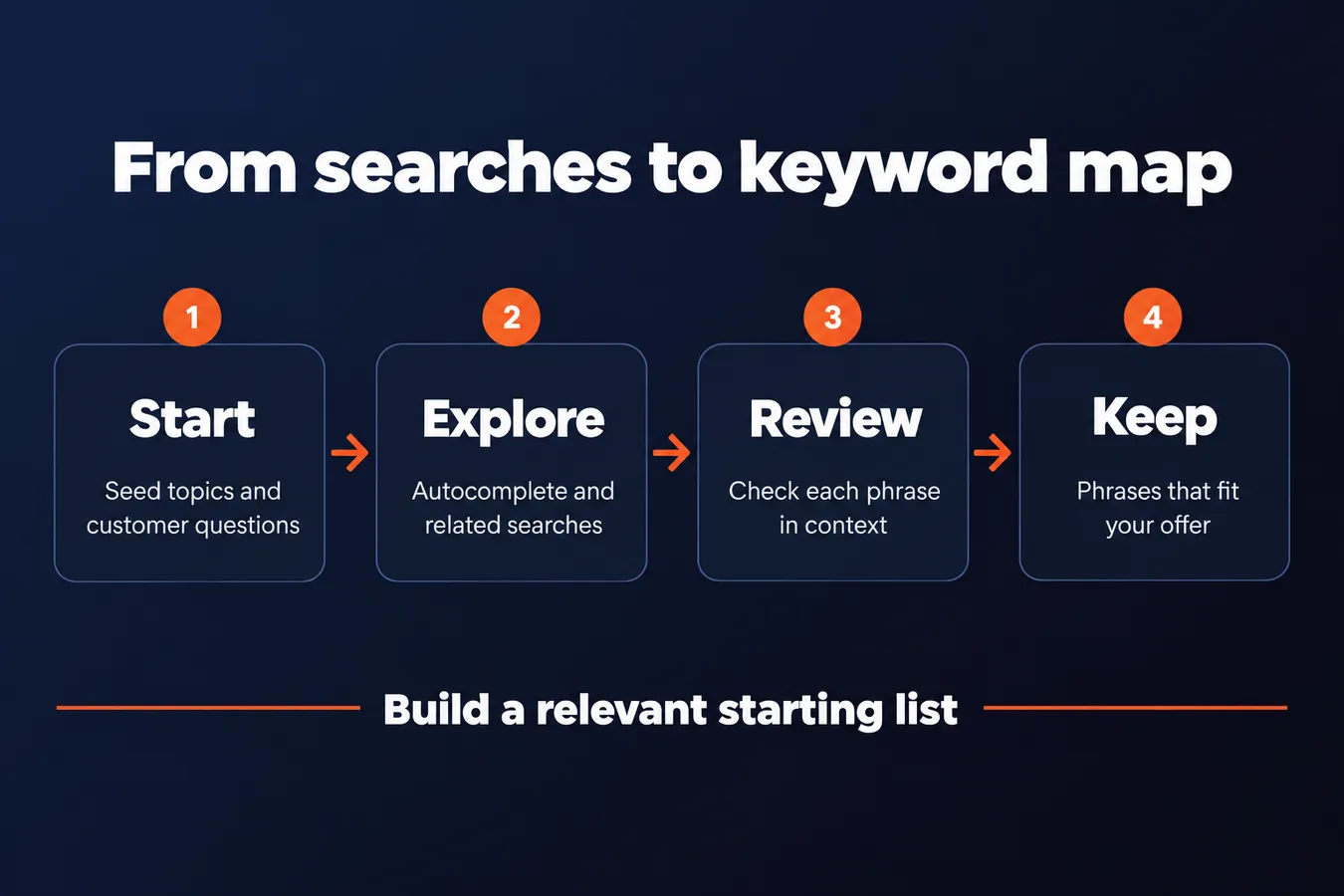
Start with seed topics from your offer. Add the questions customers ask and the words they use to describe what they need. Then review your existing pages. Their headings and copy often show how you already talk about the work.
Your first list should sound like your customers.
Now use Google autocomplete and related searches to find variations people search for. A research tool can suggest more ideas, including questions and long-tail phrases. Long-tail phrases are more specific, which makes them useful when matching a search to a particular destination or campaign.
I use tools to widen the list, then read each phrase in context. A phrase can look relevant on its own and still describe a different need.
Google Keyword Planner is useful for campaign ideas. It also shows available bid estimates, which provide a planning input for paid advertising. Use those figures as estimates when planning campaign costs and delivery.
Keep the phrases that fit your audience and your offer.
As you review the list, ask what the person searching wants and whether your offer answers that need. Keep phrases that belong on a page or in an ad campaign. Remove those that point to a different product, audience, or problem.
The goal is a relevant starting list for both SEO and online advertising. From there, decide which phrases suit organic content and which belong in paid campaigns.
Step 3: Group keywords by intent and destination
Group keywords by the task behind the search.
People searching for a topic may want to learn, compare options, or take action. Keep close variations together when they serve the same task, then give each group one clear destination.
A research tool can help you find related phrases. Use it to organize your research, then check what the searches mean before deciding where each phrase belongs.
For a group about learning, the right destination may be an existing guide or a new SEO page. For searches about hiring or buying, use a service page, product page, or paid campaign landing page that answers that need.
One group, one suitable page.
Before you choose, search the phrase in Google and review the current results. If the results favor guides, a guide probably fits. If they show service or product pages, that tells you what people expect to find.
Then review the destination itself. Does it answer the searcher's task clearly? If the phrases point to different needs, split the group and choose a destination for each.
I use this step to keep SEO content and paid campaigns tied to the same intent, while giving each group a destination that fits how people search.
For more detail on reviewing and organizing SEO terms, read my separate guide to [keyword research and SEO analysis].
Step 4: Adapt the plan for SEO pages and paid campaigns
Each group needs a clear job. Decide whether it belongs on an SEO page, in a paid search campaign, or in both.
The intent behind the keyword sets the plan.
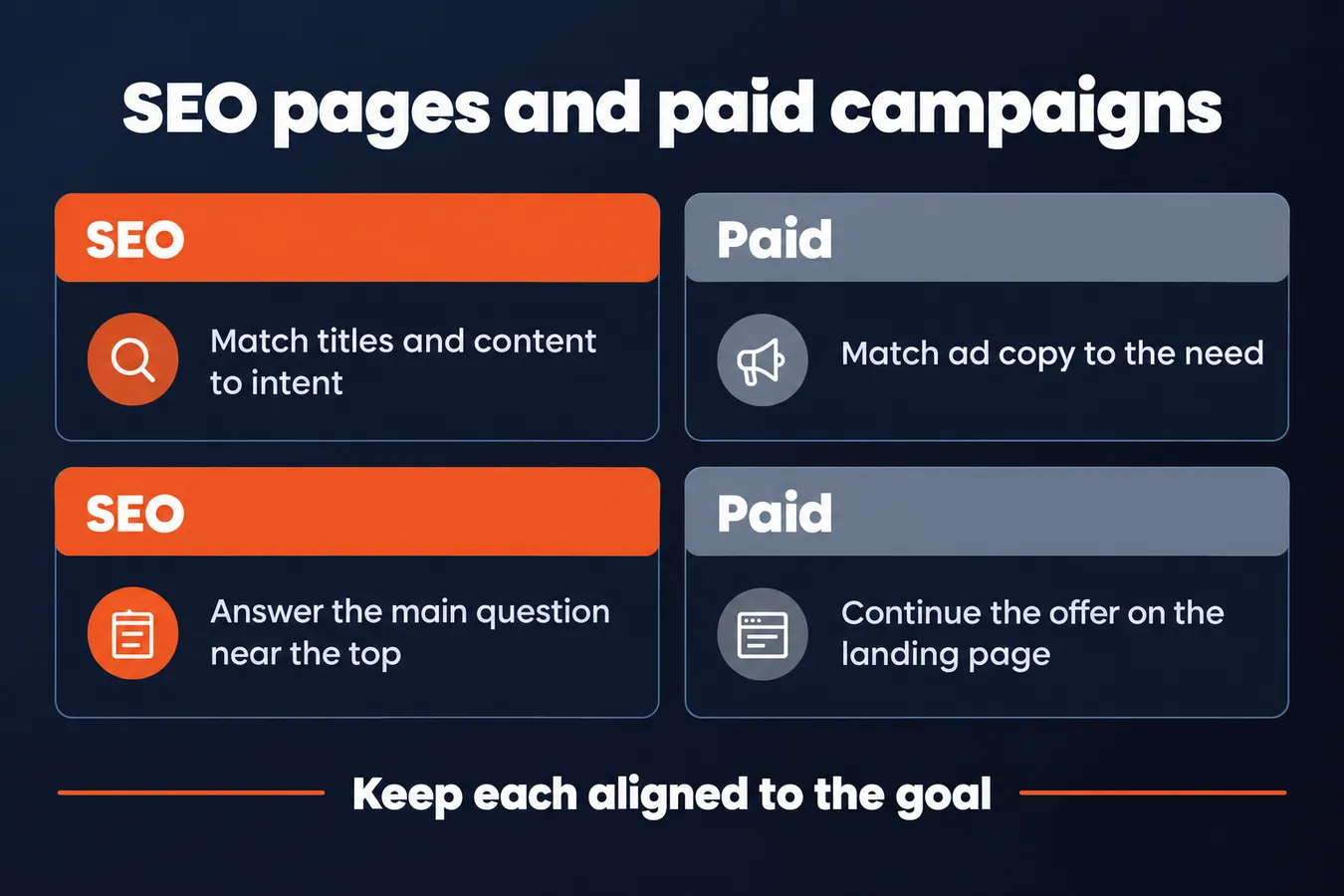
For SEO, match the title, headings, and content to what people want when they search. Put the answer to the main question near the top, then provide the details they need to act. A research tool can help you find related searches, but you still need to understand what the searcher expects from the page.
For paid search, connect each group to ad copy that speaks to the same need. The landing page should continue the offer or message in the ad. If your ad promises information about a service, send people to a page about that service.
Campaign settings and negative keywords help limit searches that don’t fit your offer. Review the search terms that trigger your ads, then add relevant phrases or exclusions and adjust the campaign. Research keeps informing the plan after setup.
Keep the keyword, ad, and landing page pointed at the same goal.
When campaign setup needs specialist help, bring in a Google Ads expert or another qualified campaign partner. Be clear about the account they’ll work in, the campaign goal, and the landing page you want to promote.
Step 5: Review results and update the keyword map
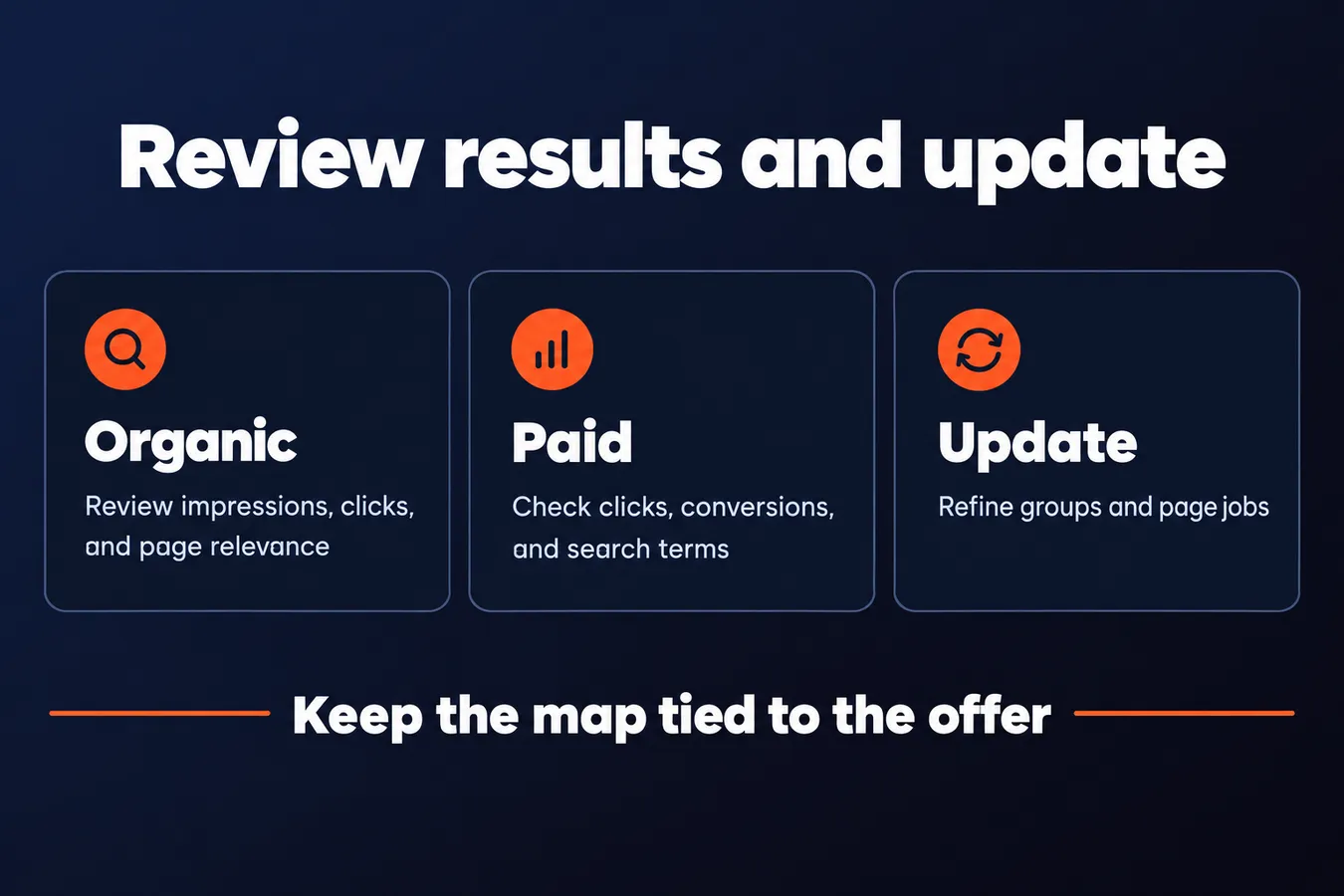
Review organic impressions and clicks alongside the page itself. Are the phrases bringing people to a page that answers their search? A click is useful, but relevance matters too. If the page ranks for a query it barely addresses, update the content or adjust the group.
Paid search gives you another view. Check clicks, conversions, and the search terms people actually used. Those queries can reveal useful wording or questions that your original research missed.
Use paid search terms to find content ideas, then check whether they deserve a page.
A search term with clicks or conversions can point to a question worth answering in SEO content. Check the intent before adding it to the map. If people want a quick answer, a focused section on an existing page may fit better than a new one.
Keep the map tied to the offer and audience. When either changes, review the groups and the job each page is meant to do. Search intent shifts too, so a page built for one kind of search may need different content as the query changes.
Give each page one clear job.
If 2 pages target the same phrases and answer the same need, combine or refocus them. That keeps your content organized around what people search for and gives you a clearer picture of which page should rank.
When you’re ready to research a new topic, use the [keyword research checklist for a new topic] to prepare your next brief. It gives you a repeatable way to find and group phrases before you build the next page or campaign.
Frequently asked questions
How do you research keywords for both SEO and online advertising?
Start with your audience, offer, and goal. Collect phrases from customer questions, existing pages, Google autocomplete, related searches, and a keyword research tool. Group phrases by intent, then assign each group a suitable page, SEO role, paid campaign role, or both. Review results and update the map as you learn.
How do you decide whether a keyword belongs on an SEO page or in a paid campaign?
Look at the task behind the search and the results Google shows. Searches for learning may fit a guide, while searches about hiring or buying may fit a service or product page and a paid campaign. Match the destination to what the searcher expects, then keep the keyword, ad, and landing page aligned.
How can paid search terms help with SEO keyword research?
Review the search terms that trigger your ads. They can reveal wording or questions your original research missed. Check each term's intent before adding it to your keyword map. A focused section on an existing page may answer the query better than creating a new page.
What should you do when 2 SEO pages target the same keywords?
Check whether both pages answer the same search need. If they do, combine them or refocus each page around a distinct task. That gives each page a clear job and makes it easier to see which destination should rank for the keyword group.
My Take: That work has made me focus on one practical question: where should each search phrase send a person? My view is that keyword research gets useful when every phrase has a job. A phrase might belong on an SEO page, in a paid campaign, or in both, but the destination has to fit the searcher's intent. I’d rather have a clear map connecting the keyword, page, and campaign goal than a long list of terms with no plan for what to do with them. That keeps the research tied to the work you’re building.
Aha Studio
Get the next playbook first
New playbooks and LaunchWatch reports land in Growth Signals, the free newsletter, along with the case studies and how-tos I find worth stealing.