New from Anthony Hayes: Aha Studio
Get found by the people searching for what you sell.
Search · 1 September 2026
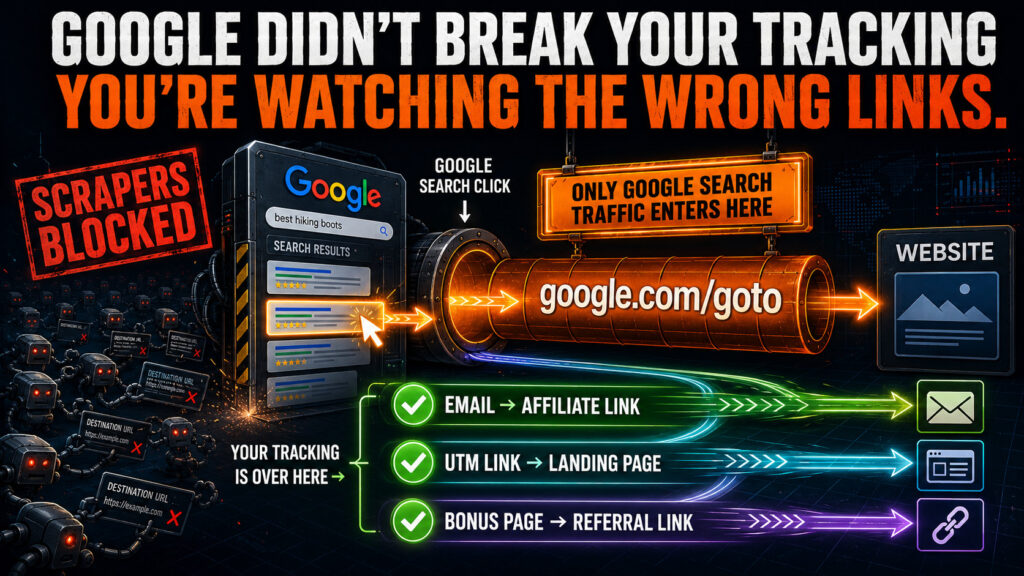
Someone in my WhatsApp group asked a good question this week. If Google is adding tracking to its search results, what happens to tools that depend on URL tracking? The change is real. The worry is pointed at the wrong thing.
Here is what set it off. Google has started sending search result clicks through a redirect at google.com/goto, and the way that got summarised online was “Google is adding tracking parameters to search results”. Read quickly, that sounds like it lands on affiliate links, UTMs and every tracking tool you own. It does not. It is an anti-scraping measure, and the people it actually costs are the ones harvesting search results by machine.
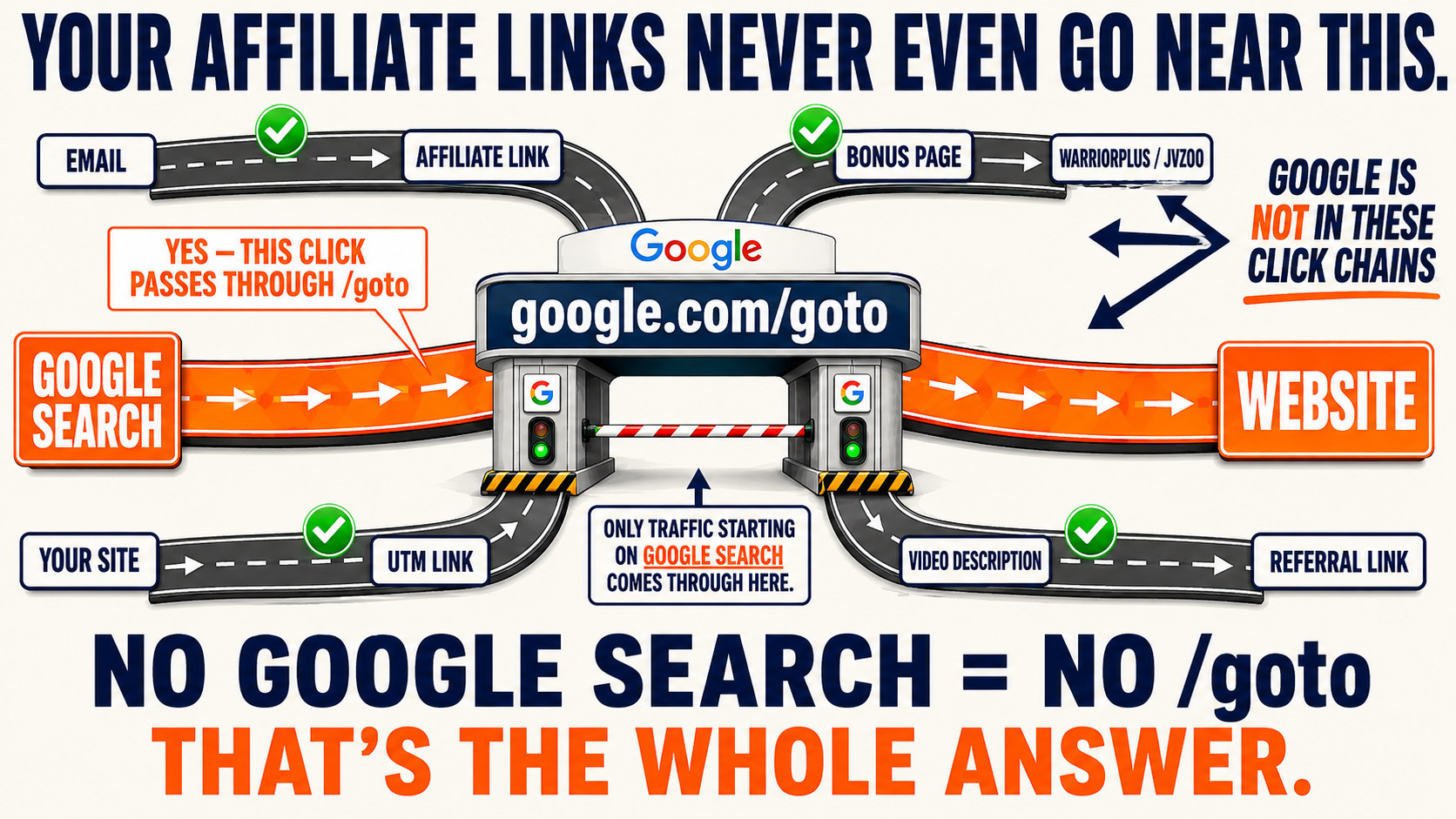
Does the google.com/goto redirect affect your affiliate links or your UTM tracking? No. The google.com/goto redirect only sits in the path of a click that begins on a Google search results page. An affiliate link in an email, a UTM tagged link on your own site, a referral link in a video description or on a bonus page never travels through a Google search result, so the redirect is never in that chain. The change is aimed at scrapers and SERP APIs that read Google’s results programmatically, not at marketers tracking their own traffic.
This is a moving story, so it gets a date. Everything below is accurate as of 1 September 2026. If the picture changes I will update the post and say what changed.
Find this useful? Add us as a preferred source on Google and more of what we publish will show up in your results.
What Google actually changed
Instead of linking straight to a destination, Google now routes search result clicks through a passthrough URL on google.com/goto. It is a server side redirect. You click, Google’s server decides where you go, and then you land on the page.
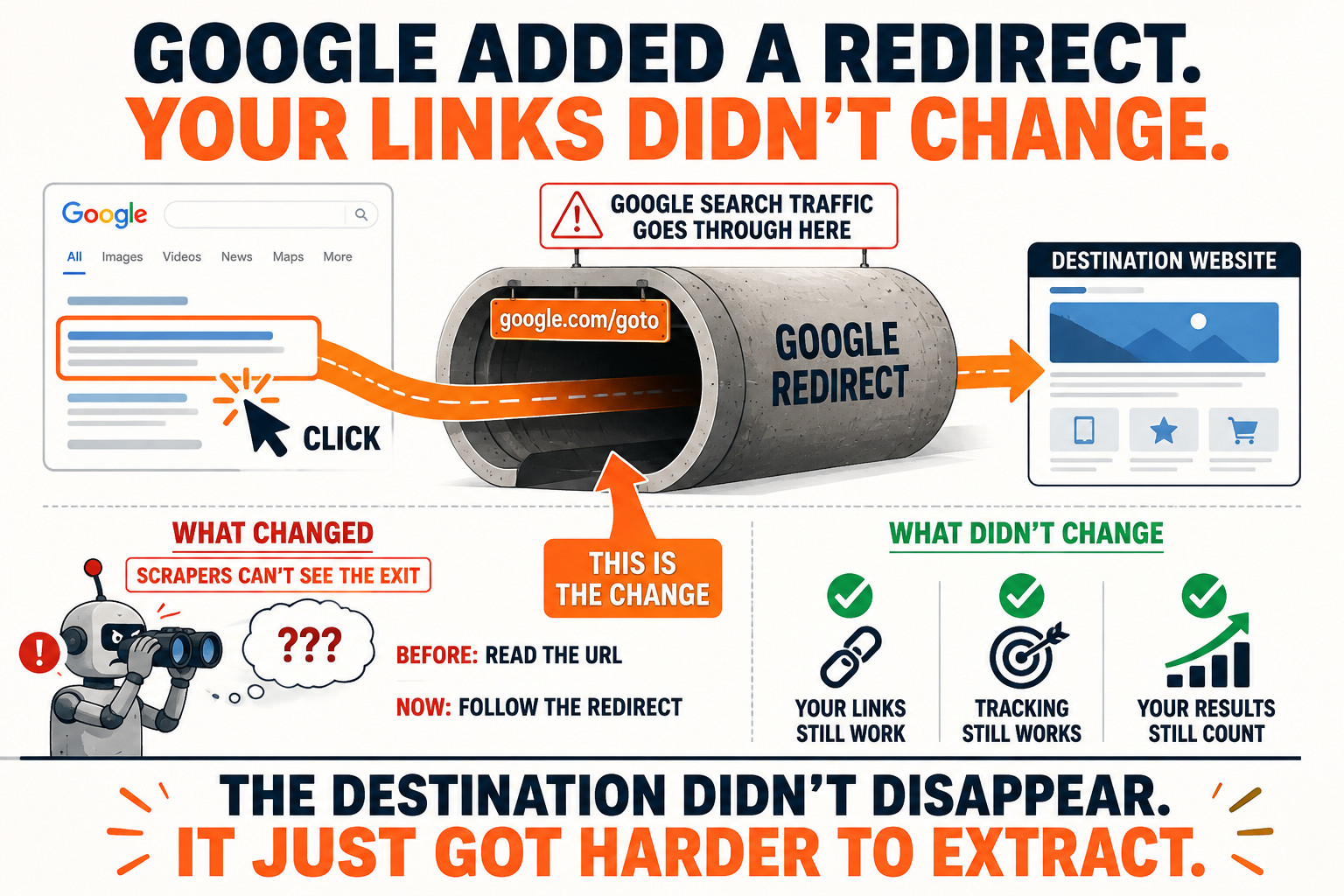
One detail explains the entire move. As Derek Perkins of Nozzle put it, “The goto links can’t be decoded, so providers will have to follow the redirect links.” A scraper can no longer look at the link and read the destination out of it. It has to actually follow the redirect, one result at a time, to find out where anything points.
Google confirmed the rollout, but only in the broadest possible terms. The statement was: “We have a long history of deploying technical measures against evolving forms of abuse, and we regularly take steps to protect our services and users.” That confirms something is being done. It does not describe what, and I am not going to read more into it than it says.
On scale, Perkins reported nearly a 100% rollout across several residential IP providers. That is one practitioner measuring across his own infrastructure, reported by Barry Schwartz at Search Engine Roundtable on 26 August 2026. It is not a number Google published. Treat it as a strong signal from someone with good visibility, not as an official figure.
Why your affiliate links and UTMs are not touched
The reassurance is easy. The reason is the part worth keeping, because the reason is what tells you how to think about the next change like this one.
A redirect can only affect a click that passes through it. This redirect lives inside the Google search results page. It gets involved at the moment somebody clicks a result in Google, and at no other moment.
Now look at where your tracked clicks actually start:
- Affiliate links on JVZoo, WarriorPlus or Zaxaa. The click comes from your email, your bonus page, your review post or your profile, and goes to the network’s own tracking domain. Google is not in that chain.
- UTM parameters on your own links. You put them there. They sit on your URL and travel with the click from wherever you placed it.
- Email to landing page. That click starts in an inbox.
- Referral links anywhere you have placed them by hand.
Not one of those begins on a Google search results page, so not one of them meets the redirect. That is the whole answer. It is not that Google decided to spare affiliate marketers. It is that those clicks were never being routed through Google to begin with.
What it does affect: scrapers, rank trackers and SERP APIs
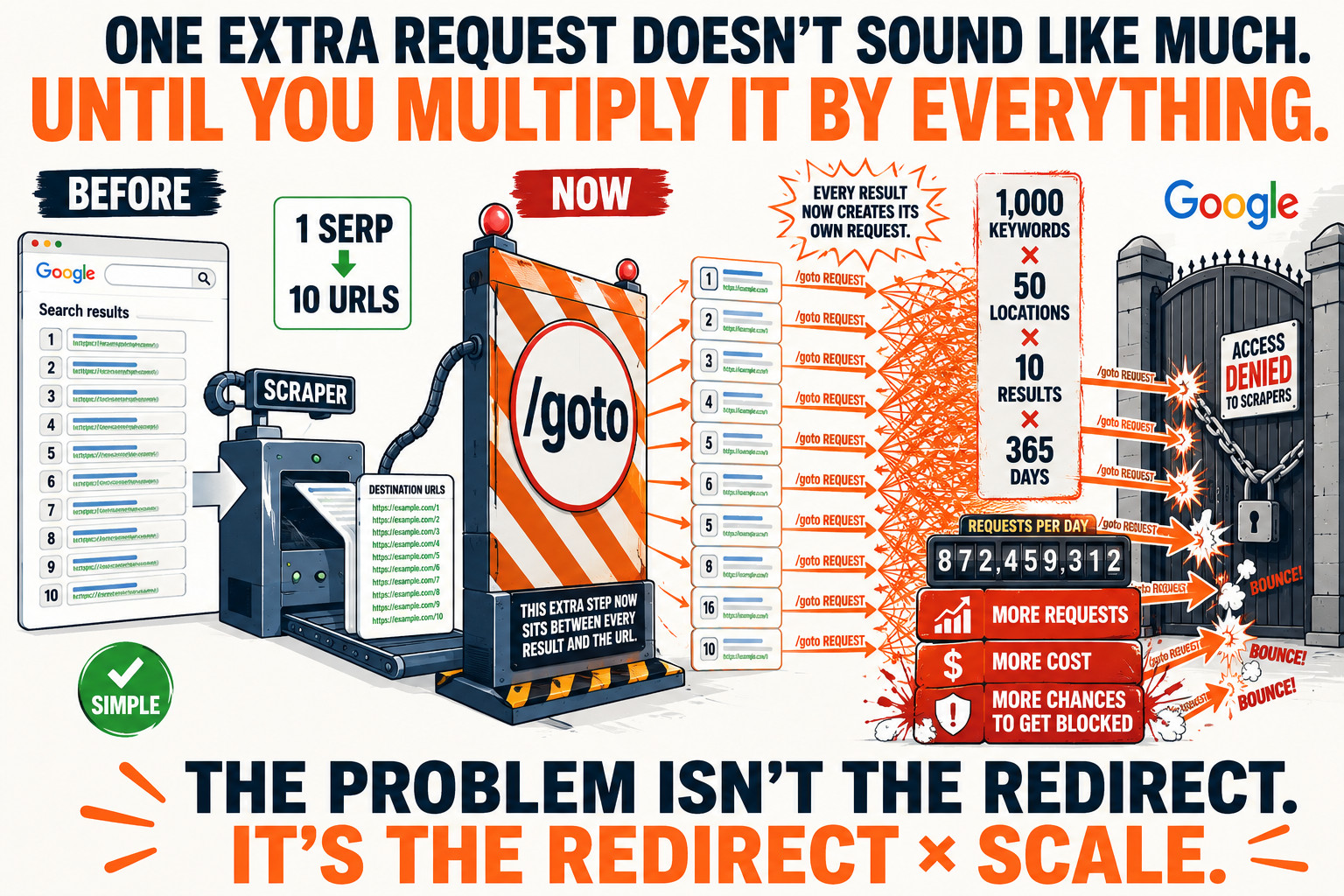
The cost lands on anything that reads Google’s results by machine. SERP scrapers, rank trackers and SERP APIs all work by pulling a results page and taking the destination URLs out of it.
That step just got much more expensive. Following a redirect means an extra request for every single result, which is slower, costs more, and hands Google far more opportunities to block the request. Multiply that by every keyword, every location and every day of tracking, and you can see the shape of it.
The reported targets are SerpApi, AI companies and third party scraping tools. Google has also taken SerpApi to court, according to the same report, so the redirect reads as the engineering half of a fight the company is running through lawyers at the same time.
What this means for you
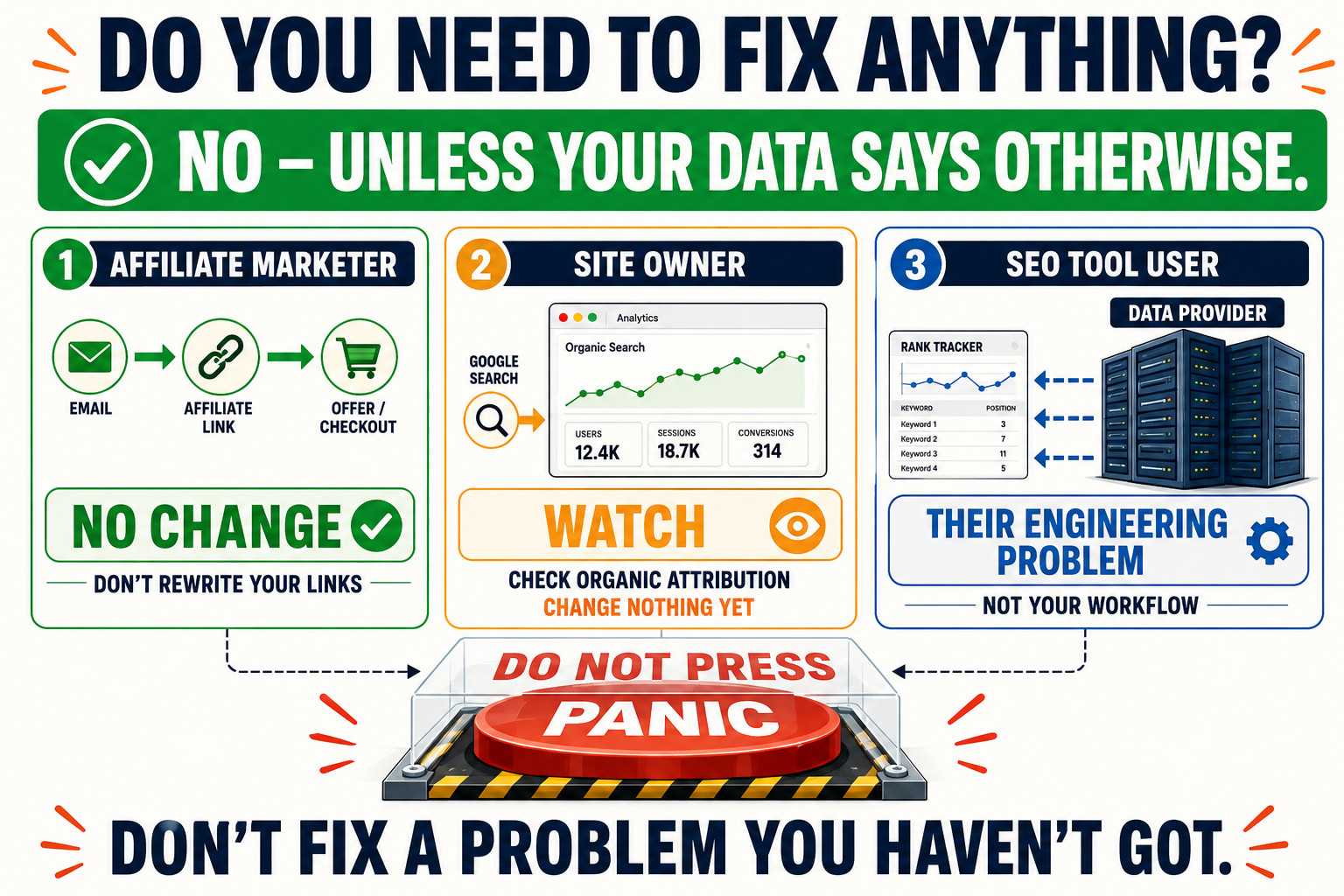
If you are an affiliate marketer, nothing changes. No link to rewrite, no tracking to rebuild, no setting to check. If you saw the headline and started auditing your links, you can stop.
If you own a site, note the date and watch your own numbers. There is one genuinely open question here, which I cover in the next section, and it is not resolved yet. Watching is the correct response. Changing your setup because of a redirect you have not seen affect anything is not.
If you use SEO tools, your data provider absorbs this, not you. The work of following redirects at scale is their engineering problem and their hosting bill. It may show up eventually as pricing or as slower refresh rates on rank tracking. Your own keyword research and intent work carries on exactly as before, which is the part I would rather people spent their time on anyway. That is the thinking behind KeywordIntent, and behind the content framework I built tools for.
The part nobody knows yet
Here is what I do not know, stated plainly, because a post correcting a misconception has no business starting a new one.
The report does not say what referrer the redirect passes. So I cannot tell you whether Google organic traffic will keep identifying itself in your analytics exactly the way it does today, and I am not going to guess. Anyone confidently telling you that attribution is about to break, and anyone confidently telling you it definitely will not, is going further than what has actually been reported.
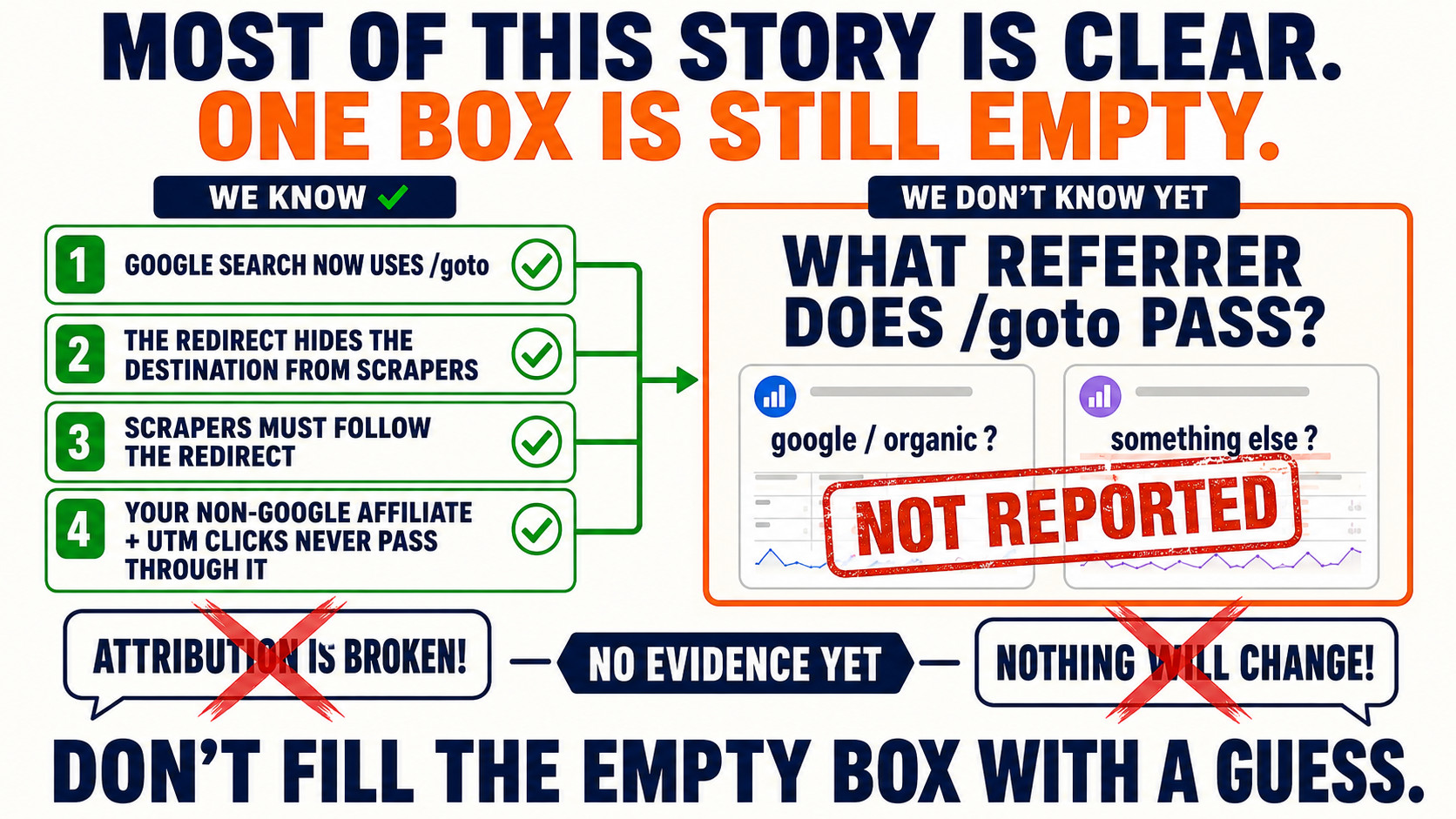
What I am watching for is simple. Either a clear statement about referrer behaviour, or credible first hand reports of organic traffic showing up differently in analytics. If either arrives, this post gets updated with the date on it.
It is worth putting this next to the other direction Google has moved in recently. It has also given readers a way to choose the sources they want to see more of. One change makes the results harder for machines to harvest. The other makes it easier for a human to pick you on purpose. Those two point the same way, and I ranked what that means for strategy in the AI search tier list.
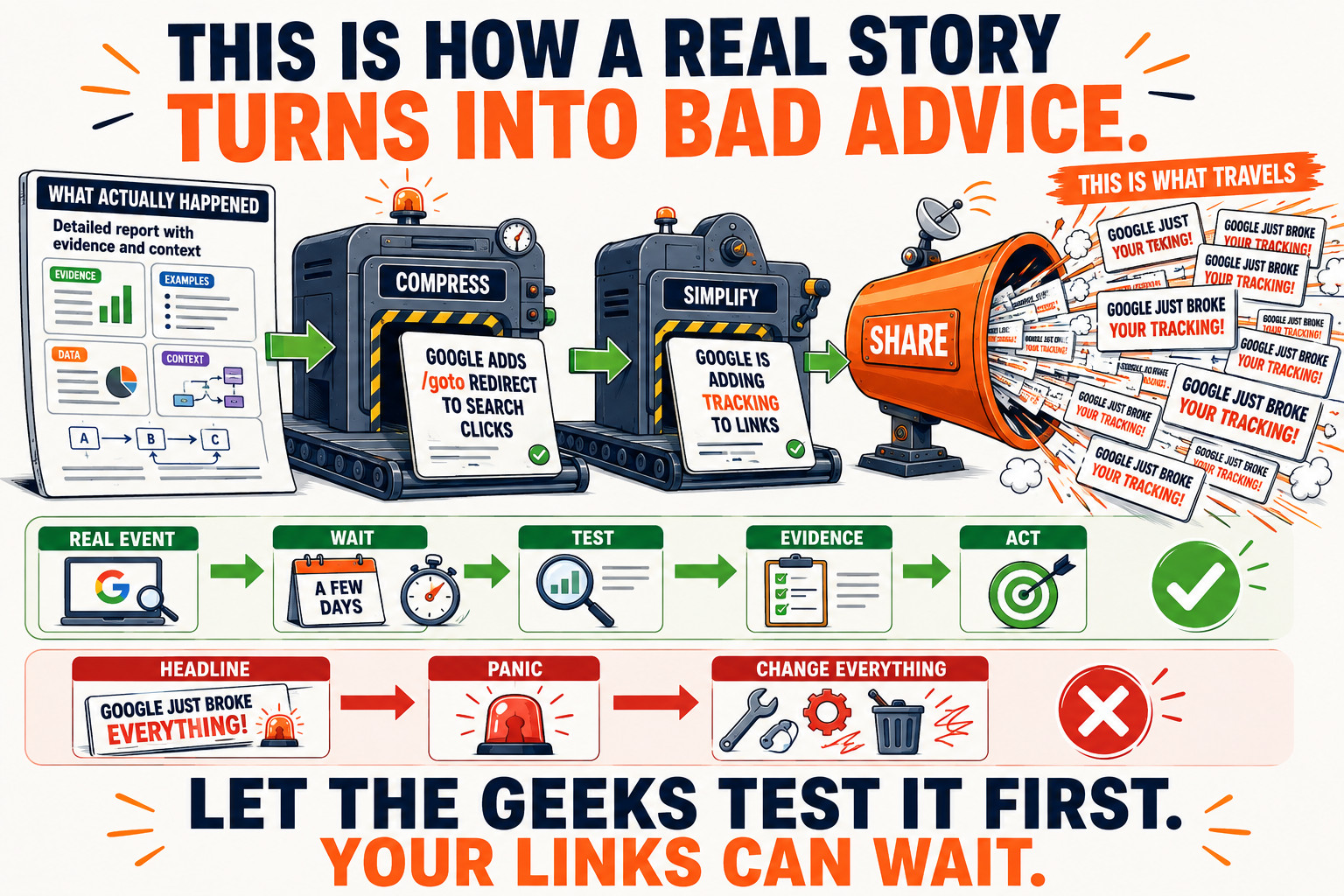
My Take: This is the second time in two weeks that a real story has been read wrong before anyone checked it. The first was Anthropic’s text watermarking, where the line going round was that Google would detect the watermark and demote you for it. Only Anthropic can detect that watermark, so that was never mechanically possible. Now it is this one. The pattern is identical both times. Something genuine happens, somebody compresses it into a single sentence, and the sentence is what travels. Here is what I posted in my WhatsApp group when the watermark story broke, and I stand by every word of it: “This is exactly the type of thing i expect the geeks will test and post about their findings. Lets wait for them. They love this sort of stuff and the attention it brings on them. Plenty of them too, so they’ll all be trying to move fast and out-do each other, which is good for us :)” That is not me being cynical, it is a strategy. There are people who will cheerfully spend a weekend running the test properly, because being first with the real answer is worth something to them. Waiting a few days for that costs you nothing. Rewriting all your links on day one because of a headline costs you a day you never get back.
Free tool
Are AI answers citing you, or reading straight past you?
If the web is getting harder for machines to scrape, being the source they quote matters more, not less. The AEO Citation Checker tells you whether AI answers are naming you on the questions you care about.