New from Anthony Hayes: Aha Studio
Get found by the people searching for what you sell.
Build in Public · #13
This week a framework has been going round the SEO world about which content is still worth making now that AI answers most questions for you. It is a good framework. I read it and realised I had quietly built a tool for almost every box on it, some of them months ago. So here is the map.
The framework is Aleyda Solis’s content prioritisation model for AI search. If you do SEO and you have not read it, go and read it, it is genuinely one of the clearest things written on this all year. Credit where it is due, the thinking is hers.
What follows is not a summary of her work. It is what happened when I held it up against the tools sitting in my own folders and found they lined up box for box. I am writing this partly because it is a useful map for anyone doing this work, and partly because it is the clearest evidence I have that I have been building toward the right target rather than just building.
Find this useful? Add us as a preferred source on Google and more of what we publish will show up in your results.
The framework everyone started sharing
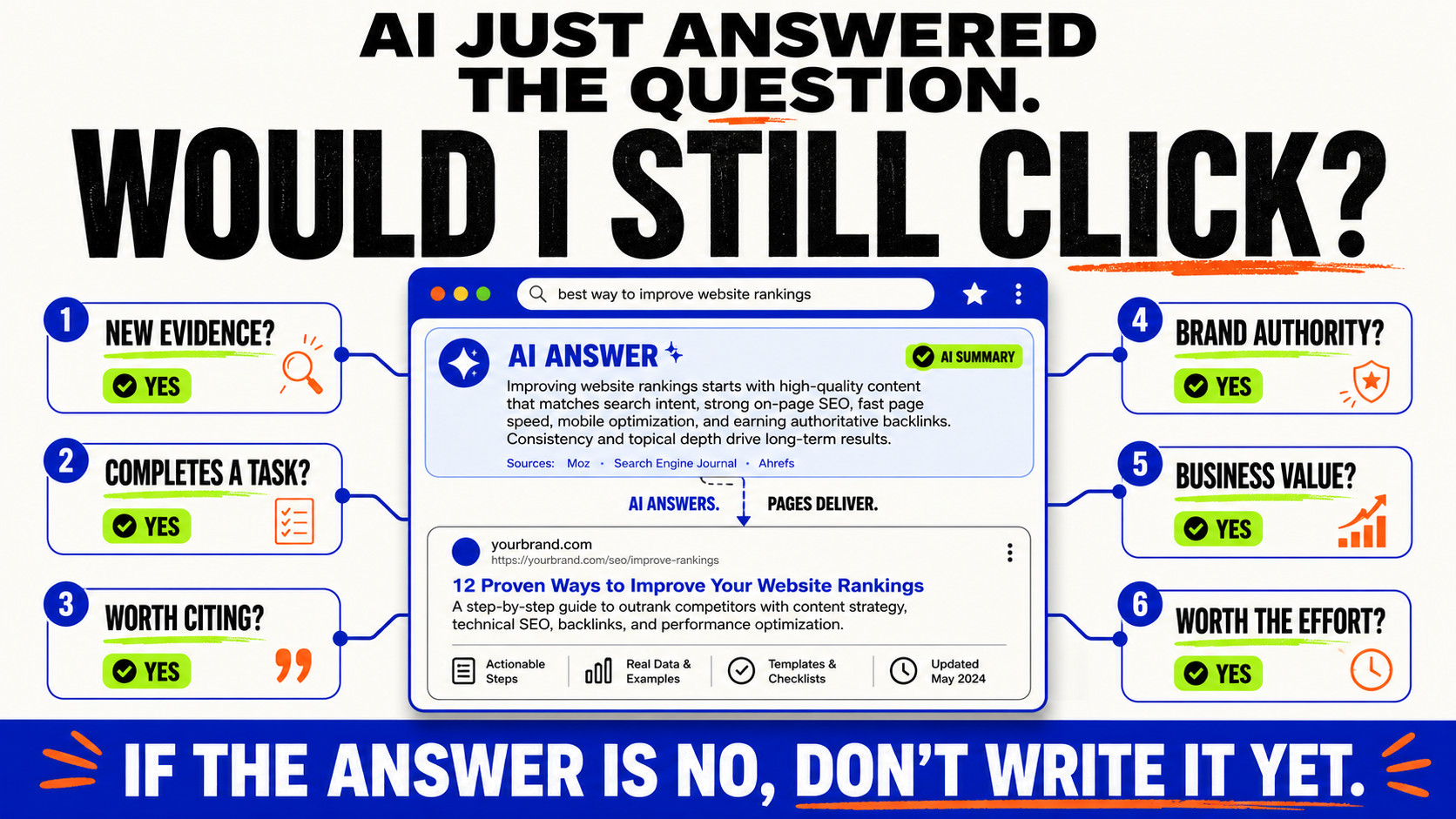
The model does two things. First it gives you six ways to judge a piece of content: whether it survives the AI answer, whether an AI is likely to cite it, whether it earns a brand mention, whether it drives real business value, whether you have a proprietary advantage nobody can copy, and how much effort it will take. Then it sorts content types into a keep pile and a cut pile.
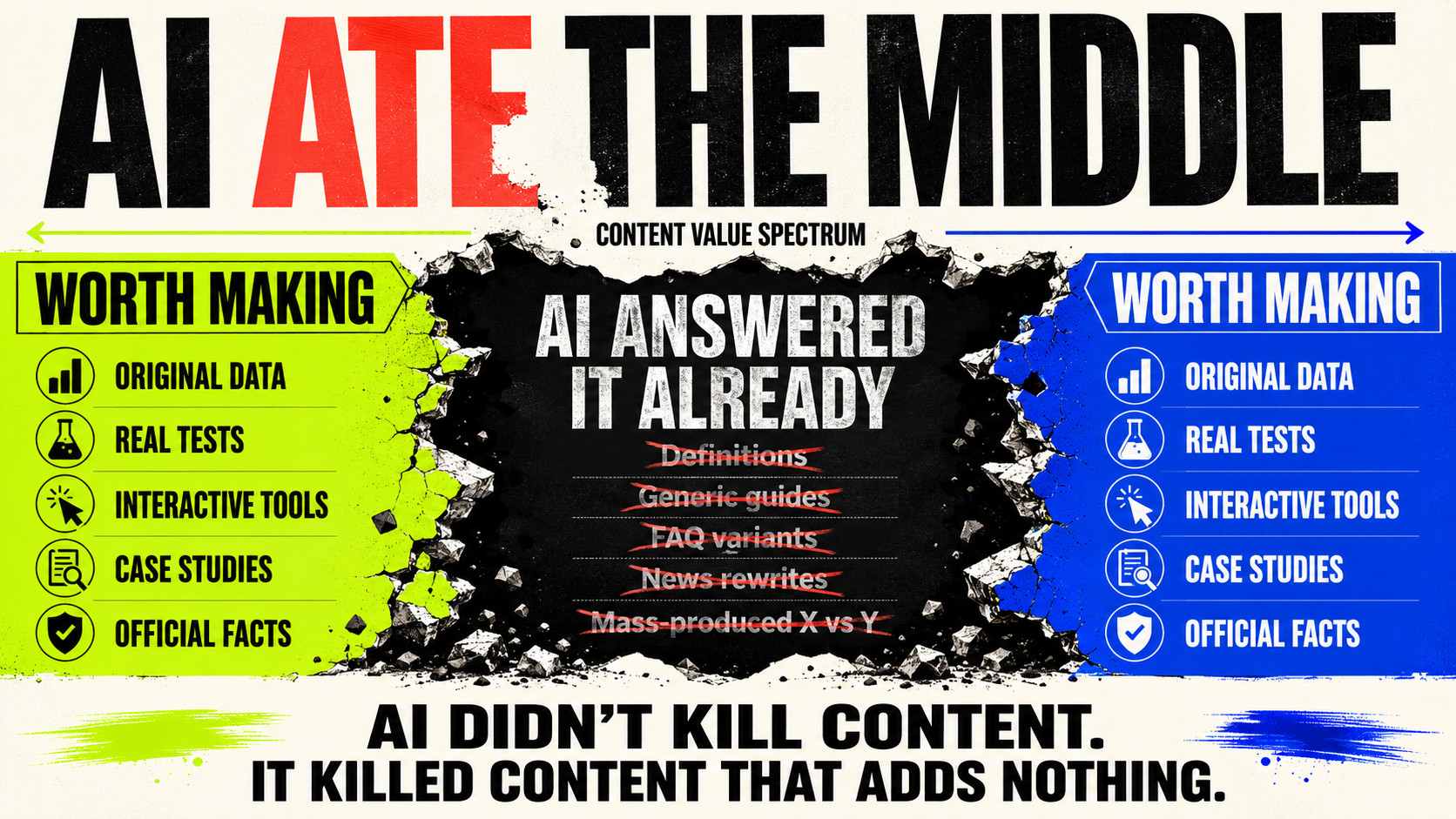
The keep pile is things like official brand and product facts, content that helps someone complete a task, original tests and live data, case studies and troubleshooting, evidence-led comparisons, and personalised interactive tools. The cut pile is things like commodity definitions, rehashed generic guides, FAQ and keyword variants, third-party news rewrites, and mass-produced comparisons.
The whole thing lands on one question, which I think is the best single sentence anyone has written about content this year: what remains unresolved after the AI has given its answer, and is your content the best resource to solve it?
Here is the part that made me want to write this. I did not need the framework to tell me what to build. I had already built it.
The content still worth making, and the tool that makes it
Take the keep pile one row at a time.
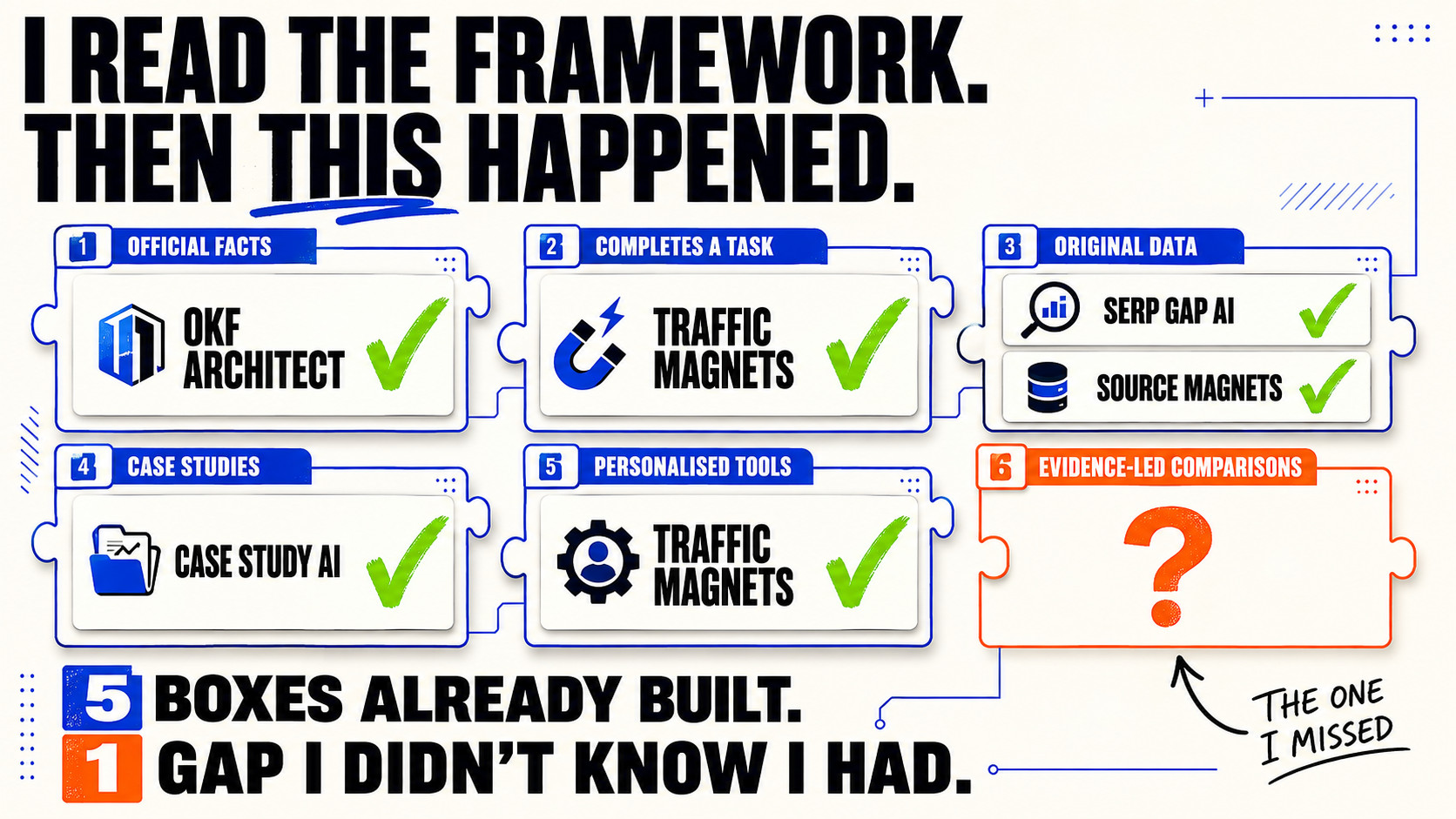
Official brand and product facts. This is content structured so an AI treats it as the authoritative source about you. I built OKF Architect for exactly this, it turns any page into an AI-ready knowledge base and merges it into a living wiki so the facts about your brand are machine-readable and consistent. It is on the wait-list.
Content that helps someone complete a task. The framework is pointing at interactive content, the kind that does a job rather than describes one. That is what Traffic Magnets makes, personalised multi-step calculators and tools you embed on a page, and what MicroCourse AI makes as a self-contained interactive course. Traffic Magnets is live. MicroCourse AI is on the wait-list.
Original tests, research and live data. This is the strongest column on the whole framework, because live first-hand data is the one thing an AI cannot regurgitate from its training.
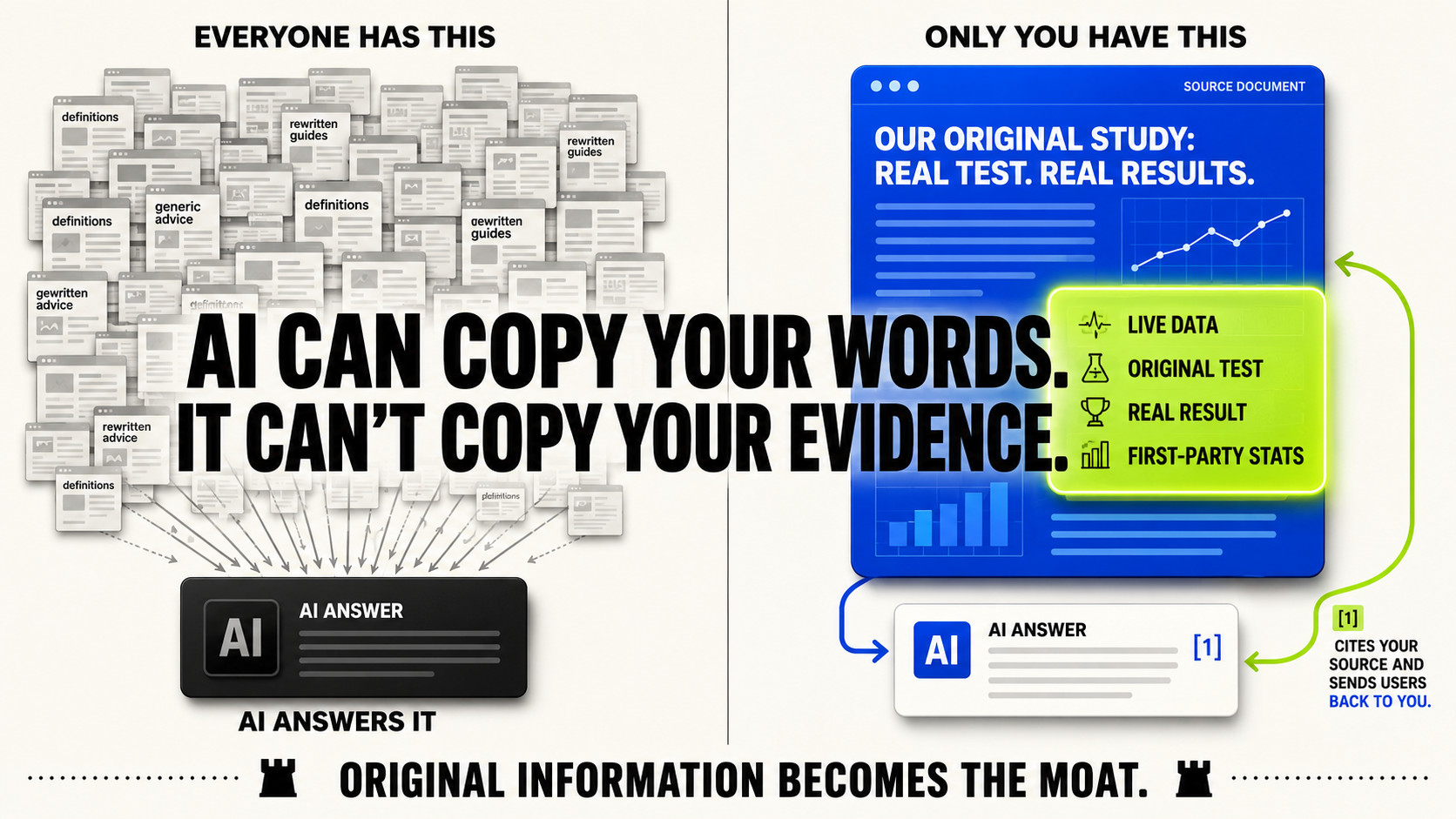
It is also the column I have built the most for. SERP Gap AI reads a live search result and scores the real relevance gap. Source Magnets turns your own data into cited, verifiable stat reports. Traffic Thief pulls per-page intent from live data. SERP Gap is launched, Traffic Thief is available, Source Magnets is on the wait-list.
Case studies and troubleshooting. One real result, written up so it is memorable and specific, is close to impossible for an AI to fake. I built Case Study AI to take a single strategy and a single result and turn it into that write-up in your own voice. It is on the wait-list. This post you are reading is itself the kind of thing it is built to help with.
Personalised interactive tools. This one is almost too on the nose, because “personalised tools” is not just a content type I make, it is a product I sell. Traffic Magnets again, and honestly the whole shelf of free tools on this site is the living proof. Every one of them completes a task rather than describing it.
The content to stop making, and how to catch it
Here is the symmetry that made this click for me. I have not only built tools that make the content the framework says to keep. I have built tools that detect the content it says to cut.
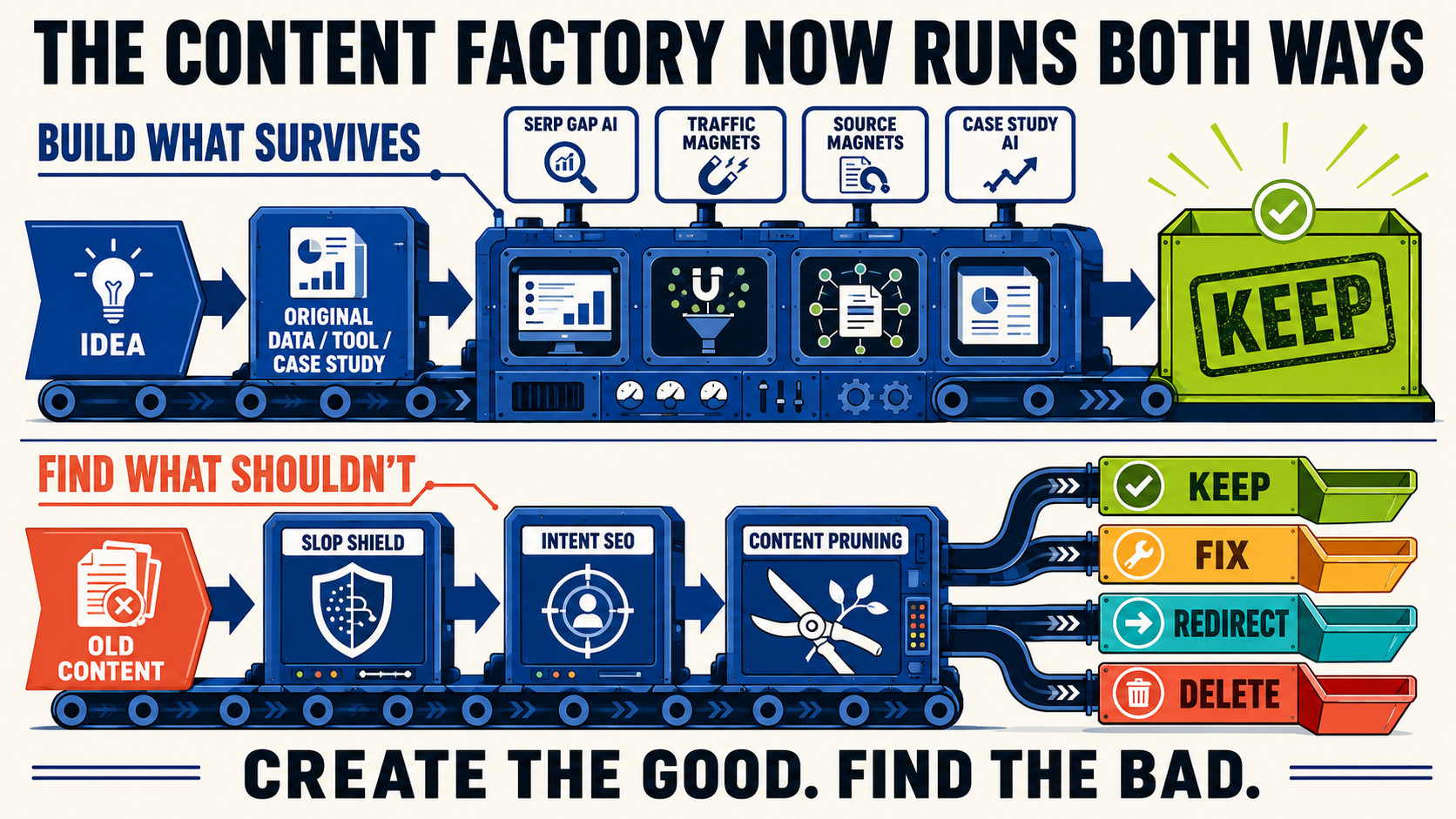
Mass-produced, rehashed, generic pages. This is the exact thing Slop Shield AI was built to catch. Point it at a site and it detects whether the pages read as a coordinated AI-slop cluster, the templated near-duplicate content that the framework, and Google, now actively want gone. It is on the wait-list.
FAQ and keyword variants. The cut pile is full of pages that exist only because someone was chasing a keyword variation. Intent SEO scores a post by search intent and citation-readiness rather than exact-match keywords, which is the same judgement the framework is asking you to make, made automatically in your editor. It is live, running as a WordPress plugin.
The cut decision itself. Once you accept that some of your existing content belongs in the cut pile, you have to actually decide what to keep, improve, redirect or delete. That is a free tool on this site already, the Content Pruning Tool. Paste your traffic and backlink data and it gives you a verdict per URL.
How to score a piece before you write it
The six judging dimensions map just as cleanly, mostly onto free tools you can use right now.
- Citation potential. The AEO Readiness Checker scores how liftable your content is into an AI answer, free. Intent SEO and the AEO Citation Tracker do the deeper version.
- Brand mention potential. The AEO Citation Checker tells you, free, whether AI is already citing you or a competitor for a given prompt.
- Business value. The SEO and Content ROI Calculator turns a piece into projected conversions, revenue and payback before you commit to it.
- Proprietary advantage. This is what Source Magnets is for, original data nobody else has.
- Click resilience and expected effort. These two stay human judgement, and they should. A tool can score citation-readiness. Deciding whether a piece still earns the click after the AI answer is a call you make yourself.
The one box I have not built yet
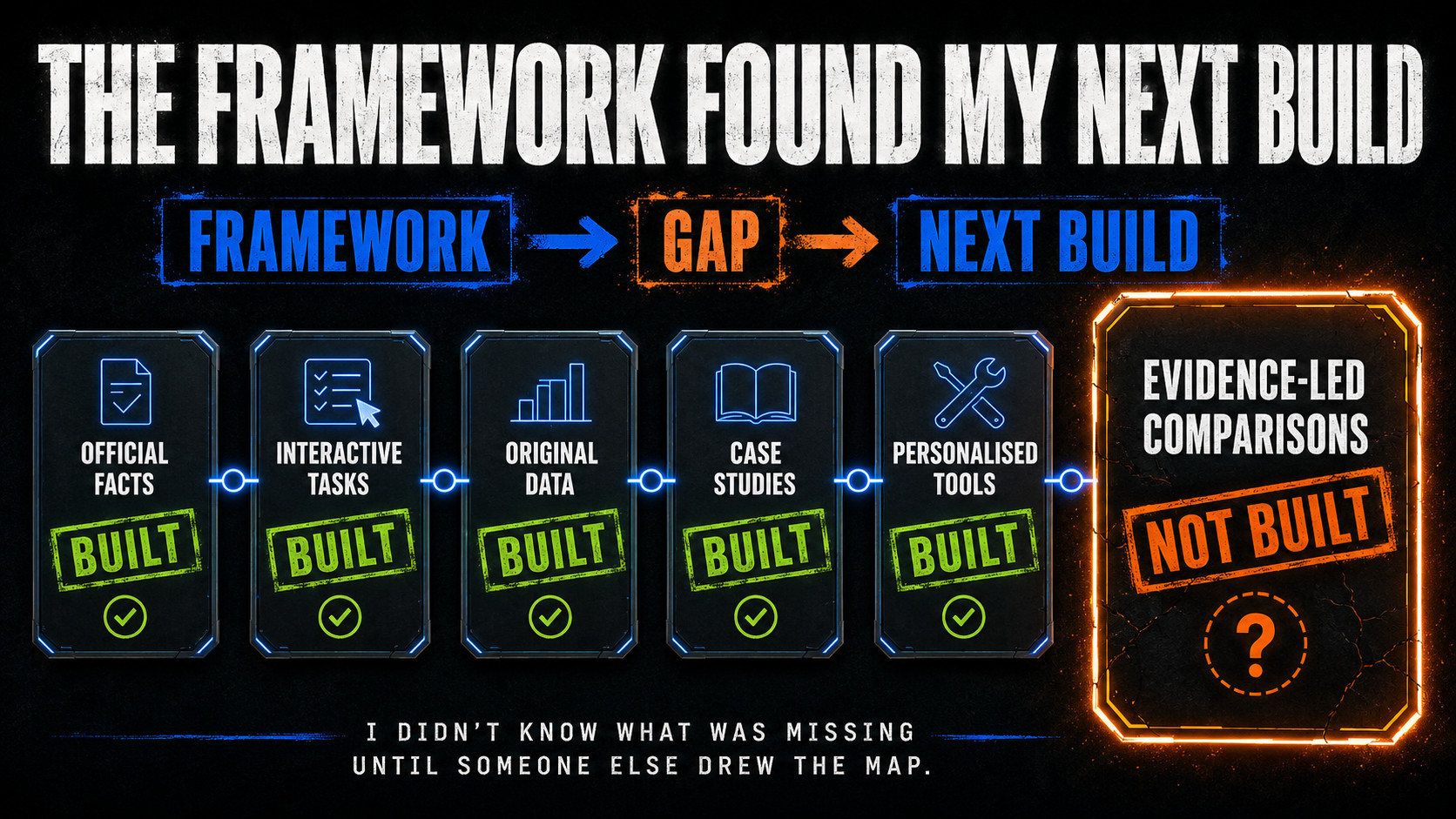
Being honest about the map means showing the gap in it. There is one row in the keep pile I do not have a dedicated tool for yet, which is evidence-led comparisons. The framework is careful to separate these from the mass-produced comparisons in the cut pile, and the distinction is the whole point, a real side-by-side built on genuine testing versus a templated “X vs Y” page spun up for traffic.
I have tools that circle it. Listicle AI assembles list content, Page Sniper tears down what a competitor is really selling. But a proper evidence-led comparison builder, the kind that would sit in the keep pile rather than the cut pile, is not built. So it goes on the list. If you had told me a week ago I was missing one, I would not have known which one. The framework told me.
My Take: The reason this mattered enough to write up is not that I was right. It is that for the first time in a while, a respected outside framework handed me a checklist and I could tick almost every box with something I had already shipped. When you are building fast and often, the quiet fear is that you are just producing, that motion is not the same as direction. This was the clearest signal I have had that the direction was right, and it came from someone else’s map, not my own. It also showed me the one thing I had missed, cleanly, in one row. That is what good frameworks from people who know more than you are for. Not to copy, but to check your own work against. The influencers sharing this are giving people the right advice. I am just in the slightly strange position of having spent the last few months building the tools that do what the advice says.
Free tools
Score your own content against the framework
Four of the judging dimensions map onto free tools on this site. Check your content’s citation-readiness, see whether AI already cites you, and get a keep-or-cut verdict on your existing pages, no signup for the basics.