New from Anthony Hayes: Aha Studio
Get found by the people searching for what you sell.
Build in Public · #12
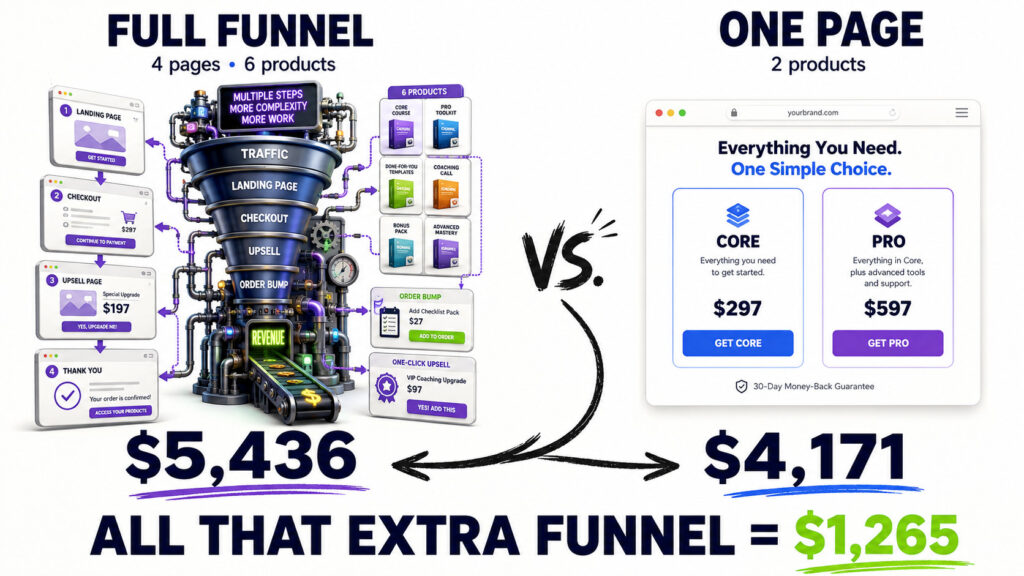
I launched two tools back to back. One had a full funnel behind it. One had a single page with two buttons and nothing after it. Same audience, same platform, days apart. Both launches are now closed, so here are both sets of numbers and what removing the funnel actually cost me. It was less than I expected, and the reason why is the interesting part.
Updated September 2026 with the final settled numbers and five further lessons. Those are at the end of this post.
I have been arguing for a while that funnels slow me down. Four sales pages, four sets of copy, four products to finish before anything can go live. Meanwhile I have a backlog of finished tools going stale, because the launch queue moves slower than the software does.
So on the second one I removed the funnel entirely. One page, a core version and a pro version side by side, no upsell sequence at all.
Both are closed now, and the comparison is cleaner than any test I would have designed on purpose.
Find this useful? Add us as a preferred source on Google and more of what we publish will show up in your results.
The two launches, side by side
SERP Gap AI, with the full funnel. Four pages, six products.
- 1,231 visitors, 343 sales, 28% conversion
- $5,436.65 revenue
- $4.42 per visitor
- 0% refunds
Broken down by product:
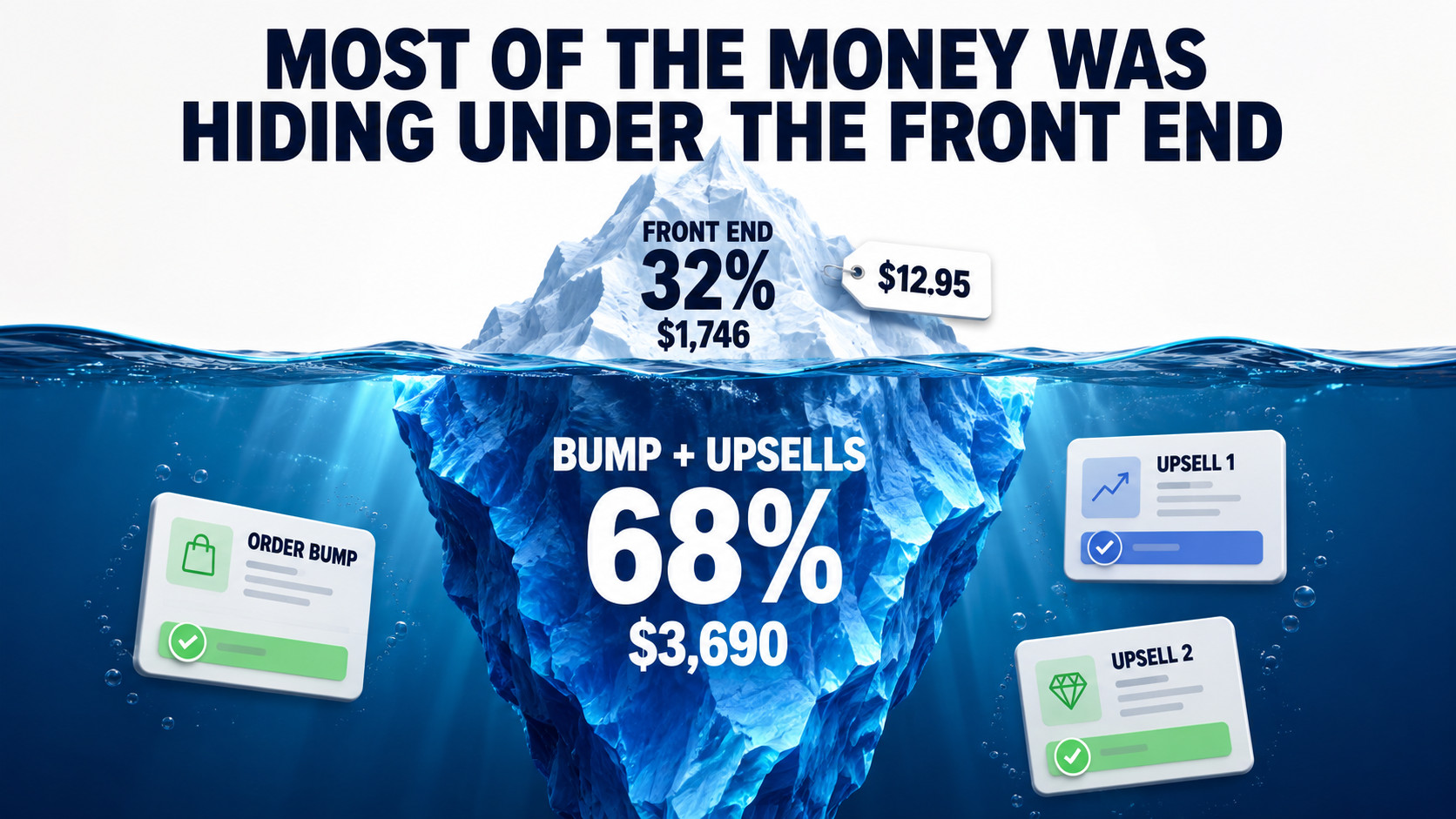
- Front end at $12.95: 126 sales, $1,746.65
- Order bump at $9.95: 84 sales, $835.80
- Upsell 1 at $27: 74 sales, $1,998.00
- Upsell 2 at $12.95: 56 sales, $725.20
- Three site licence tiers: 3 sales, $131.00
Page Sniper, with no funnel. One page, two products.
- 1,128 visitors, 129 sales, 11% conversion
- $4,171.20 revenue
- $3.70 per visitor
- 0% refunds
Broken down:
- Pro version: 125 sales, $4,119.40
- Core version at $12.95: 4 sales, $51.80
Two working products, two real audiences, zero refunds on either. Nothing here is a failure. But one of them is doing something the other is not, and it took me a second pass to see what.
What the funnel was actually worth
Look at where SERP Gap‘s money came from. The front end brought in $1,746.65 of a $5,436.65 launch. That is 32%. Everything after the front end brought in the other 68%. The thing I was actually selling made less than a third of the launch.
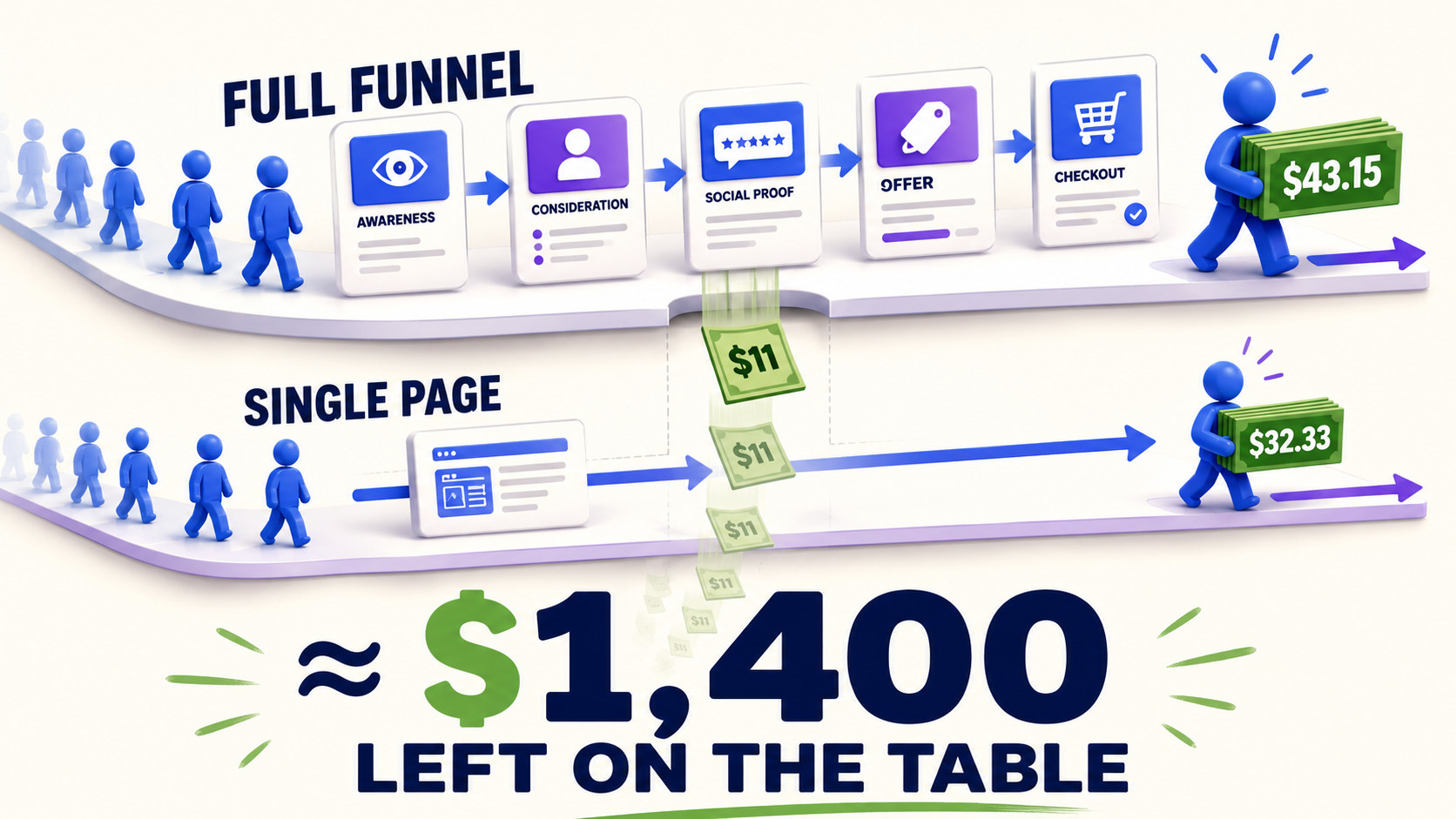
Now put both launches on the same footing. Revenue per buyer:
- SERP Gap, full funnel: $43.15 per buyer
- Page Sniper, single page: $32.33 per buyer
So the funnel was worth about $11 a buyer. Across Page Sniper’s 129 buyers, that is roughly $1,400 I did not collect.
Here is the part I nearly got wrong, and it turned out to be the actual lesson. Page Sniper did not really have a $12.95 front end. It had a $12.95 core and a pro version from $27 rising to $37 on the same page, and almost everyone bought pro. So a Page Sniper buyer paid about $33, where a SERP Gap front-end buyer paid about $14.
The single page was not just a front end. The pro button was doing the job of a front end and an upsell at the same time, in one click.
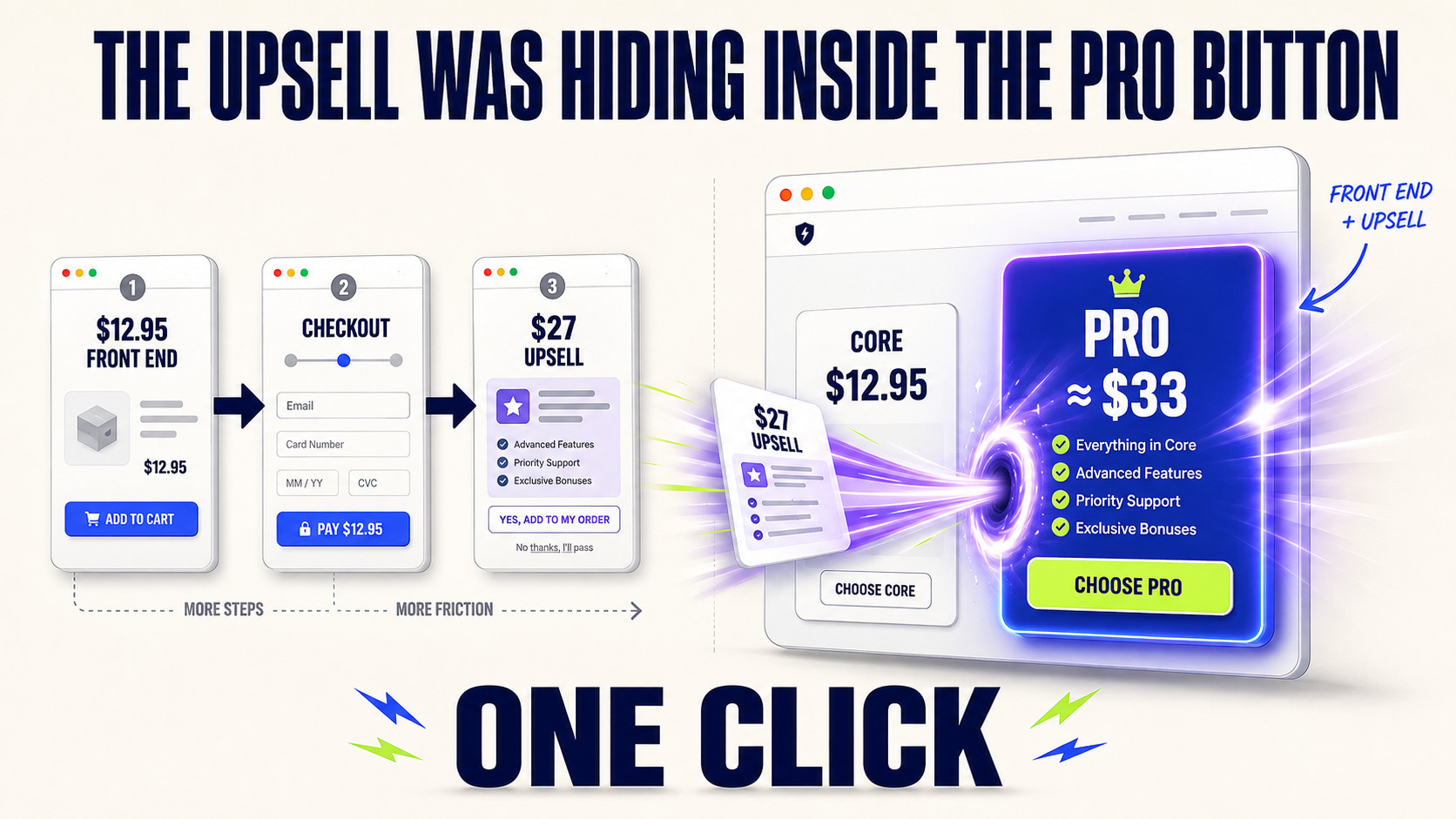
That changes what “add a funnel” even means here. There is no point bolting a $27 upsell onto a buyer who already paid $33 for pro. The one thing the single page genuinely lacked was the order bump. On SERP Gap the bump took two out of every three buyers at $9.95. Add only that to Page Sniper and I recover about $850 of the $1,400, with one extra product, not four.
So the single page captured roughly three quarters of full-funnel revenue per buyer with no back end at all, because the pro tier quietly absorbed the upsell. That is a much stronger result for hitting fast and thin than I expected when I sat down to write this. I came in ready to conclude the funnel won. The numbers made me put that down.
Almost everyone skipped the cheap version
This is the number I did not expect, and it is the most interesting thing in either launch.
Page Sniper had both versions on one page. Core at $12.95, pro starting at $27 and rising ten cents with every sale, up to $37.
125 people bought pro. 4 people bought core.
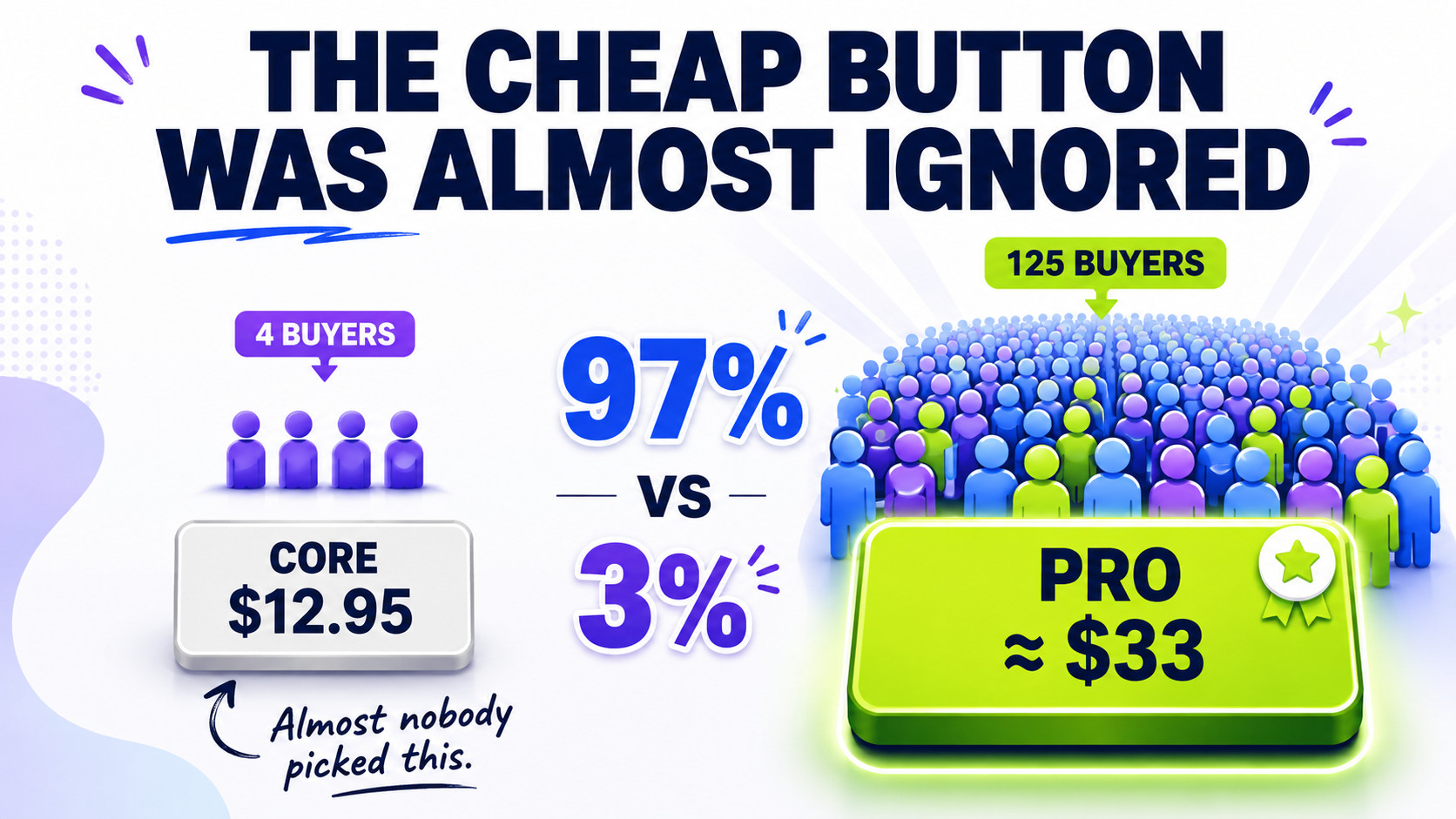
The average pro sale came out at $32.96. The cheap option took 3% of sales.
I had assumed that putting a $12.95 button next to a $30-plus button would drag everything down to $12.95. It did the opposite. Given a straight choice with both options visible, almost nobody wanted the smaller one.
So the single page format was not the problem. It genuinely worked, and it worked at the higher price, which is exactly why the pro tier could carry the launch on its own. If you take one selling lesson from this post, take that one. I had been pricing as though people needed talking into $30, and they did not.
The number I nearly fixed
My order bump on SERP Gap reported a 10% conversion rate. My rule of thumb is that a bump should be doing at least 40%, so I wrote myself a note that the bump was weak and needed rebuilding.
Then I looked at where that 10% comes from.
The platform was measuring bump sales against everyone who visited the page, not everyone who bought. Both rows show the same 832 visitors, which is the giveaway.
84 bumps against 126 actual buyers is 67%.
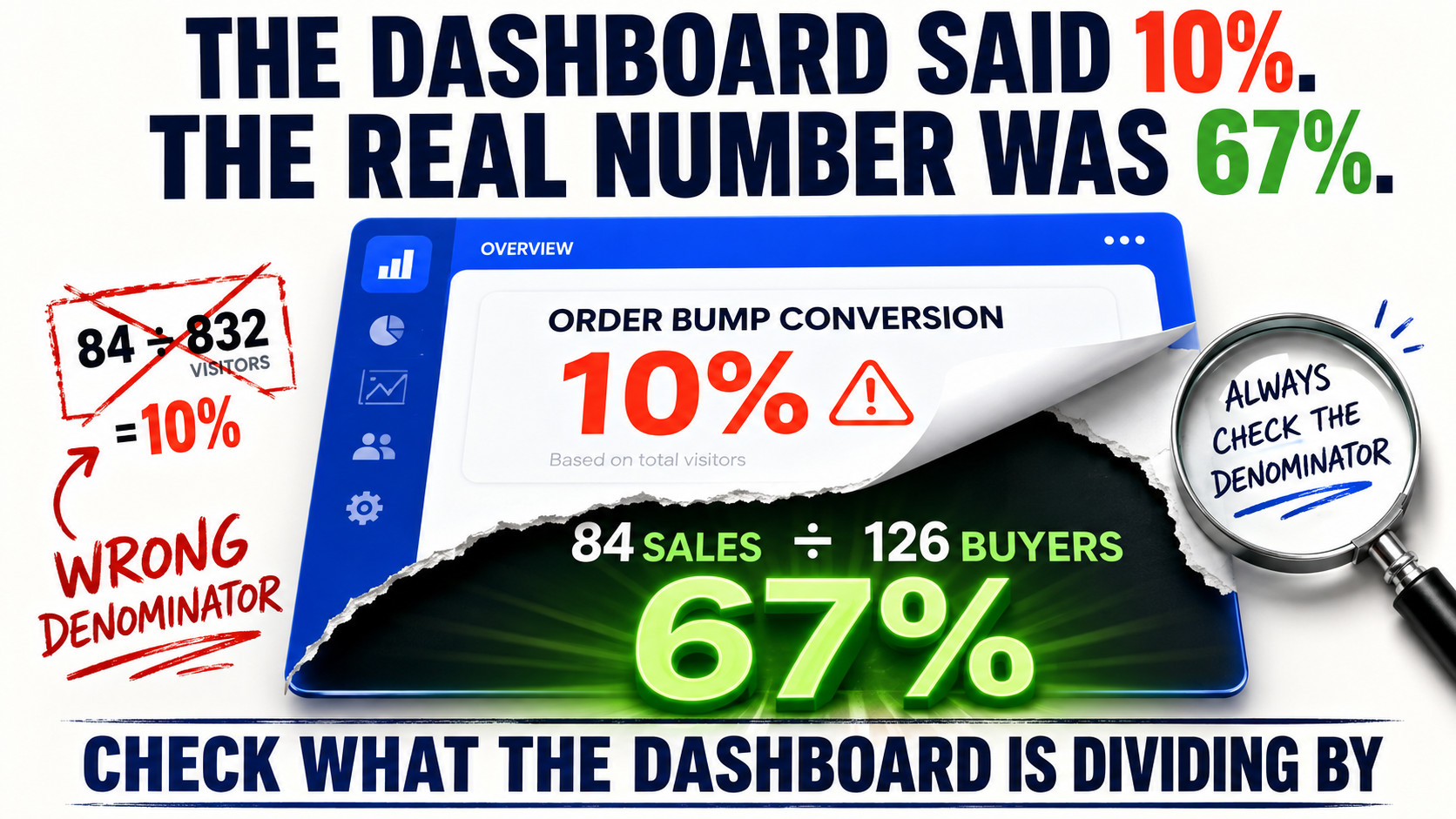
My bump was not underperforming. It was beating my own target by half again, and at $835.80 it was the third biggest line item in the launch. It is also, from the section above, the single thing the no-funnel launch was missing.
I was one decision away from tearing out and rebuilding the best converting thing on the page, because I read a dashboard without checking what it was dividing by. If you take one operating lesson from this post, take that one. Know your denominator.
The launch that went live before I was ready
Now the expensive part, and it is entirely mine.
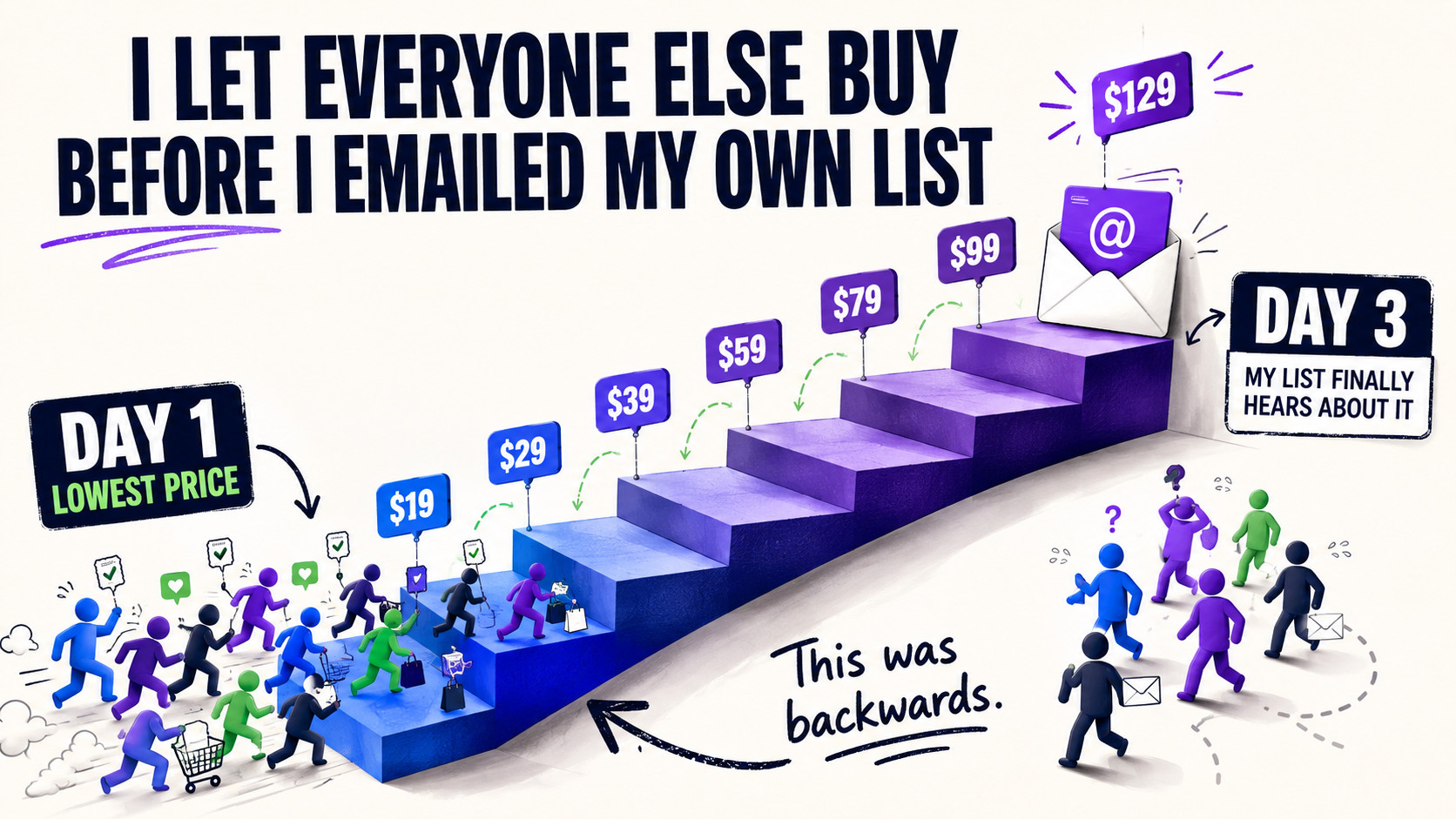
Page Sniper went live before I intended. A launch date was left too close to the current date in the platform, and the platform did what it is designed to do. It fired notifications out to previous buyers and it opened the affiliate programme.
Sales started arriving. I was still building the pro version at the time. It was not finished.
Worse, because the notifications and the affiliate section were live before I had sent a single email of my own, the first wave of sales all came through other people. By the time the affiliate commission, the platform fee, the payment processor and a revenue share had come out, I was keeping about five dollars on a twenty eight dollar sale.
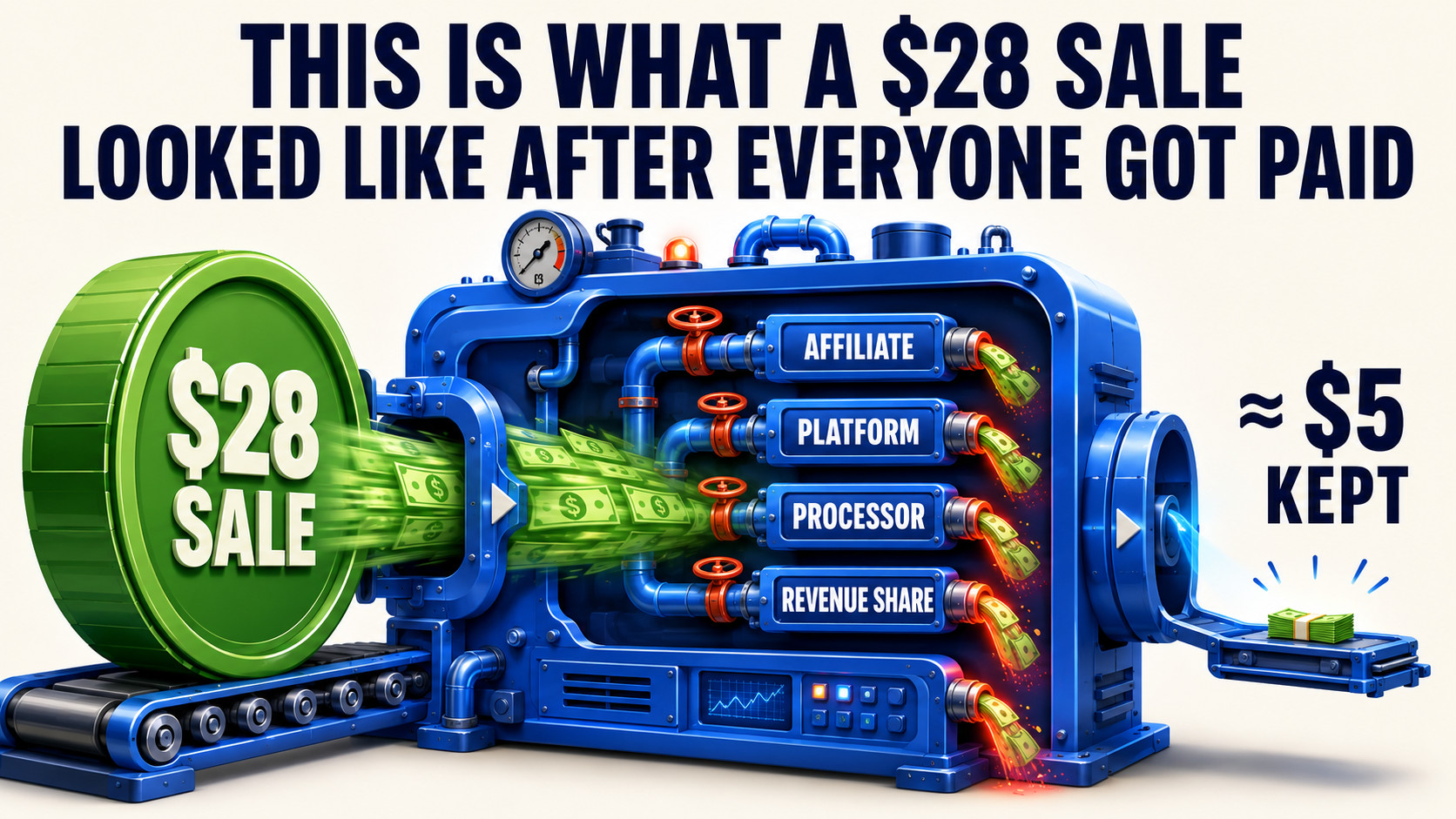
That is the real cost. Not the embarrassment, the margin. On a launch priced this low there is nothing spare. Five dollars a sale is not a business, it is a hobby with paperwork. That same money, kept, pays for advertising on the platform, or pays somebody on the team.
I also did not email my own list until day three. On a dime sale that rises with every purchase, that is precisely backwards. The whole point of a rising price is that buying early is rewarded, and I let strangers take the cheap end of my own price ladder while my own audience heard nothing.
None of that is the funnel question. That is just process, and I did not have one.
What I am changing before the next one
Concrete, because vague lessons do not survive contact with the next launch:
- Affiliates stay switched off for the first three days. I promote to my own audience first, at full margin, then open it up.
- The launch date gets set months into the future by default. A date near today is a loaded gun. I move it in deliberately when everything is finished, and never the other way round.
- Nothing goes live until the product is finished and tested. Obvious. Wrote it down anyway, because clearly it needed writing down.
- Every offer gets an order bump, and one upsell if it does not delay the launch. The bump is the non-negotiable one. It was the whole gap between the two launches above, and it costs almost nothing to add.
- Email goes out on day one, not day three, especially on a rising price.
- A countdown timer on the page. I flagged this last time and still have not done it. Without a visible deadline I cannot read a price test, which means the last two price experiments told me nothing.
- Demo video before launch, not during. Also flagged last time. Also still not done.
- Paid placement on the platform. My buyers are almost all people who already know me. The tools are good. Not enough new people are seeing them, and that is a distribution problem, not a product problem.
Two of those are repeats from my last launch post. I am leaving them visible rather than quietly dropping them, because a lessons list you do not act on is just a mood. I wrote recently about nine things that were silently broken across my business, and the pattern is the same one. Nothing errors. It just quietly costs you.
Combined across the two closed launches: $9,607.85, 472 sales, zero refunds. I am happy with that. I am happier that I now know exactly which lever I left unpulled, and that it turned out to be one cheap product rather than three expensive ones.
My Take: I removed the funnel because I thought funnels were slowing me down, and I expected the numbers to punish me for it. They did not, and the reason is the thing I want to remember. My single page had a pro tier that almost everyone bought, so the expensive button was doing the work of a front end and an upsell at once. It captured about three quarters of what a full four-product funnel earned per buyer, with nothing behind it. The one piece it was actually missing was the order bump, one cheap product, not a four-step chain that adds weeks to a build. So the real answer was never funnel or no funnel. It was keep the single page, make the pro tier strong, add a bump, and stop there. And the quiet lesson underneath all of it is that 125 of 129 people picked the expensive version when both were right in front of them. I had been pricing my own work as though people needed convincing to spend thirty dollars. They did not even hesitate.
Update, September 2026: the final numbers, and five more lessons
Both launches carried on selling after this post first went up, and the totals have now settled. These figures supersede the ones above.
- SERP Gap AI, with the funnel: 339 sales, $5,328.65
- Page Sniper, no funnel: 133 sales, $4,367.20, and 127 of those were pro
That is $9,695.85 across 472 sales between the two. For context, my best seller so far is still TubeGraphics at $6,864.85 from 416 sales, and that one had a full funnel behind it.
The direction of travel is the part worth noticing. Page Sniper kept climbing after I published this, with no funnel, no bump, and nothing at all chasing the buyer afterwards. That does not change the conclusion above. It sharpens it.
There is also something I should have said in the original post, because it changes how you read every number in it. All of these launches ran with zero affiliate outreach. Normally you line affiliates up weeks in advance. I have enough finished tools waiting that I have simply been releasing them, on the basis that a funnel plus an order bump reliably brings in 250 or more funnel sales on its own. So none of these are the numbers of a promoted launch. They are the floor, not the ceiling.
Five things I am taking into the next one
- An order bump and at least one upsell, every time. On Page Sniper that alone would probably have made it the best seller of the three.
- Drop a bonus in between $37 and $47 on the dime sale. Sales visibly slowed as the price climbed toward $37. A small extra tool added at that point keeps the curve moving instead of letting it stall.
- Keep the dime sale. A price that rises with every purchase forces early sales, which is exactly what you want in the first 72 hours.
- Price the upsell below the pro version of the front end. If pro tops out at $37, the upsell goes at $27. It turns the decision into an easy yes, and it lifts both funnel volume and earnings per click.
- Start affiliate outreach early. See above. It is the one lever I have never actually pulled.
The angle matters more than the tool
The last one is the thing I keep coming back to. The biggest sellers on a platform like this are organic traffic products and make money online products. Looking back at SERP Gap with that in mind, I think it was probably too advanced for the audience it went out to. It is a good tool. It also asks the buyer to already understand the problem it solves.
The lesson is not to build simpler tools. It is to lead with a simpler promise, and to be honest with myself about whether somebody can grasp the outcome in one line before they have read anything else.
Evergreen Workshop
Build the tools, not just the launch
Both of the products in this post were built with Claude Code, start to finish. Evergreen is the workshop where I show how, including the parts that do not go to plan.