Keyword Research › Search Intent and Content Mapping
Keyphrase introductions
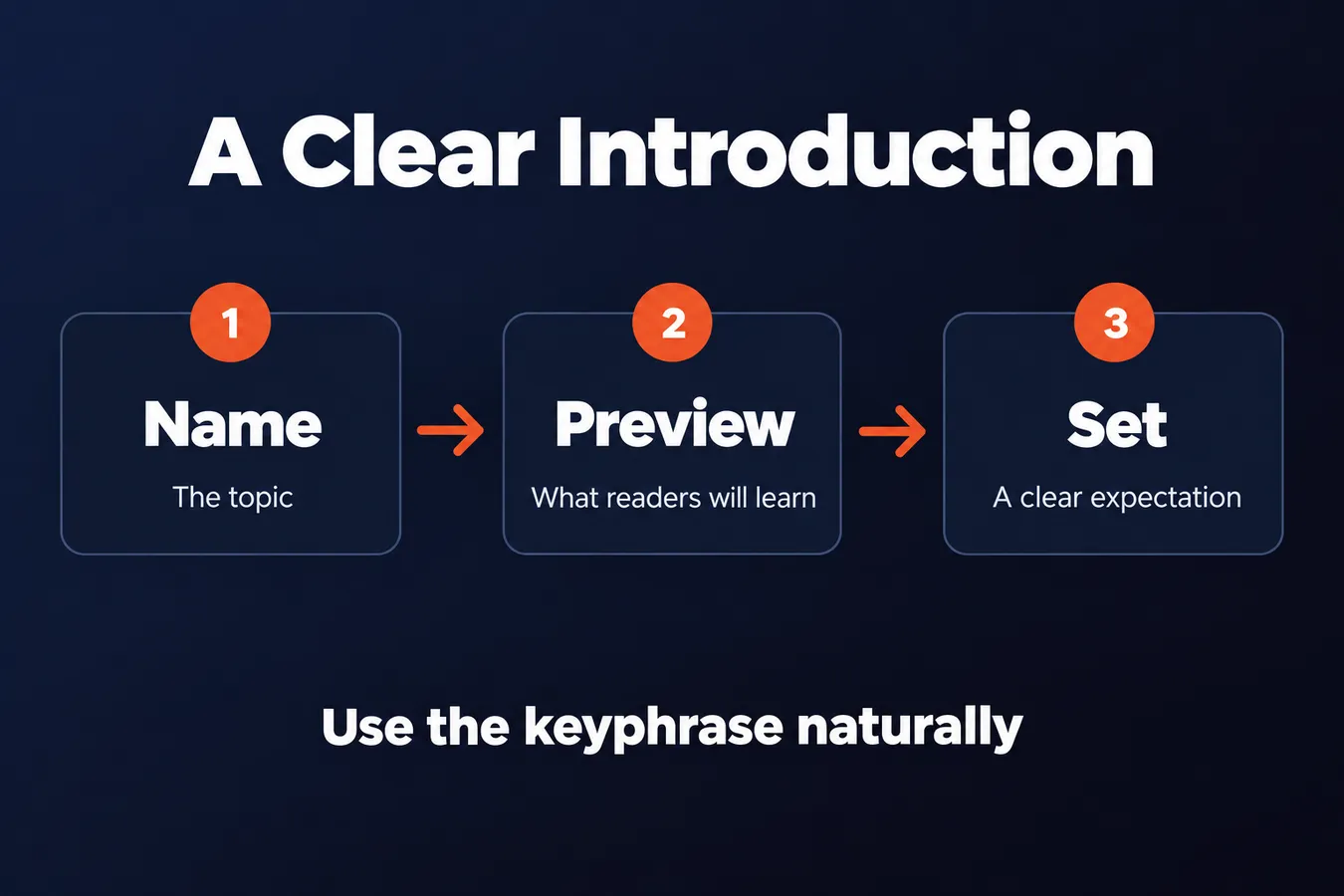
A keyphrase in your introduction should name the subject and tell readers what the page will help them do. You’ll see an example, learn where to place the phrase, and get a simple way to check that it reads naturally.
A keyphrase can appear in the first sentence and still leave readers unsure what the page will help them do. The sentence needs to name the topic and set a clear expectation.**
A useful keyphrase in introduction example shows both parts at once: it includes the target phrase and tells readers what they’ll learn.
I’ll show you how to make that first sentence clear and natural.
I’m Tony Hayes. I’ve been building marketing software since 2011, and I build everything with AI without writing code myself. I’m the creator of NicheBlasta, JV Swaps and the Aha Studio AI workers.
Here’s what we’ll cover:
- A clear example of a keyphrase used in an introduction
- Natural placement that keeps the sentence easy to read
- A clear expectation for what the page covers
- A simple check for the keyphrase and common mistakes to avoid
For help understanding what readers expect from a search, read How to Identify Search Intent Before Writing.
Find this useful? Add us as a preferred source on Google and more of what we publish will show up in your results.
A keyphrase in an introduction example
A keyphrase in introduction example shows how to use the search phrase early while making the page’s subject clear.
Here’s a complete opening sentence: “This guide shows you how to prune an apple tree, including which branches to remove and when to stop.”
The phrase “how to prune an apple tree” names the topic right away. The rest of the sentence previews useful content, so readers know what the page covers before they move into the next paragraph.
That’s the job of an introduction. Add the focus keyphrase in a sentence that tells people what the post is about and what they’ll learn. The words around it give the phrase context, which makes the text easier to understand.
The keyphrase should fit the subject and the sentence.
A clumsy version might say, “How to prune an apple tree is about how to prune an apple tree, and this post explains how to prune an apple tree.” The phrase appears several times, but readers still don’t know which branches the page discusses or when pruning should stop.
Repeating a keyphrase doesn’t add useful detail. It takes up space in the introduction and leaves the content’s focus fuzzy.
I’ve been building marketing software since 2011, and I keep this part simple: write the opening for the person who searched, then make the page’s subject obvious. Google and other search engines can read the words, but your reader needs a clear answer first.
Use this approach whether you’re writing a short post or a longer page. The exact phrase might need a little grammar around it, but the introduction should still sound like natural English and preview the content you actually provide.
Place the focus keyphrase where it reads naturally
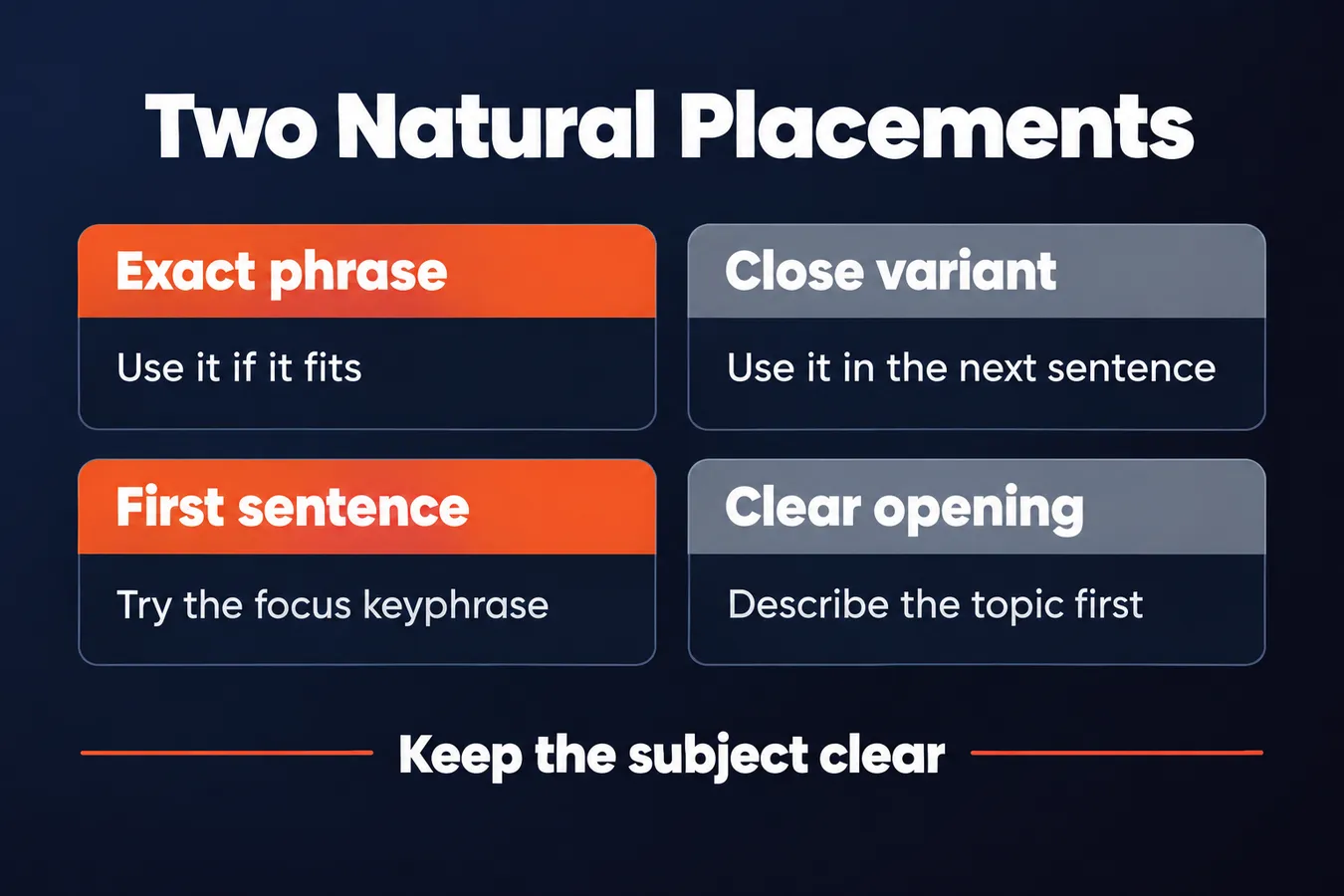
Try the focus keyphrase in your first sentence. If it fits the meaning, it tells readers what the post covers right away.
For example, a post about choosing a running watch could open: “Choosing a running watch gets easier when you know which features matter for your training.” The topic is clear, and the wording feels like part of the sentence.
The keyphrase should support the introduction and leave its focus intact.
If the exact phrase makes the opening clumsy, lead with a clear description of the topic. Then add a close variant in the introduction.
Say your focus keyphrase is “best plants for a shady garden.” You could begin, “A shady garden can still support plenty of color and texture.” Then use “plants that grow well in shade” in the next sentence. The subject stays clear without forcing the exact words into an awkward spot.
A keyphrase can appear early without becoming the whole introduction. Use it once where it fits, then spend the rest of the opening explaining what the page will cover and who it’s for.
I like to read the first paragraph aloud. If the keyphrase trips up the sentence, I rewrite the sentence.
Keep the opening honest about the content that follows. If the post compares plant choices for low-light gardens, the introduction should say that. A phrase that attracts a search but promises a different topic gives readers the wrong idea.
Google and other search engines can use words in the page to understand its topic, but write the introduction for people first. Add the focus keyphrase or a close variant where it helps the reader know what the post is about.
Write an introduction that sets a clear expectation
Your introduction should name the topic, tell readers what they’ll learn, and preview the page’s scope. A few clear sentences are enough to connect the keyphrase with the purpose of the post.
The reader should know what this page will do before they move on.
Here’s a before-and-after example. The vague opening gives readers little reason to keep reading:
“SEO introductions are an important part of content. There are several things to think about when writing one.”
Now give the page a specific purpose:
“This guide shows you how to use a keyphrase in an introduction without making the text sound forced. You’ll see how to introduce the topic, clarify what the page covers, and keep the opening focused on what readers came to find.”
The keyphrase fits because it belongs to the subject. The rest of the paragraph explains what the reader will learn.
That’s the standard I use for an introduction. Add the focus keyphrase where it reads naturally, then make the purpose of the page plain. Google and other search engines might use many signals to understand content, but your opening is written for the person who clicked through from search.
Match the opening to the reason someone searched.
A person looking for examples wants to see how a keyphrase works in real introductory text. Keep the opening on that topic, and preview the examples the page will show. If the post answers a different question, the keyphrase alone won’t make the content a good fit.
Before writing, read the separate guide on [how to identify search intent before writing]. It covers how to check what readers are looking for; here, the focus is on making your introduction reflect that purpose in a few direct sentences.
Vague and specific introductions
| Opening | Topic clarity | Page scope |
|---|---|---|
| Vague opening | Little detail | Not stated |
| Specific opening | Keyphrase topic | What readers will learn |
Check the keyphrase without writing for a score
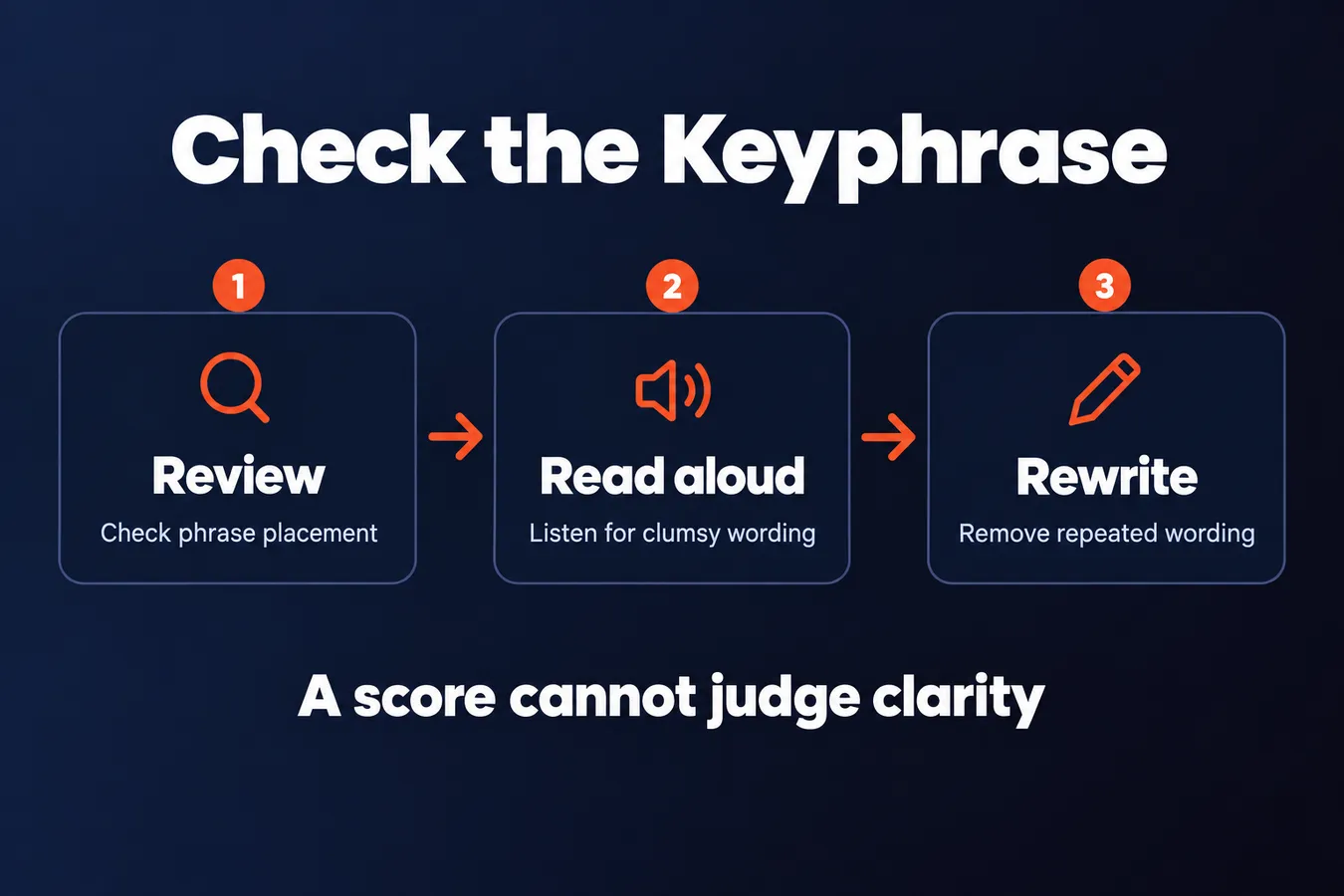
A focus keyphrase check may flag whether your keyphrase appears in the introduction. Use that notice to review the opening and see whether the phrase fits the paragraph.
The check offers a prompt for editing possible issues.
A phrase appearing in the introduction doesn’t prove the page will rank or reach more readers. Google and other search engines consider how the page matches the topic and what the full content covers. A score can tell you about phrase placement. It can’t tell you whether the opening makes sense to a person.
Read the paragraph aloud. You’ll hear repeated wording that looks fine on screen but feels clumsy in the text. Remove those repeats, then read it again. The keyphrase should fit naturally into the sentence and leave room for the sentence’s point.
Keep the wording clear and the subject obvious.
Your focus keyphrase should match the page topic and the content plan. If the phrase points to one subject while the post covers another, adding it to the introduction won’t fix that mismatch. Check the intended topic first, then make sure the opening tells readers what they’ll find on the page.
I use SEO checks to give the content a second look after writing it. The paragraph still has to work when you say it aloud, and the page still has to deliver what the keyphrase suggests.
For help choosing topics and assigning phrases across your content, see my keyword research for content planning guide.
Avoid common keyphrase introduction mistakes
A keyphrase belongs in the introduction, but repeating it several times in a short paragraph makes the text feel forced. Use the exact phrase once where it fits, then write naturally about the topic.
Your reader needs the point stated clearly.
A broad opening can also bury the subject. If your post explains how to use a keyphrase in an introduction, name that topic near the start. A line about how important good content is could fit almost any page, so it makes readers wait for the information they came for.
The same goes for promises. If your introduction says the post will give readers examples, make sure the content includes examples. A big promise that the page doesn’t fulfill creates a mismatch between the opening and the rest of the text.
Make the promise match the page.
I keep the opening focused on what the page actually covers. If I add a point to the introduction, I check that the post follows through on it.
Then compare the introduction with the page title and the first section. They should all describe the same topic. If the title is about using a keyphrase naturally, but the first section shifts to keyword research, the page feels unfocused.
That consistency helps readers understand what they’re about to read. It also gives Google and other search engines clearer signals about the content. SEO starts with a clear subject, expressed in ordinary words.
Read the introduction as a short paragraph on its own. Does it name the topic, set an accurate expectation, and lead into the first section? If the keyphrase feels bolted on, adjust the sentence around it until the whole text reads naturally.
Frequently asked questions
What is a keyphrase?
A keyphrase is the search phrase you want your page to address. In this post, the example is “how to prune an apple tree.” It names the topic, and the introduction gives readers a clear idea of what the page will explain.
Can you give me an example of a keyphrase in an introduction?
Try: “This guide shows you how to prune an apple tree, including which branches to remove and when to stop.” The phrase names the subject, and the rest of the sentence previews what readers will learn.
Does the exact keyphrase have to appear in the first sentence?
Try the exact phrase in your first sentence if it fits naturally. If it makes the sentence awkward, open with a clear description of the topic and use a close variant in the next sentence. The introduction still needs to make the page’s subject clear.
How can I check whether my keyphrase sounds natural?
Read the introduction aloud. If the phrase trips up the sentence or sounds repeated, rewrite the wording around it. A keyphrase check can prompt you to review placement, but it can’t tell you whether the paragraph makes sense to a reader.
My Take: I’ve been building marketing software since 2011, and I keep the introduction focused on the person who searched. The keyphrase should fit the sentence and name the subject. Then the rest of the opening should tell readers what the page covers. I like to read the first paragraph aloud. If the keyphrase trips up the sentence, I rewrite it. That small check helps me catch wording that looks fine on screen but sounds forced when spoken. I use SEO checks to review the content and its keyphrase placement. A placement notice can show whether the phrase appears early. The paragraph still has to make sense to a person, and the page has to deliver what the introduction promises.
Aha Studio
Get the next playbook first
New playbooks and LaunchWatch reports land in Growth Signals, the free newsletter, along with the case studies and how-tos I find worth stealing.