New from Anthony Hayes: Aha Studio
Get found by the people searching for what you sell.
Build in Public · #7
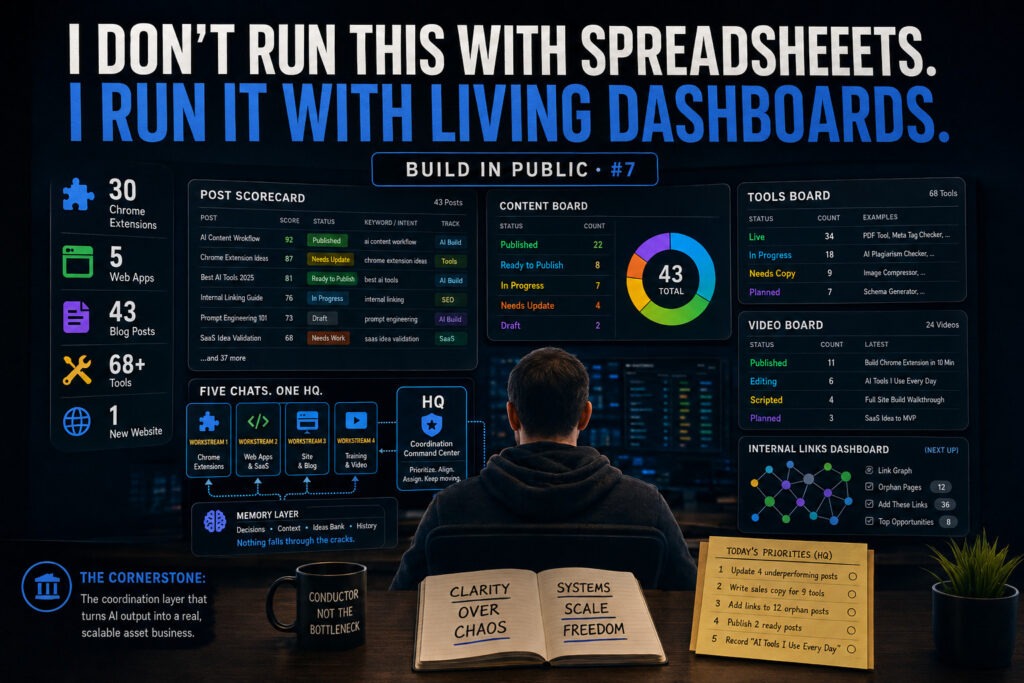
In a month I built 30 Chrome extensions, five web apps, a pile of free tools and a new website. That much moving at once should be chaos. It isn’t, because I stopped trying to hold it in my head and started building instruments to see it at a glance. Here’s the command center.
You can build fast with AI. Everyone’s figured that part out. But speed creates a second problem nobody warns you about: you lose track. Which post needs work? Which tool still needs sales copy? What’s actually the priority today? Most people either drown in it or slow down to cope. I did neither. I built a control panel.
Find this useful? Add us as a preferred source on Google and more of what we publish will show up in your results.
Instruments, not content
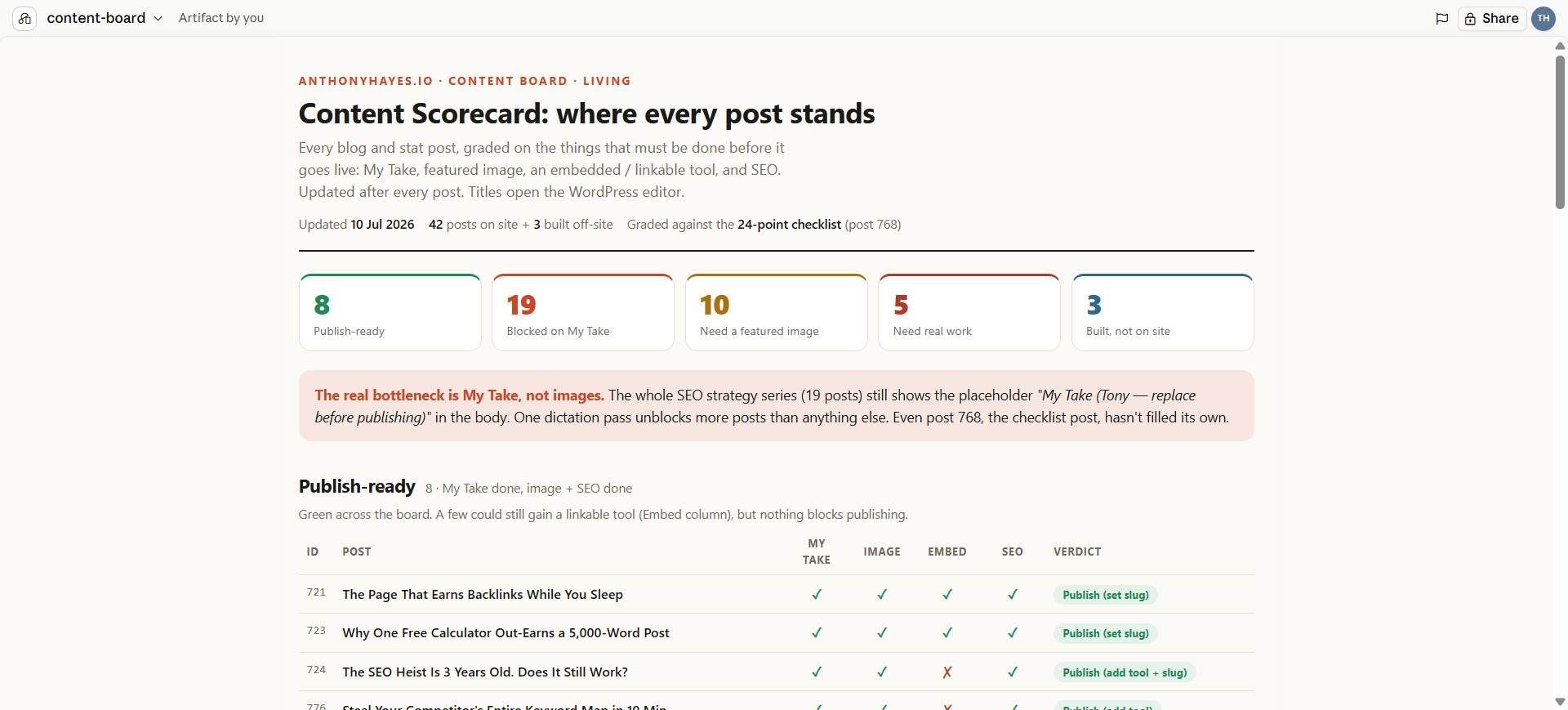
Somewhere in week three, the bottleneck stopped being building and became seeing. I couldn’t keep 68 tools, 40-odd posts and a full site rebuild straight in my head. So I started asking Claude to build me artifacts, not blog posts but instruments. Things I pin and glance at.
Each one is designed to answer a single question without me having to think:
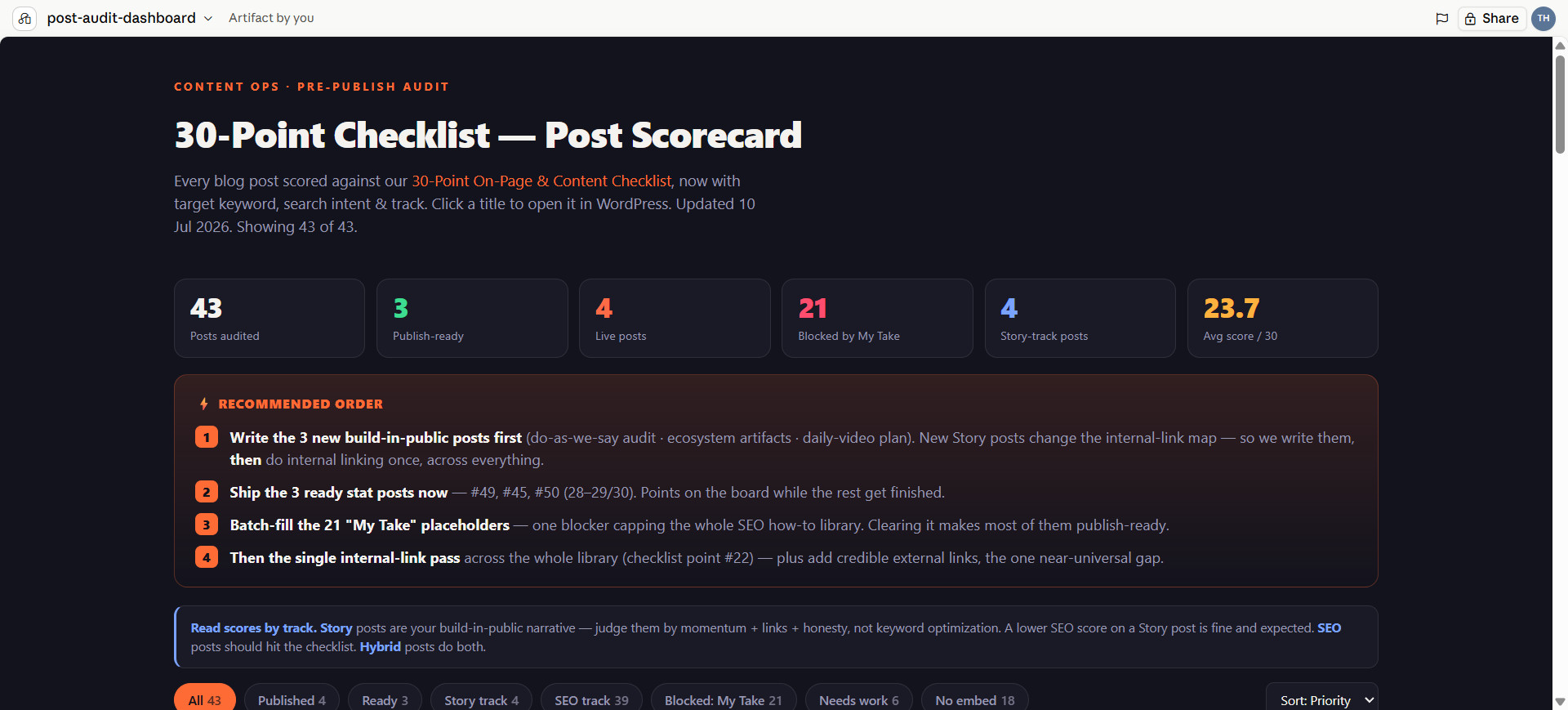
- The 30-Point Checklist: the standard every post must pass. An interactive tool, not a PDF rotting in a folder.
- The Post Scorecard: all 43 posts, each scored, colour-coded, tagged with keyword, intent and track, click-to-edit. I open it and instantly know what to fix, publish, or leave alone.
- The Content, Tool and Video boards: living status for every post, every tool, every video. Not a plan I wrote once; a board I update as things move.
- The internal-links dashboard (next up): the link graph, the orphans, and “add these links” suggestions, kept current.
That checklist isn’t hypothetical, here it is, live. Run it on your own draft:
That’s the whole design brief for each artifact: what do I need to see without thinking?
Five chats and an HQ
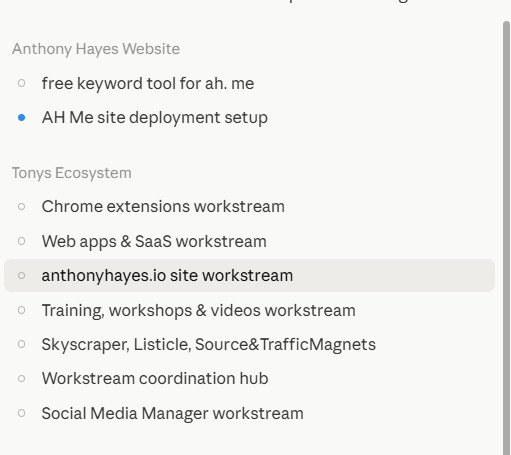
Underneath the dashboards is the structure that produces them. I run the entire operation across five Claude Code chats. Four are workstreams: Chrome extensions, web apps and SaaS, the site and blog, and training and video. The fifth is HQ: a coordination chat that builds nothing itself. Its only job is to look across the other four, keep the priorities straight, and hand me a to-do list, in order.
And the thing that makes it hold together is memory. Each chat remembers the decisions, the context, the ideas we banked for later, so nothing falls out of my head into a void. Something I think of at 6am gets banked, and surfaces again exactly when it’s relevant. That’s not a nice-to-have. That’s the difference between a system and a pile of clever conversations.
I’m the conductor, not the bottleneck
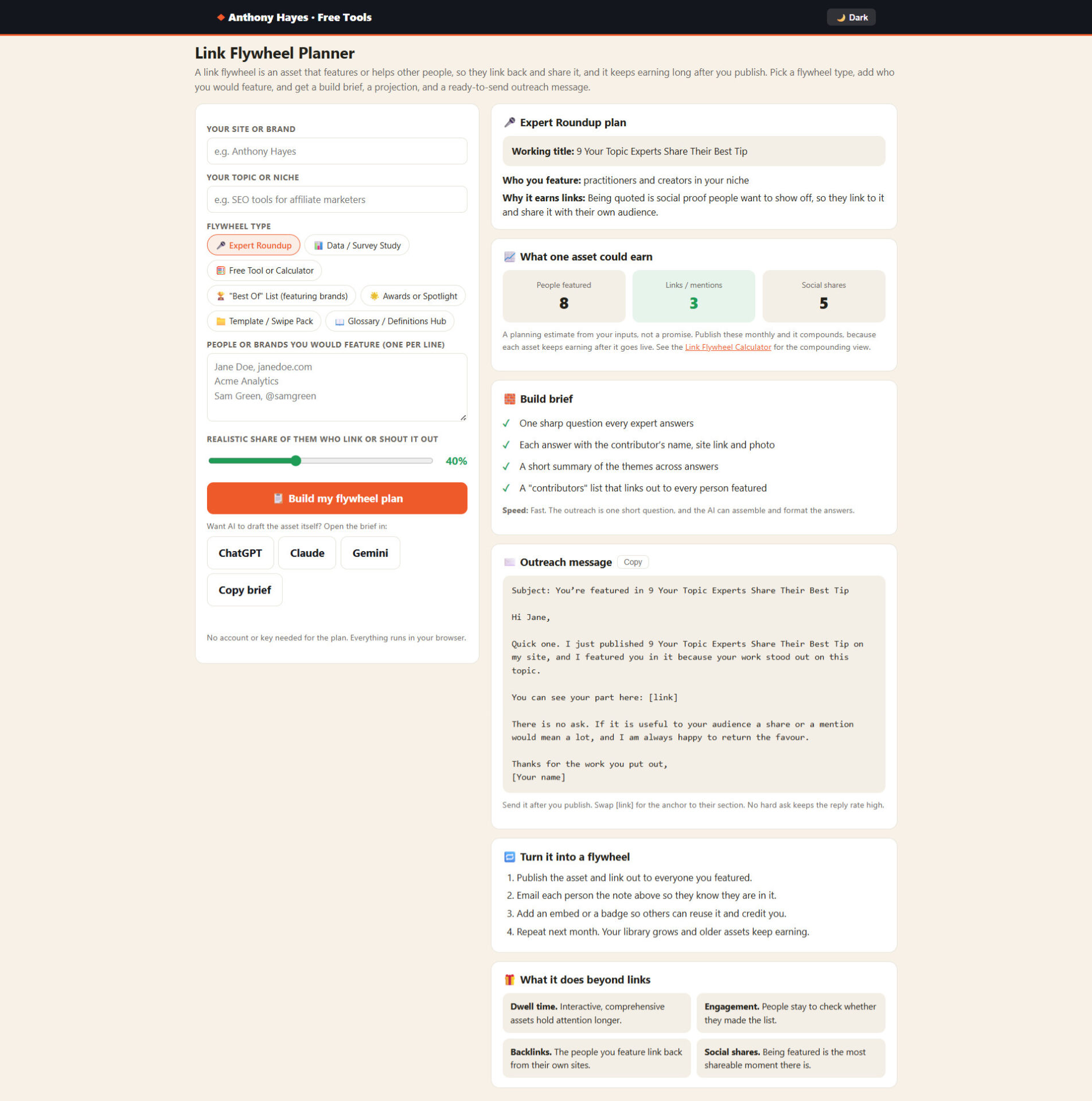
Here’s what this actually buys me. I’m not managing chaos, I’m setting the system up as co-creator with Claude Code, and then everyone plugs into something already laid out. The tasks are clear, the context is written down, the priorities are visible. My small team can tap straight into their part without waiting on me to explain it for the tenth time. Less man-management. More motion in the same direction.
That’s the real leap: from using AI to type faster to using it to build an organization.
Why this is the Cornerstone
This coordination layer, the dashboards, the workstreams, the memory, the HQ, is the part nobody shows you. Every demo out there is “look, AI wrote a blog post.” Almost no one shows you how to keep a real, growing asset business organized while you build it at speed. That’s the heart of the Cornerstone workshop, and honestly the moment I look forward to most: watching someone see the whole command center running and realize they could run their own the same way. (It all traces back to one tweet, if you’re just catching up.)
My Take: The bottleneck in an AI business was never production, you can produce all day now. The bottleneck is coordination and standards: knowing what to do next, holding a bar, and not dropping things as you scale. Solve that with instruments you can glance at and a memory that never forgets, and you stop being the constraint in your own business. Build the control panel before you think you need it.
Cornerstone Workshop
Want to see the whole command center?
The dashboards, the workstreams, the way it all coordinates, I build it live in the Cornerstone workshop.