New from Anthony Hayes: Aha Studio
Get found by the people searching for what you sell.
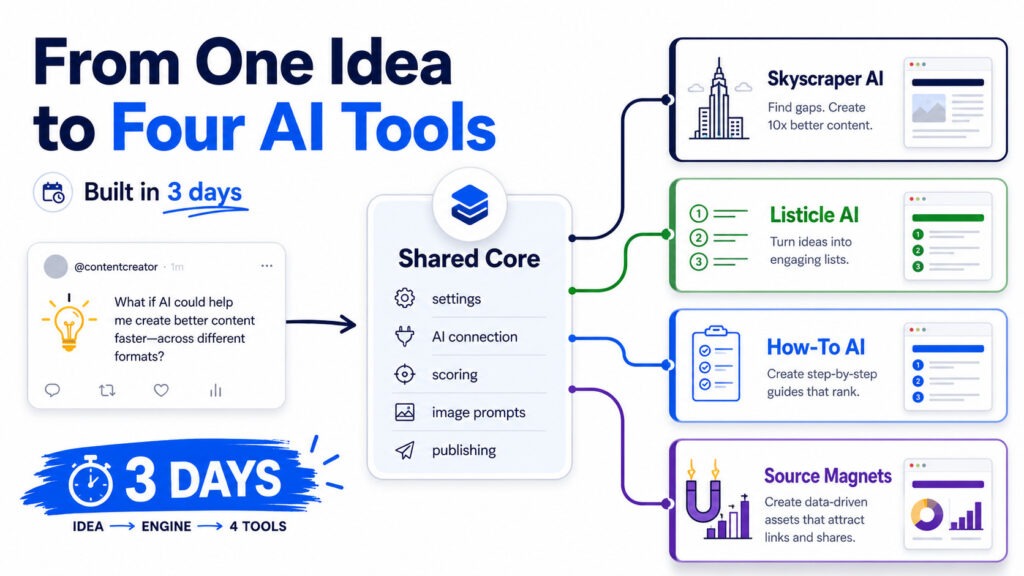
A few weeks ago I saw a post from Ahrefs offering Domain Rating data free through their API. That was the whole spark. Not a business plan, not a launch calendar, just a tweet and a thought: “I could do something useful with that.”
This is the story of what happened next, because what started as a single small idea turned into a suite of tools I am genuinely proud of. I want to write it down while it is fresh, partly so I remember how it actually went, and partly because the lesson in here is bigger than any one tool.
Find this useful? Add us as a preferred source on Google and more of what we publish will show up in your results.
The first build
The DR data was the seed, but the real question underneath it was the one I keep coming back to: how do you create content that earns links and traffic without a big budget or a big team. So the first thing I built was Skyscraper AI, a tool around the skyscraper technique, a method I first learned from Brian Dean. Take a topic, find what already ranks, and help the writer build something clearly better, with the structure and the on-page pieces that tend to attract links.
I built Skyscraper AI as a Chrome extension. That choice mattered more than I realized at the time, and I will come back to why.
It worked. And the moment it worked, I noticed something. The hard part was not the idea. The hard part was all the plumbing around the idea: settings, licensing, a clean way to talk to an AI, a way to score the output, a way to publish it. Once that plumbing existed, the next tool was not a from-scratch project. It was a variation.
One spark became a pattern
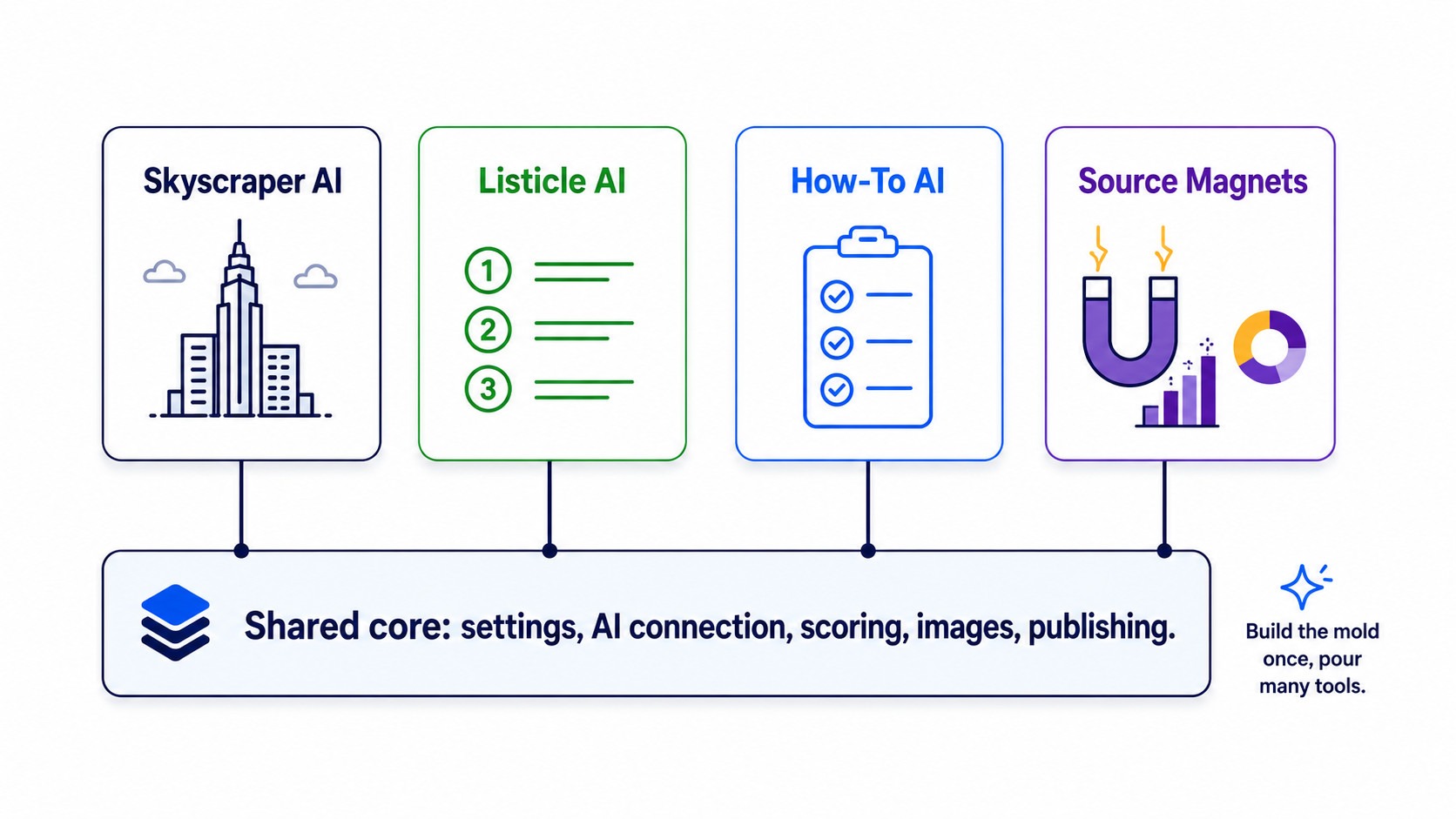
That is the part I did not expect. I thought I was building a tool. I was actually building a template for building tools.
So I kept going. If the skyscraper method deserved a tool, so did the other content formats that earn traffic:
- Listicle AI, for the kind of resource-list posts that pull in links because they save people time.
- How-To AI, for step-by-step guides, the format people search for when they have a problem to solve right now.
Each one reused the same core. The same settings system. The same way of working with the user’s own AI account so there is no extra cost from me and no API key to hand over. The same approach to scoring and to image prompts. I was not copying and pasting code so much as pouring a new tool from the same mold and changing what made it different.
These became a front-end line. Small, focused, honestly priced tools that do one job well.
The flagship I cared about most
Then I got to the one I had been circling the whole time.
There is a method I have always rated for earning press and links: build a post around a real, defensible statistic. Not an opinion, not a hot take, a number people can cite. When a writer or a blogger or even an AI assistant needs a figure for that topic, your page becomes the easiest one to quote. That is how you earn coverage every month without paying for it.
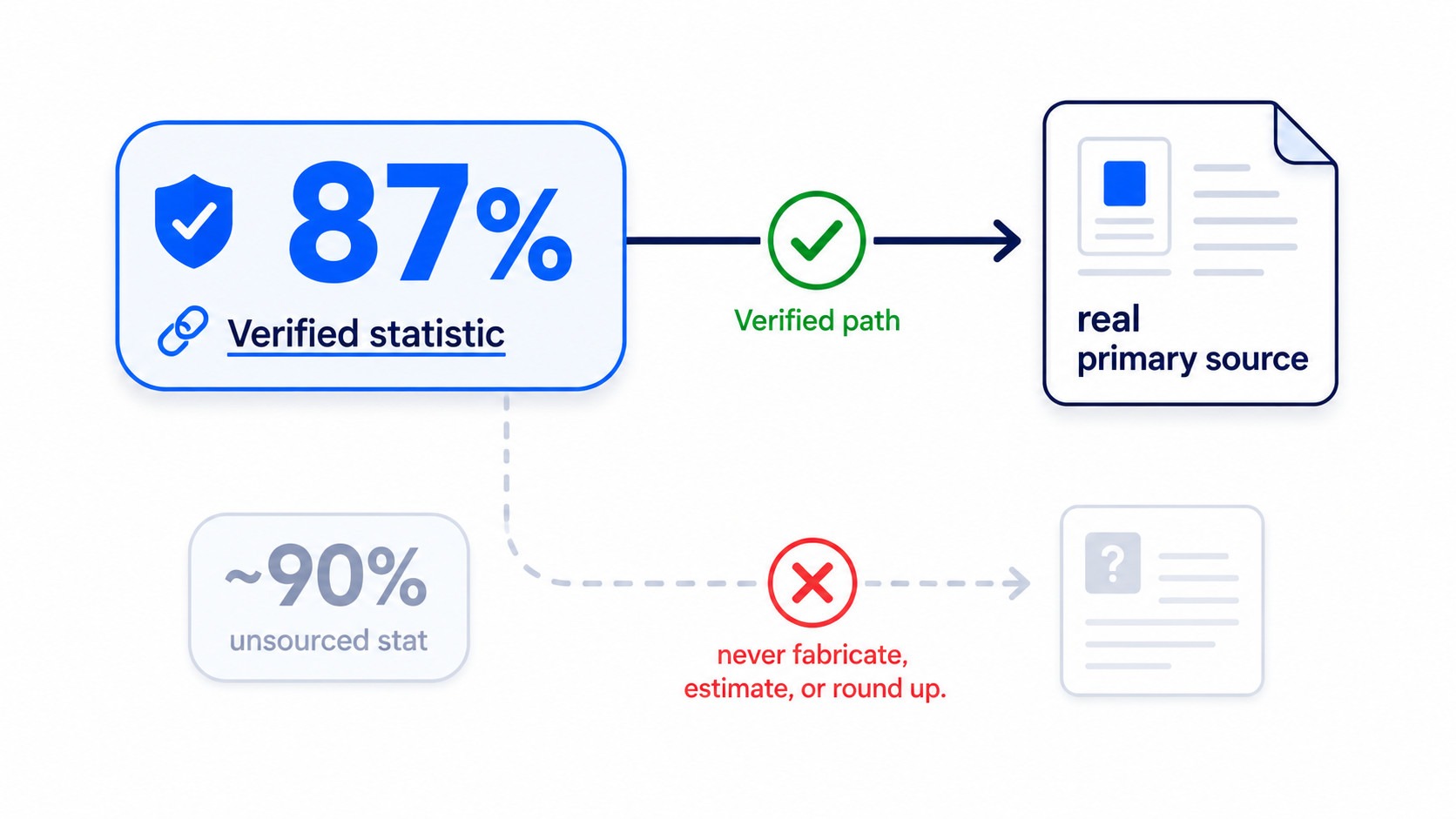
I built that into the flagship, Source Magnets. And this one taught me the most, because the method has a hard rule at its center: you never fabricate, estimate, or round up a stat. Every number has to survive what I started calling the click-through test. A reader can click through to a real, primary source and see the figure for themselves. The moment you fudge a number, the whole thing stops being a source and starts being noise.
So the tool had to protect that rule, not work around it. It generates ideas, it pressure tests a candidate stat and tells you to approve, sharpen, or replace it, it builds the cited report, and it scores the draft on citation coverage as its signature measure. The optimizer deliberately does not rewrite your stats, because the one thing I never want to risk is breaking a verified number to chase a readability score.
The thing I had to fix
Here is the honest part. The first version of the flagship had a flaw I have been burned by before. It gave the user a brilliant report and then asked them to do a bunch of manual work with it. Copy this, retype that, move this into the next step.
I know exactly what happens with that. People get a great output, feel a flash of overwhelm, tell themselves they will come back to it later, and never do. On a previous tool that exact friction led to refunds. Not because the tool was bad, but because it asked too much between the idea and the result.
So I went back in and built what I started calling the glue. Now the AI returns its report, you paste the whole thing back into the tool with one click, and it extracts every idea and fills your content bank automatically. No retyping. From there one button pressure tests a stat, another button carries that idea into the builder with its keyword and supporting stats already attached. The whole point was to shorten the distance between “I have an idea” and “I published something and started promoting it.”
That is the difference between a tool people admire and a tool people actually finish.
How each tool actually works
I want to be specific here, because “AI content tool” can mean almost anything, and most of what it usually means is “paste a prompt and pray.” These do not work like that. Let me show you the actual mechanics.
The shared engine underneath all of them
Every tool sits on the same foundation, and a few decisions in that foundation shape how all of them behave.
You bring your own AI. None of these tools sell you AI usage or hold an API key of mine. You connect your own ChatGPT, Claude, or Gemini account. That keeps your costs honest and your data yours, and it means the tool gets better automatically every time those models do.
There are two ways the tools use that AI, and the choice is deliberate per tool:
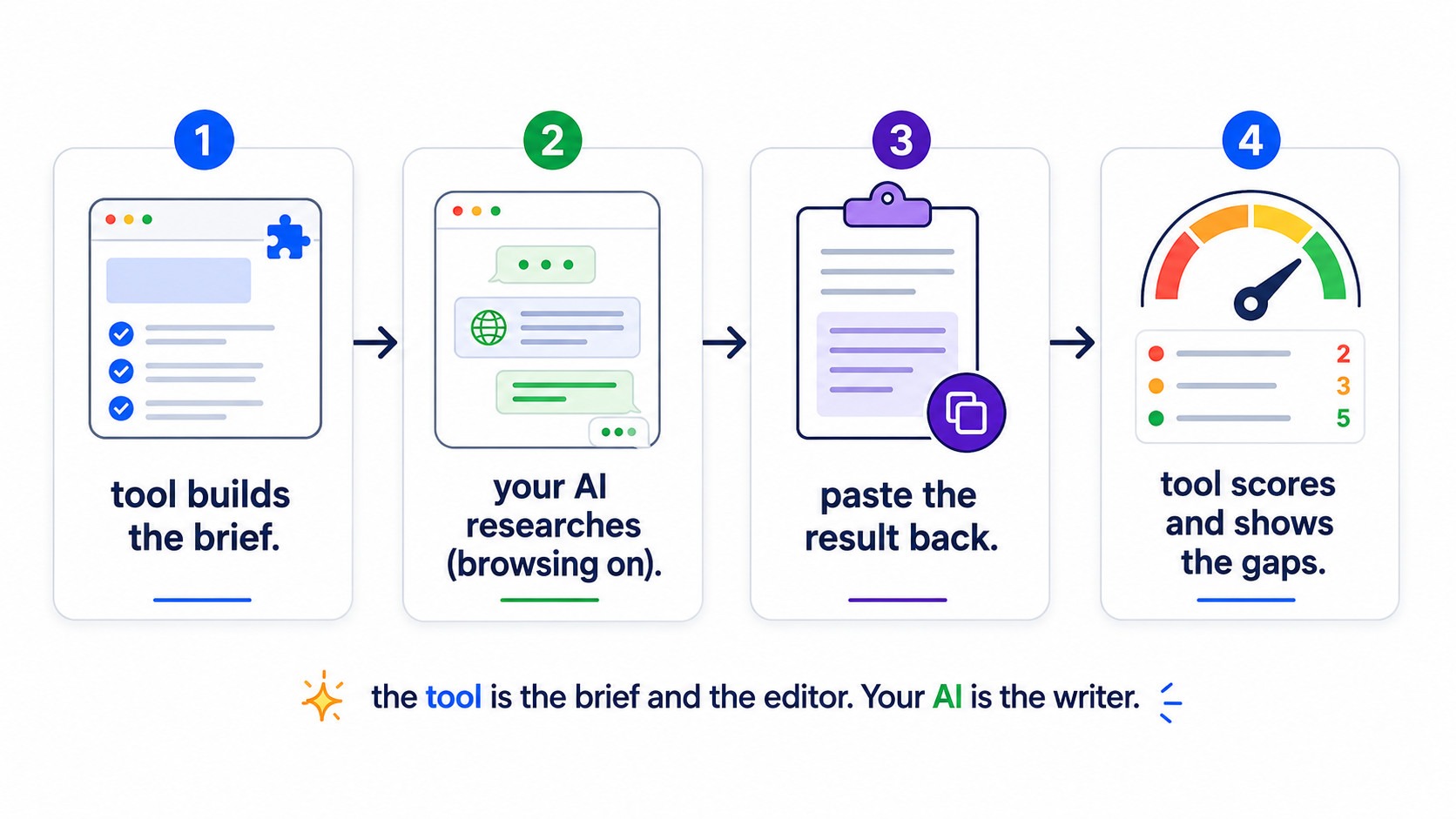
- The prompt and paste-back model. For the tools where research quality matters most, the extension does not try to be the AI. It builds a long, self-contained, expert-level prompt, opens your AI for you, and drops the prompt in. Your AI, with browsing on, does the heavy research. Then you paste the result back into the tool’s editor, which scores it and shows you what to fix. The extension is the brief and the editor. Your AI is the writer. This is how Skyscraper AI, How-To AI, and Source Magnets work.
- The in-extension assembler. For the tool where structure matters more than open-ended research, the extension generates the content directly through your connected AI and assembles it into shape. That is Listicle AI.
Scoring is built in, and it is honest. Every tool measures the draft rather than just trusting it. Readability with a real Flesch calculation, structure checks, and a naturalness pass that flags clichés and the tells of generic AI writing. Source Magnets adds the one that matters most for its job, a citation-coverage gauge.
Images without another subscription. The tools generate detailed, brand-aware image prompts you can paste into whatever image tool you already use. No extra API, no surprise bills, and the prompts are deterministic, so they do not break into a mess of empty boxes the way an AI-generated list of prompts sometimes does. I learned that one the hard way.
Publishing is optional and direct. If you run WordPress, you can push a finished draft straight to your site with an application password that never leaves your own machine. If you do not, you export to Markdown, HTML, or Word and paste it wherever you like.
Skyscraper AI
You give it a topic. It builds a research brief that tells your AI to study what already ranks for that topic and then produce something clearly more complete and more useful, with the structure and on-page pieces that tend to attract links. You paste the result into the editor, which scores it and surfaces the gaps, including a competitor-terms view so you can see the concepts the top pages cover that yours does not yet. Tighten, then export or publish.
This was the first one, and it is still the cleanest illustration of the whole idea. The tool is not pretending to know your topic better than a browsing AI does. It is making sure the AI is pointed at the right target and that the output is measured before it goes live.
Listicle AI
This one is for the list and round-up posts that earn links because they save people time. A good list post is really a small database with a point of view, so this tool is an assembler. You set the topic and how many items you want, and it builds the list with the structure that makes these posts linkable, then scores it and generates the image prompts.
The item count is where the product tiers live. The front-end version covers up to twenty five items, which is a complete, publishable post on its own. An order bump takes you to fifty, and the full version handles a hundred or more for the big definitive resource lists. The front-end also comes with commercial rights, because a list tool is most useful when you can actually use what it makes.
How-To AI
How-to and step-by-step guides are what people search for when they have a problem to solve right now, which makes them some of the highest-intent content you can publish. This tool works like Skyscraper AI, the prompt and paste-back model, but tuned for instructional structure.
It starts by generating title options, with the small touches that earn clicks honestly, like the current year or a “new” tag where it fits. It builds a how-to brief, and the editor scores the returned guide on the things that make a guide good, including a genuine step count that ignores FAQ questions so it measures the actual instructions. It carries the same competitor-terms view and image prompts as Skyscraper AI, because a good guide should be both complete and easy to follow.
Source Magnets
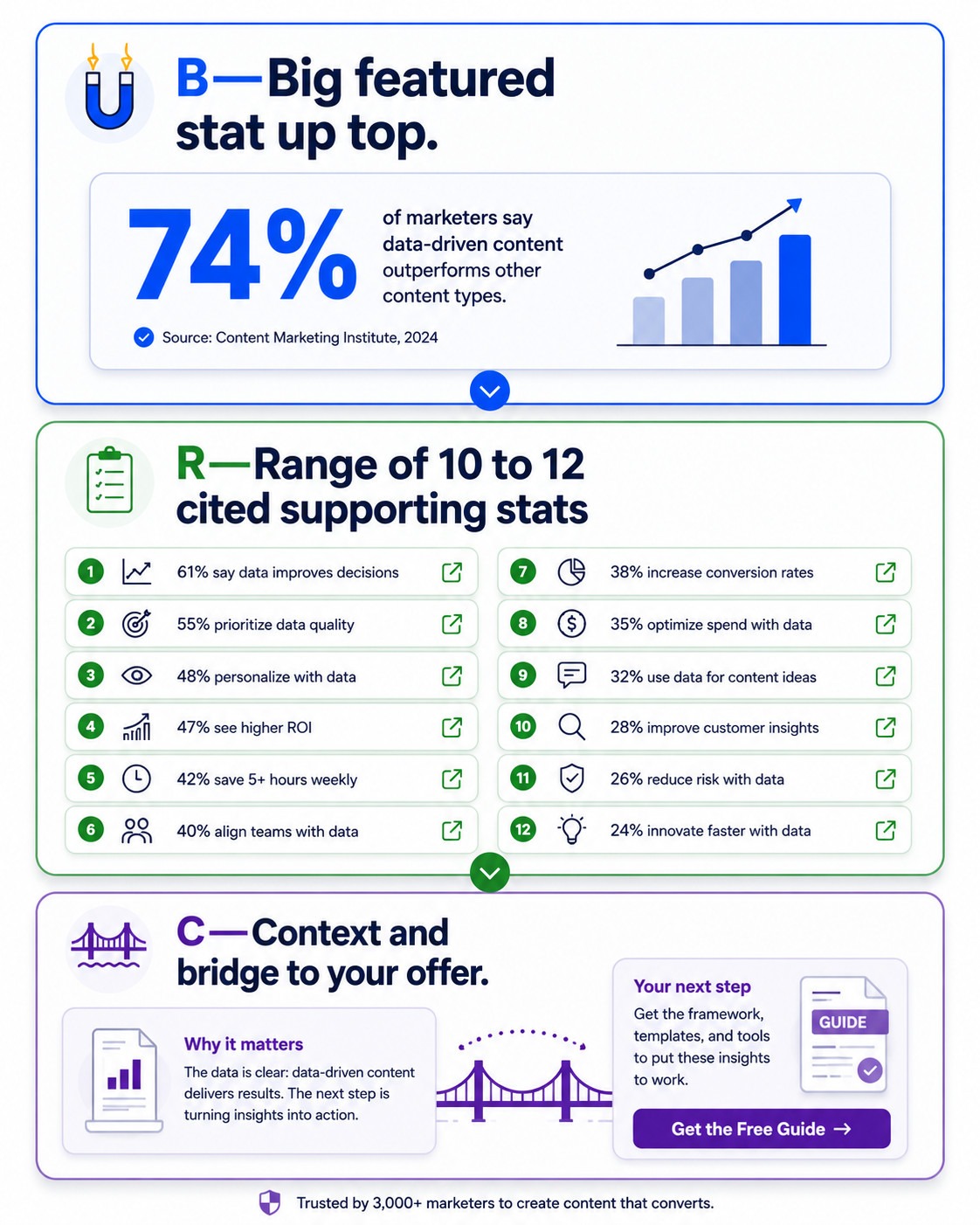
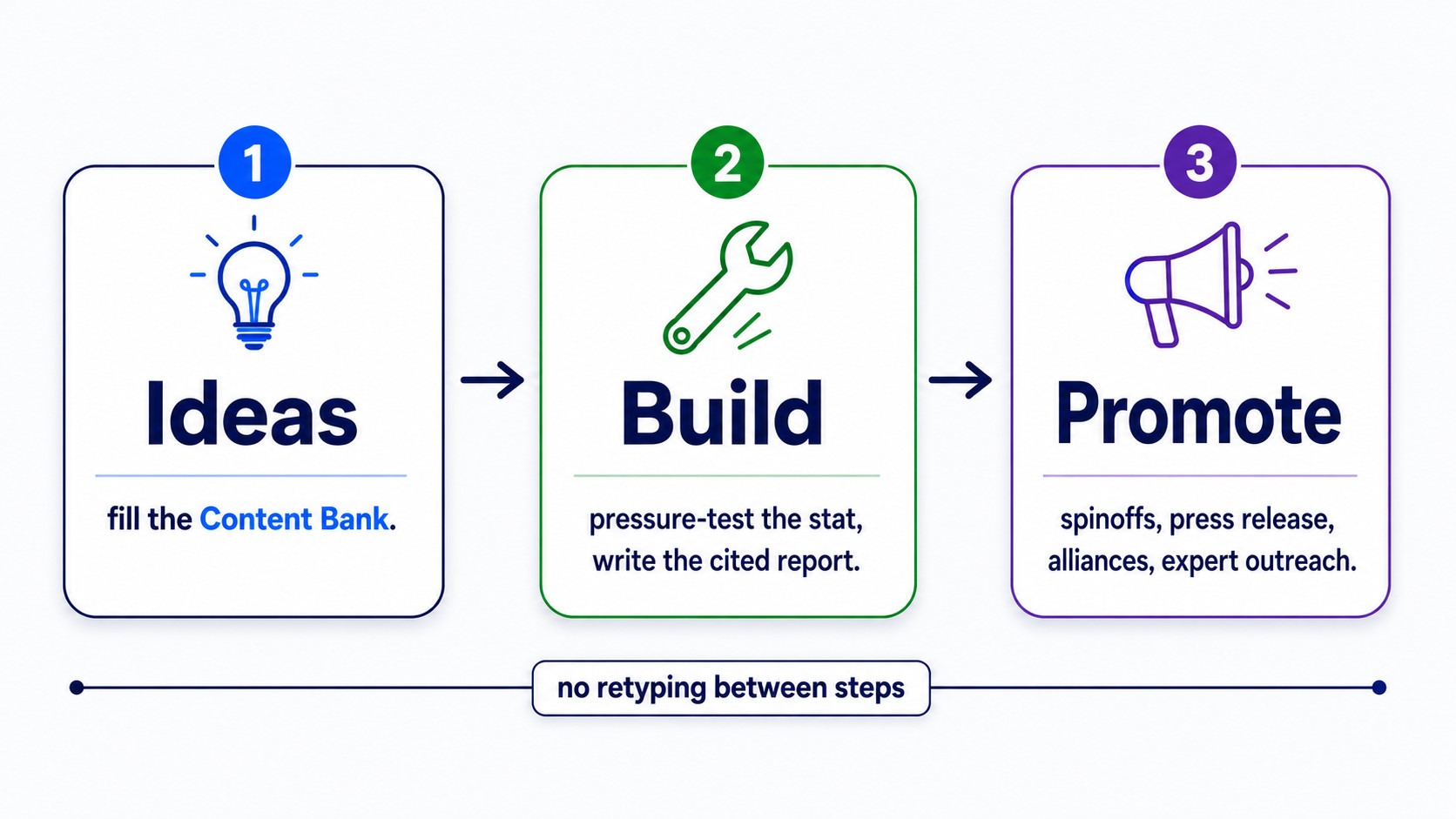
The flagship runs in three phases, and the glue I described earlier connects them so you never retype anything.
Phase one, ideas. You run one ideation pass and your AI returns a batch of stat-post ideas, each one run through a three-box test (is it searched, is it citable, does it bridge to something you sell), spread across four formats, and weighted roughly seventy percent toward tangential topics, because those are the ones other people actually cite and link to. You paste the whole report back, and the tool extracts every idea into a Content Bank with its format, its candidate stat, its keyword, and a verdict. You star the winners and delete the rest. That is the only decision you make. No retyping.
Phase two, build. You pick a banked idea and pressure-test its featured stat first. Your AI runs it through a checklist and comes back with approve, sharpen, or replace, because the whole method lives or dies on one rule: never fabricate, estimate, or round up a number. Every stat has to survive the click-through test, where a reader can click through to a real primary source and see it. Once the stat holds, one button carries that idea into the report builder, keyword and supporting stats already attached, and your AI builds the full cited report. Then you paste it into the optimizer, which scores structure, readability, and citation coverage, its signature measure. The optimizer deliberately does not rewrite your stats, because the one thing I will never risk is breaking a verified number to chase a readability score.
Phase three, promotion. A live post earns nothing if nobody knows the number exists, so the last phase builds the outreach. Spinoff stat pages, a press release built around your verified number, an alliance partner shortlist, and personal expert-quote outreach. Each one opens in your AI pre-filled from the idea you already banked.
That is the tool I am proudest of, because it does not just make content. It walks you from a blank page to a published, citable asset and the outreach to promote it, without ever asking you to fudge a number or retype your own work.
So which one should you build first?
Four formats, four tools, and the honest answer is that it depends on your goal and what you have to work with. So rather than tell you, here is a small interactive tool that asks you four quick questions and points you at the format to start with. It is also a live example of the kind of interactive calculator I build into posts, the same one I cover in the workshop below.
Why Chrome extensions, and why that matters to me
For a while I built things on a no-code platform. Fast to start, but I developed a low hum of dread with those tools. A nagging sense that something would break, that an update somewhere upstream would quietly take a feature down, that I did not fully own the thing I had made.
The Chrome extensions feel different. They are mine. The code sits in files I can read. The user’s data and keys stay on their own device. There is no server of mine to fall over at the wrong moment. When I open one of these projects I do not feel the dread. I feel like I am standing on something solid.
That feeling is worth more to me than I expected. It is the reason a tweet about an API turned into weeks of building instead of an afternoon of tinkering.
The part that still surprises me: three days
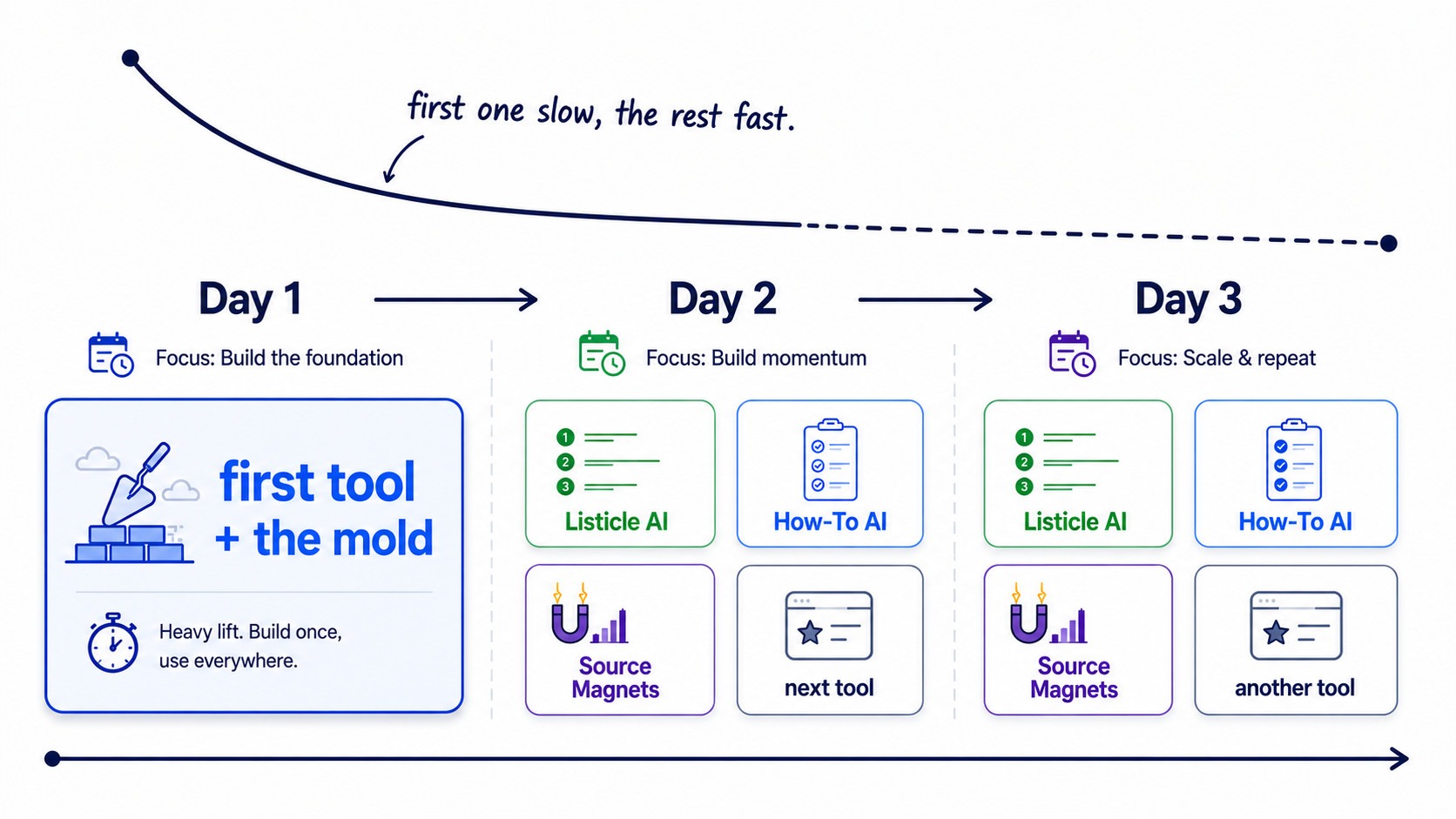
Here is the detail I keep coming back to. From that first tweet to a working set of tools, the build took three days.
Not three days for one tool. Three days for the whole set, plus the flagship. That is only possible because of the thing I worked out early. I was not building tools, I was building a mold. The first one was slow because I was pouring the mold at the same time as the first cast. Everything after that was fast, because the foundation already existed and I was only changing what made each tool different.
Leverage does not come from working faster. It comes from building the thing that makes the next thing easy.
I will be honest about the business side too, because it is part of the story and it is the part I would want to read. Based on how small tools like these have performed for me before, my own working estimate is that each one can do somewhere around ten thousand dollars in its first few weeks, and the flagship closer to twenty thousand, from promotion to my own audience alone. Those are my projections, not promises, and not a typical result for anyone. They depend entirely on the offer, the audience, and the follow-through, and plenty of launches do less. But even at a fraction of that, the math on three days of work is hard to ignore.
And that is only the opening move. The plan is to take the set onto the webinar circuit as a single bundle, where the economics change again, and to let the small tools keep selling quietly through the content on the new site long after launch week. The building took three days. The selling is the part that compounds.
What I actually learned
A few things I want to keep.
Build the second thing before you finish admiring the first. The value was never in any single tool. It was in noticing that the plumbing was reusable and leaning into that hard.
Friction is the silent killer. Quality does not get you a happy customer if the customer gives up halfway. Every step you can remove between effort and result is worth more than another feature.
Pick foundations you trust. The tools I trust are the ones I keep improving. The ones I do not trust are the ones I quietly avoid. That is true of software and probably of most things.
A rule at the center keeps you honest. With the stat tool, the no-fabrication rule was not a limitation. It was the entire point. The constraint is what makes the output worth citing.
What is next, and a promise
I have a few more ideas in the same family, and the same mold makes them realistic instead of daunting. I will keep sharing the build as it goes.
Here is the honest plan, so you can hold me to it. I am releasing the tools one a week over the next four weeks rather than all at once, so each one gets its own moment. I am starting with promotion to my own audience only. I am deliberately not pushing affiliates at launch, because I want a clean read on what the tools do on their own before other people’s traffic muddies the numbers.
And I am going to come back and tell you exactly what happened. Earlier in this post I put my projections on the record: roughly ten thousand per small tool and around twenty thousand for the flagship in the first few weeks. In four weeks I will write the follow-up with the real figures. Not just sales, but how many new people joined the list, what the staggered release did to momentum, and whether I beat my projection, matched it, or fell short. If I missed, I will say so and why. That is the part of build in public most people skip, and it is the part I would most want to read.
If you take one thing from this today, let it be the small one. I almost scrolled past that tweet. The whole thing exists because I stopped on it for a second and asked what I could make with it. Most good projects start about that quietly.
Credit where it is due
I should be clear about where the methods come from. The skyscraper technique, the stat-post approach behind Source Magnets, and a lot of how I think about list and how-to content, I learned from Brian Dean’s work over the years. The tools are mine and the build is mine, but the thinking stands on what he taught. Credit where it is due, and thank you.