New from Anthony Hayes: Aha Studio
Get found by the people searching for what you sell.
Traffic & Promotion · Shareable AI tools
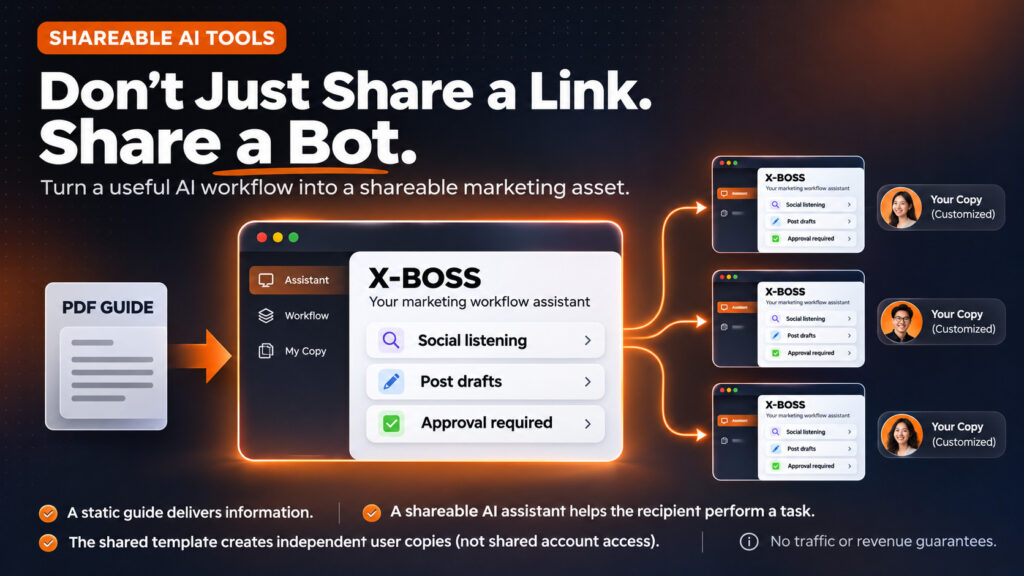
Most marketers still hand people a PDF and hope it earns attention. Today I tried something different. I took a shareable Grok Bot I found on X, made my own copy, turned it into an X growth assistant called X-Boss, and shared it as a public template anyone can import and make their own. Here’s what happened, how to repeat it, and why a bot people can use beats a guide they have to read.
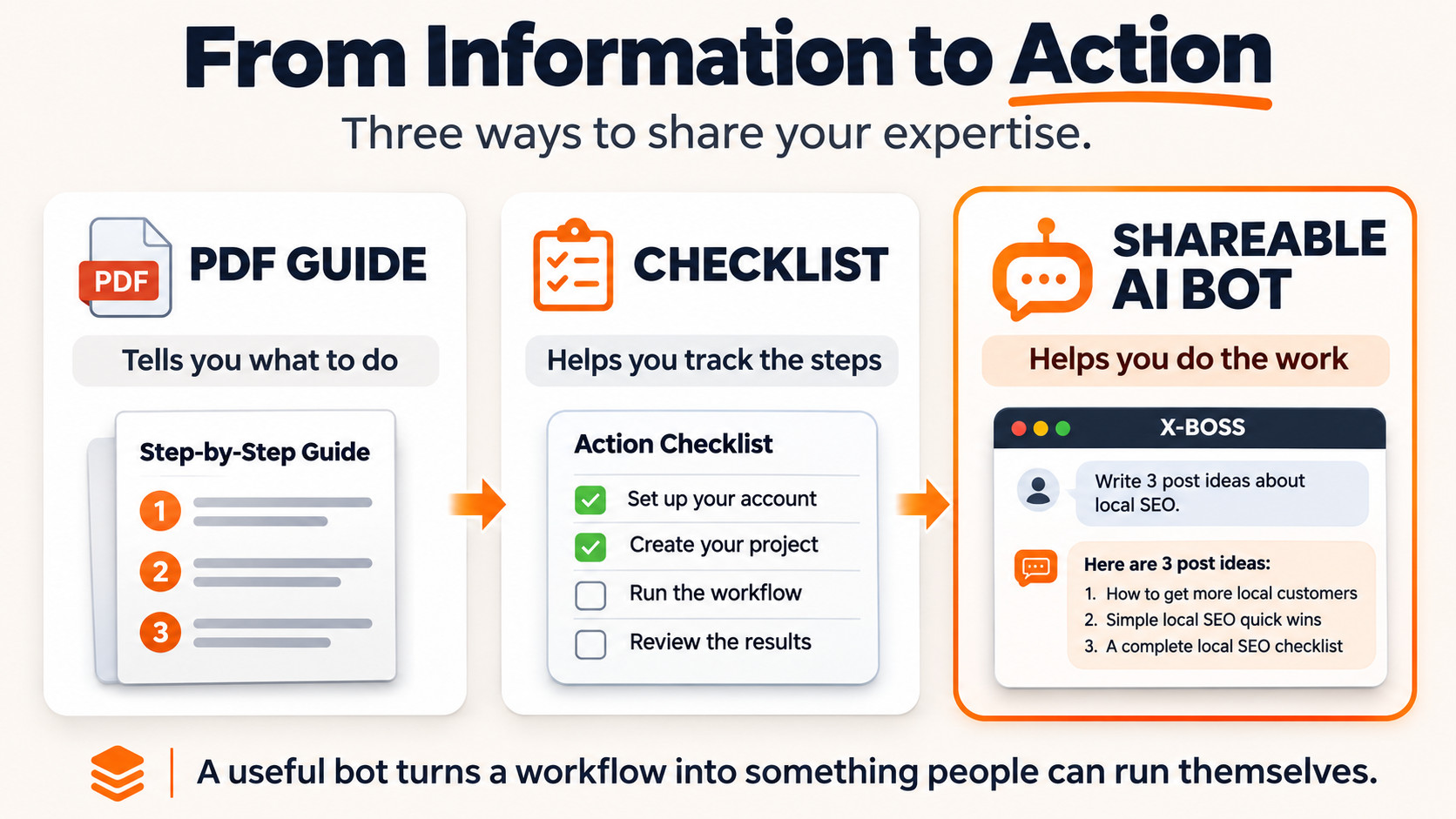
A PDF tells someone what to do. A shareable bot helps them do it.
That’s the whole idea. And after today, I think it changes how we should look at lead magnets and free tools.
Find this useful? Add us as a preferred source on Google and more of what we publish will show up in your results.
What happened with X-Boss
I found a shared Grok Bot on X. It was useful, but it wasn’t quite what I needed.
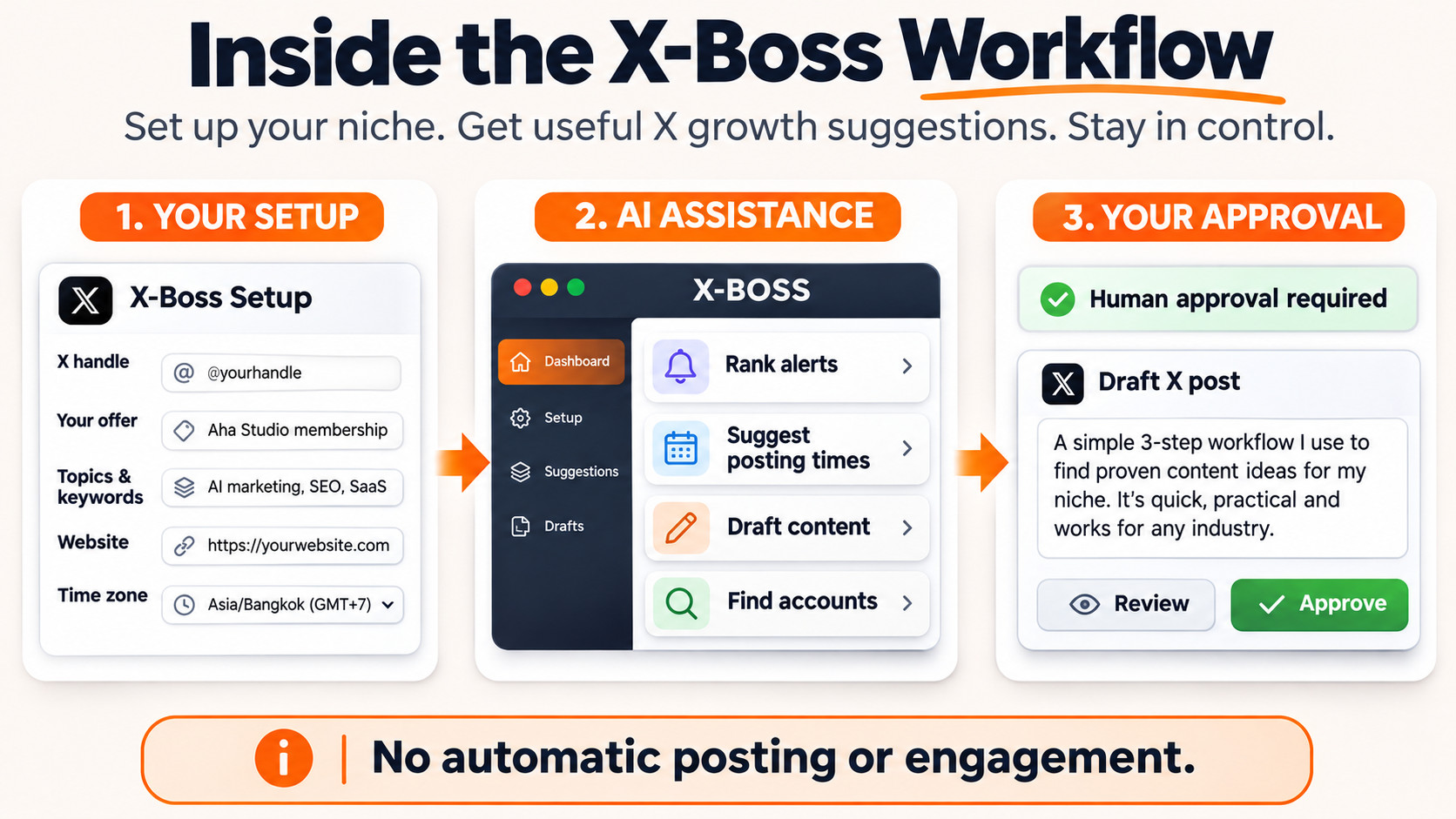
So I imported a copy, renamed it X-Boss, and expanded it into an X growth assistant that works for any niche.
On the first run, X-Boss asks a few practical questions:
- Your X handle and time zone
- Your offer and who it’s for
- The topics, keywords and accounts to watch, and what to leave out
- Your website or blog, as a content source
- The formats you like to post in
- When you want alerts
From there it can:
- Rank social listening alerts, so the conversations that matter rise to the top
- Suggest posting times
- Draft X posts, threads and articles from your website content
- Suggest accounts worth connecting with
One rule doesn’t bend: it never posts or engages on its own. Every draft and every suggestion waits for you to approve it.
That matters. A bot that acts for you can feel powerful, and risky. A bot that gets strong options ready for you feels useful, and you can trust it.
When I made the template shareable, I added a short invitation in the welcome to look at the free demo workers in Aha Studio. It sits beside the setup, not in the way of it. The bot’s job is still X growth help. The link is just a relevant next step for anyone who wants to see what other AI workers can do.
Want your own copy? Import the X-Boss Grok Bot here, then set it up for your own niche on the first run.
What a shareable Grok Bot actually is
Think of it less like a freebie and more like a workflow someone can pick up and use.
- The template is what you publish for other people to use.
- Their copy is theirs to change, extend and run in their own account.
- Your account stays yours. Nobody gets access to it.
One thing to check before you share: look at exactly what your template will copy, and clear out anything private first. Your test runs, your own notes, anything you wouldn’t hand to a stranger.
If you’ve used Custom GPTs, the pattern will feel familiar: share a useful starting point, and let people make it theirs. They aren’t the same product, but the way they spread is similar.
In plain words: you’re not just sharing advice. You’re sharing an assistant that already knows how to start the job.
A simple loop you can repeat
You don’t need a big product roadmap. You need one painful job your audience does again and again.
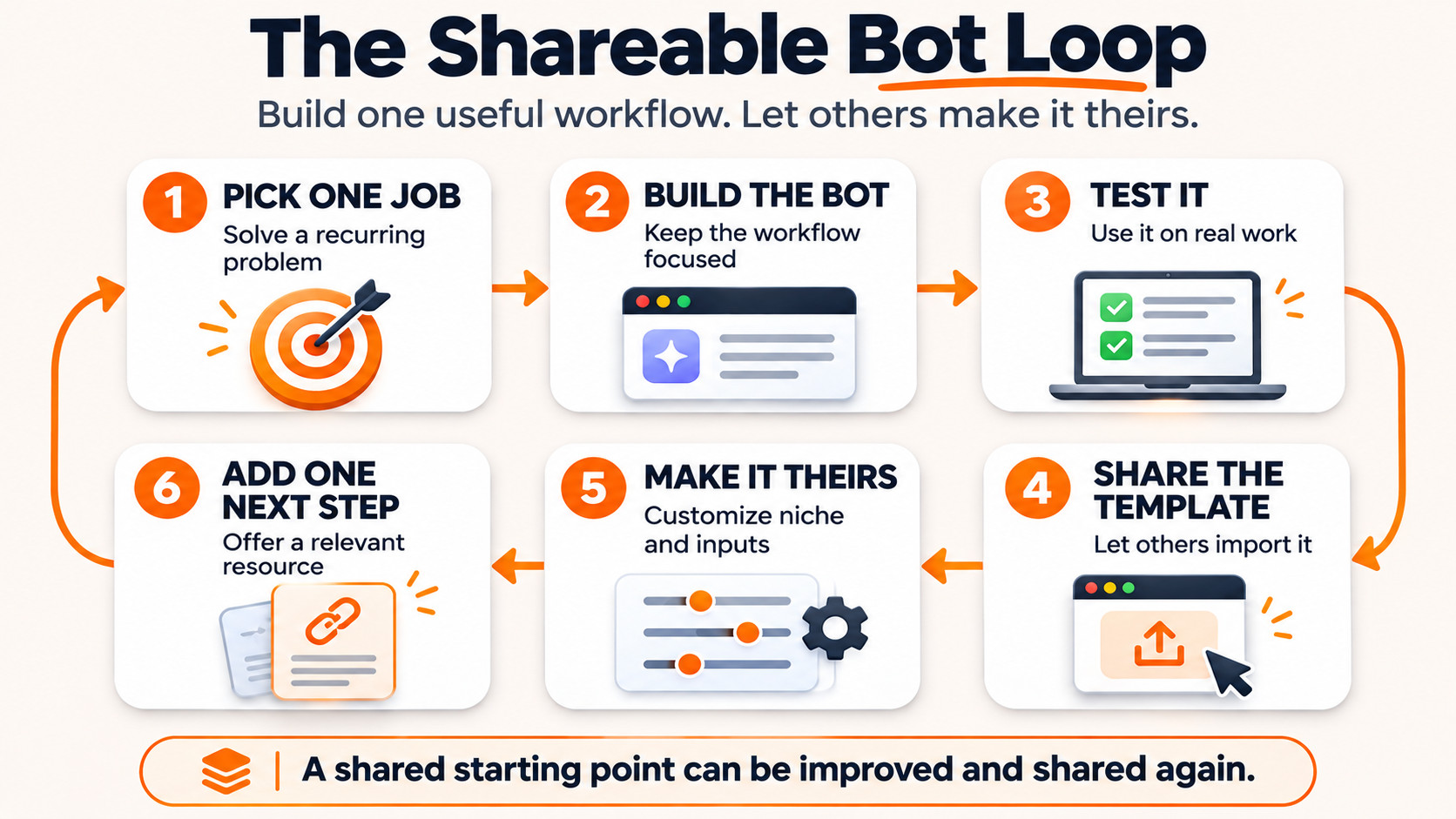
- Pick one painful job. Something your audience does often and still finds slow or easy to get wrong. Turning a blog post into a week of social drafts. Scanning niche conversations for openings. Qualifying leads before a call. Writing launch emails for an affiliate offer.
- Build a bot for that one job. Keep the first version narrow. A bot that does one job well beats one that claims to do everything.
- Test it on your own work. Fix the awkward questions. Tighten what it gives back. Keep the first run short.
- Share the template. Make it public so other people can import a copy.
- Let people make it theirs. Invite them to change the niche, the offer, the keywords, the tone and the sources. That’s part of the value.
- Add one relevant next step. A demo, a related tool, a newsletter, a service. One. Not a maze of upsells.
That’s the loop. I didn’t start from a blank page with X-Boss. I started from someone else’s shared bot. Now someone else can start from mine.
Why this can work for traffic and sales
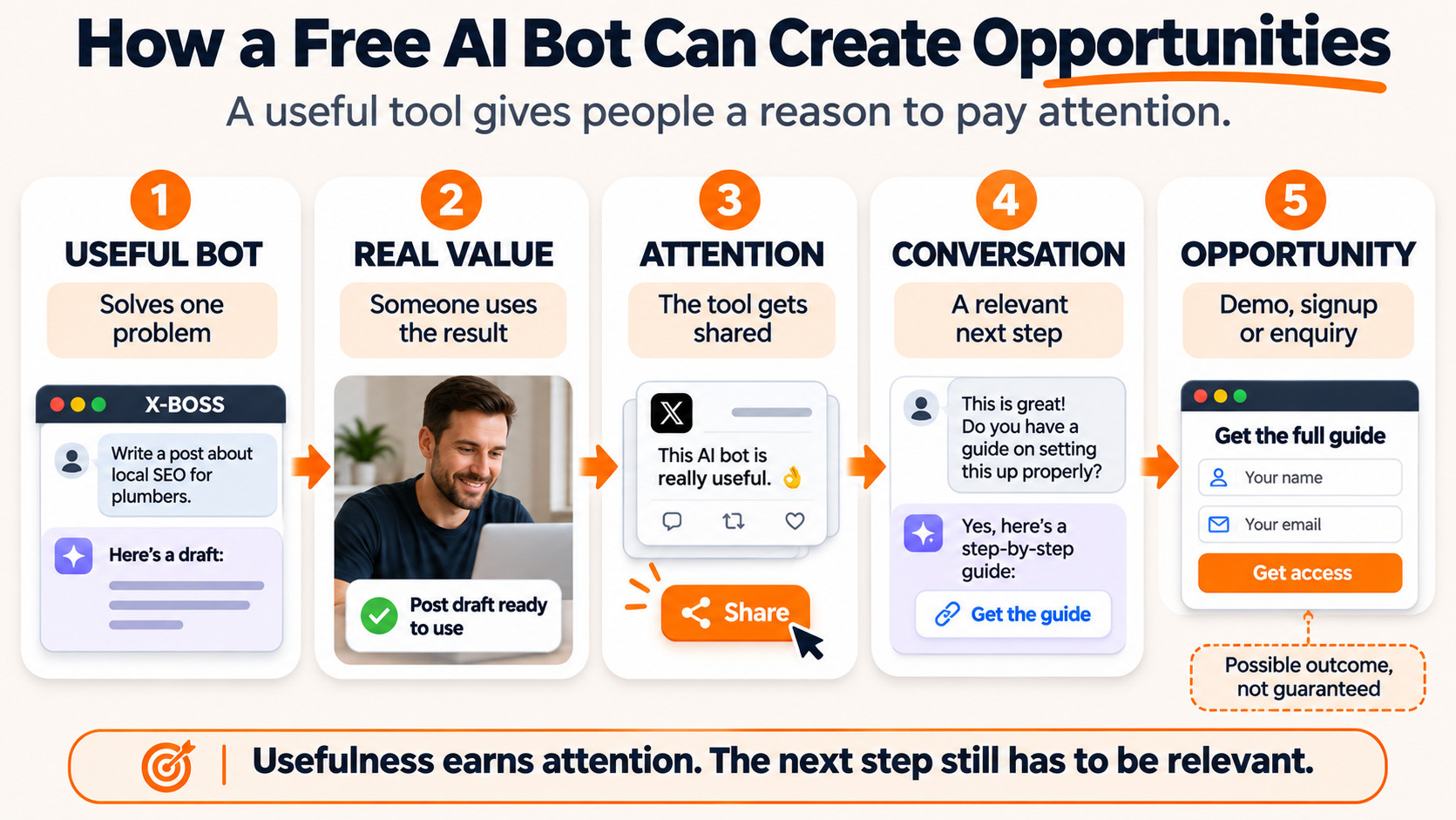
People share tools that help them look good and get results. A useful bot has a chance to travel because:
- It gives an instant “I can use this” moment
- It fits the importer’s niche, not just yours
- It lowers the cost of trying your way of working
- It makes your next step feel earned, not pushed
Here’s the thing. A shared bot won’t bring traffic or sales on its own. You still have to put it in front of the right people, and it still has to be genuinely useful. Usefulness earns attention. Attention starts conversations. Conversations are where the opportunities come from.
Bot ideas by audience
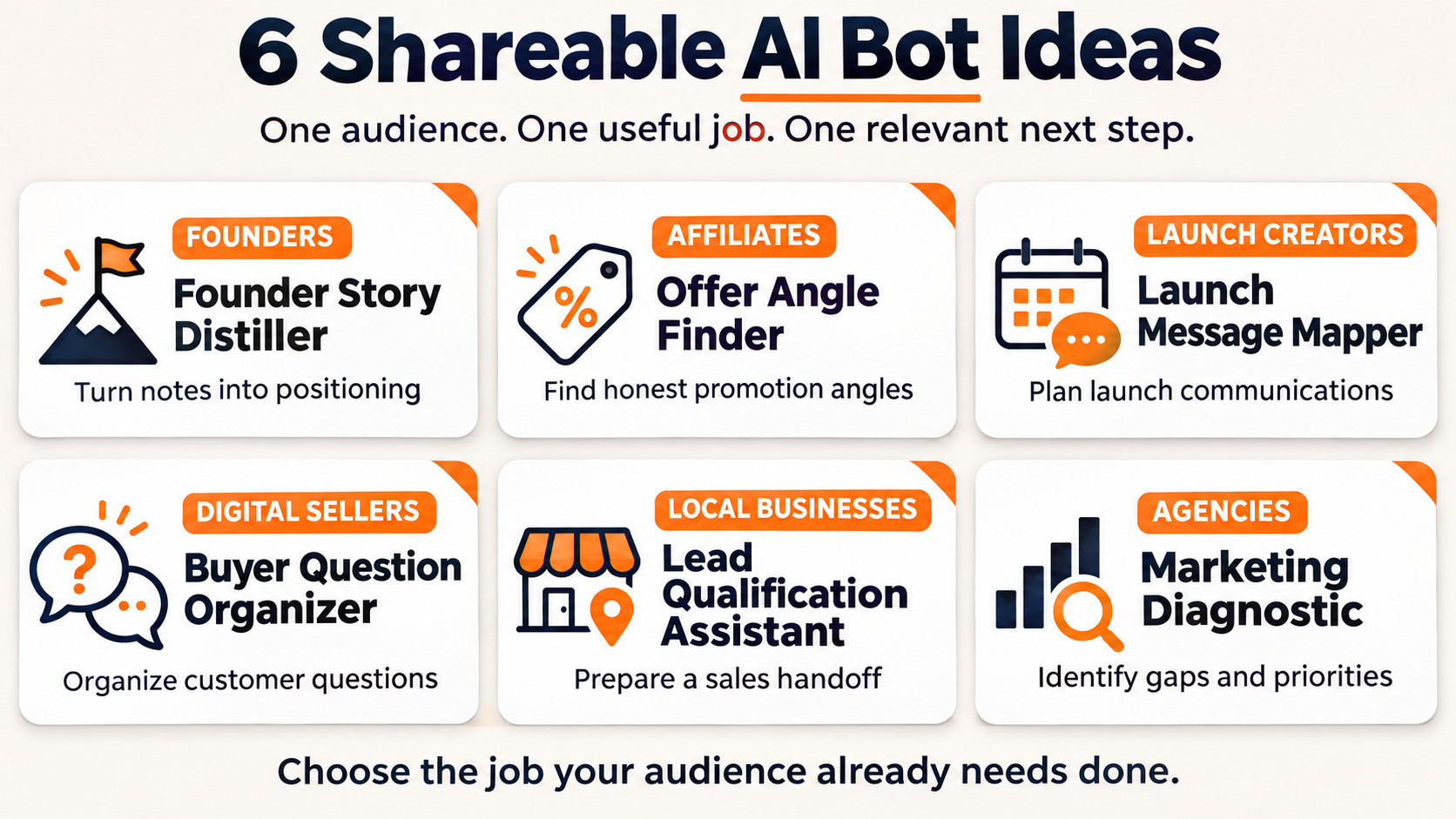
The same pattern works for almost anyone who sells something. One job, one bot, one next step.
- Founders: a Founder Story Distiller that turns rough notes and customer quotes into positioning lines, FAQ answers and post drafts. Next step: a product demo.
- Affiliate marketers: an Offer Angle Finder that reads an offer page and suggests honest angles and objections, without inventing claims. Next step: a swipe file or content system.
- JVZoo and WarriorPlus launch creators: a Launch Week Message Mapper that turns a launch brief into email themes, posts and partner updates to review. Or a JV Partner Brief Assistant that sets out who the offer is for and which claims to avoid. Next step: launch support.
- ClickBank and Gumroad sellers: a Buyer Question Organizer that turns common buyer questions into content ideas and draft support answers. Next step: templates or onboarding help.
- Local and service businesses: a Lead Qualification Assistant that asks the right questions and writes a handoff note for the sales call, without pretending to close the deal. Next step: book a consultation.
- Agencies: a Marketing Diagnostic that walks a prospect through a short assessment and gives a plain summary of gaps and priorities. Next step: “Want help putting this in place? Book a strategy call.”
Help first. Let people make it theirs second. Invite them further third.
Where the call to action belongs
- In the welcome: short and optional. “Want to see related demos? They’re here.” Then let people get on with the setup.
- After a useful result: offer the deeper system or service that goes with what they just got.
- In a later follow-up: invite people who already got value to a product, service, community or newsletter.
Don’t hide the value behind a hard sell. Don’t force a form before the bot works. Don’t invent urgency. The free bot should still be useful to someone who never clicks your link.
Launching one: keep it simple
- Build: one audience, one painful job, one short first-run questionnaire, one useful result, one optional next step.
- Test: run it on your own work, ask a few people in your niche to import a copy, and watch where they get stuck.
- Share: say what problem it solves in plain words, show a real before and after from your own use, and make it clear people get their own copy.
- Follow up: answer questions in public, share improvements, and show how people are using their copies.
Measure what you can see: template imports (if they’re visible to you), clicks on your link, conversations that mention the bot, email sign-ups and sales you can trace back. If the response is weak, make the bot more useful before you promote it harder.
The big lesson
The old model was: get attention, give content, hope they buy.
The better model: solve a real job, let people make the solution theirs, and earn the right to invite them further.
A good bot template isn’t your private brain dump. It isn’t automatic posting. And it isn’t a promise of traffic or sales. It’s a starting point for work people already need to do. Help first, and people listen when you point them to the next step.
Frequently asked questions
What is a shareable Grok Bot?
It’s a Grok Bot published as a public template. Other people import their own copy into their own account, then change it for their niche, offer and sources. They don’t get access to your account.
Can a shareable bot work as a lead magnet?
Yes, if it does one useful job well. Instead of a PDF that tells people what to do, the bot helps them do the work, and a short, optional link in the welcome can point them to your next step.
Should a shared X bot post for you automatically?
X-Boss never posts or engages on its own. It ranks alerts, suggests times and drafts posts, and every draft waits for your approval. That keeps you in control of your account.
[MY TAKE DRAFT: Tony to approve or redictate before publishing.]
My Take: I didn’t build X-Boss from scratch. I found someone’s shared bot on X, made a copy, and turned it into what I needed. That’s the part that got me. The work compounds: someone shares a starting point, you improve it, you share yours, and the next person improves that. And a bot that does a real job for people is a far better first impression than another PDF. The rule I won’t bend on is the same one we use in Aha Studio: it drafts, you approve. Nothing posts on its own.
Aha Studio
See what custom AI workers can do
Type your website or your niche and get a free marketing plan in about a minute. No card, no account.
Or watch one AI worker do one job, free:
- Site Sniper: a small, complete website from one keyword
- Calculator Sites: a whole calculator site from one keyword
- Keyword Research: 13 research automations, step by step
- SEO Magnets: your content plan and articles, built from your keyword gap
- BuildMyDirectory: a real directory for any niche and place
- Neighborhood Pages: a landing page for every service in every neighbourhood
- SocialWatchr: the posts on X your business can answer