New from Anthony Hayes: Aha Studio
Get found by the people searching for what you sell.
Local SEO and Google Business Visibility › Costs, Pricing and Choosing Help
SEO pricing packages
A cheap monthly SEO package and a premium retainer can cover very different work, and the price on the front page rarely tells you which one you're getting. This guide breaks down what each tier should include for a local business, so you can compare proposals on the work itself. The most useful habit is reading the line items before you look at the total.
A basic local SEO package usually starts at a few hundred dollars a month, and the price alone doesn't tell you what you're getting. Two proposals with the same monthly fee can do very different amounts of work. To compare them properly, check what each tier includes: Google Business Profile upkeep, citation cleanup, on-page fixes, new content, reviews, link building, technical audits and reporting.
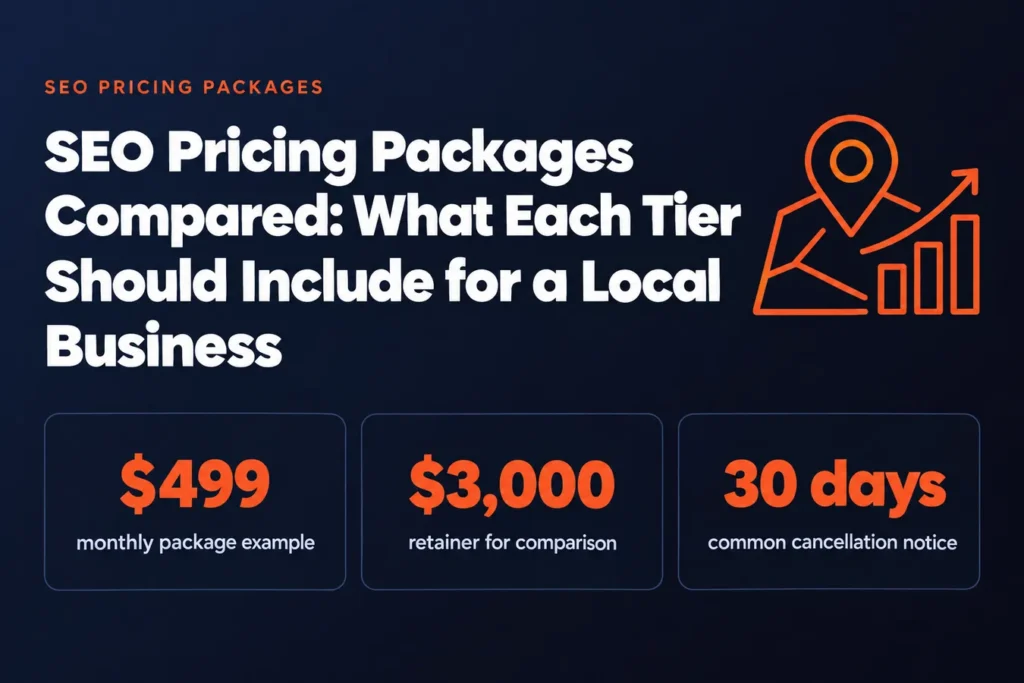
A monthly package that starts at $499 can look like a bargain next to a $3,000 retainer.
But the cheaper one often delivers a fraction of the work once you read the line items.
Here's what you'll get out of this post: a clear picture of what each tier of SEO pricing packages should actually include for a local business.
I've spent a lot of time looking at how marketing work gets scoped and priced, so I've seen plenty of proposals that look identical on the front page and aren't close underneath. The gap is almost always in the details: how many pages get touched, whether anyone is managing your Google Business Profile, and who is checking the results each month.
We'll walk through the basic tier first, then what changes at the mid-tier, what a full-service package adds, and what cheap packages usually leave out. Last, I'll show you how to put two proposals side by side and compare them properly.
If you're also trying to figure out how much local SEO should cost overall, or whether an agency, a freelancer or doing it yourself makes more sense, those are covered on their own pages in this hub.
Pricing tiers at a glance
| Tier | Typical monthly cost | Main focus |
|---|---|---|
| Basic | A few hundred dollars | Listings, citations, core pages |
| Mid-tier | Not stated | New local content and reviews |
| Full-service | Not stated | Links and technical upkeep |
Find this useful? Add us as a preferred source on Google and more of what we publish will show up in your results.
What a Basic SEO Pricing Package Should Cover
Most small local packages land somewhere around a few hundred dollars a month. That's the entry point, and it's where many local businesses start. The budget buys focused work, and the question is whether that work is the right work.
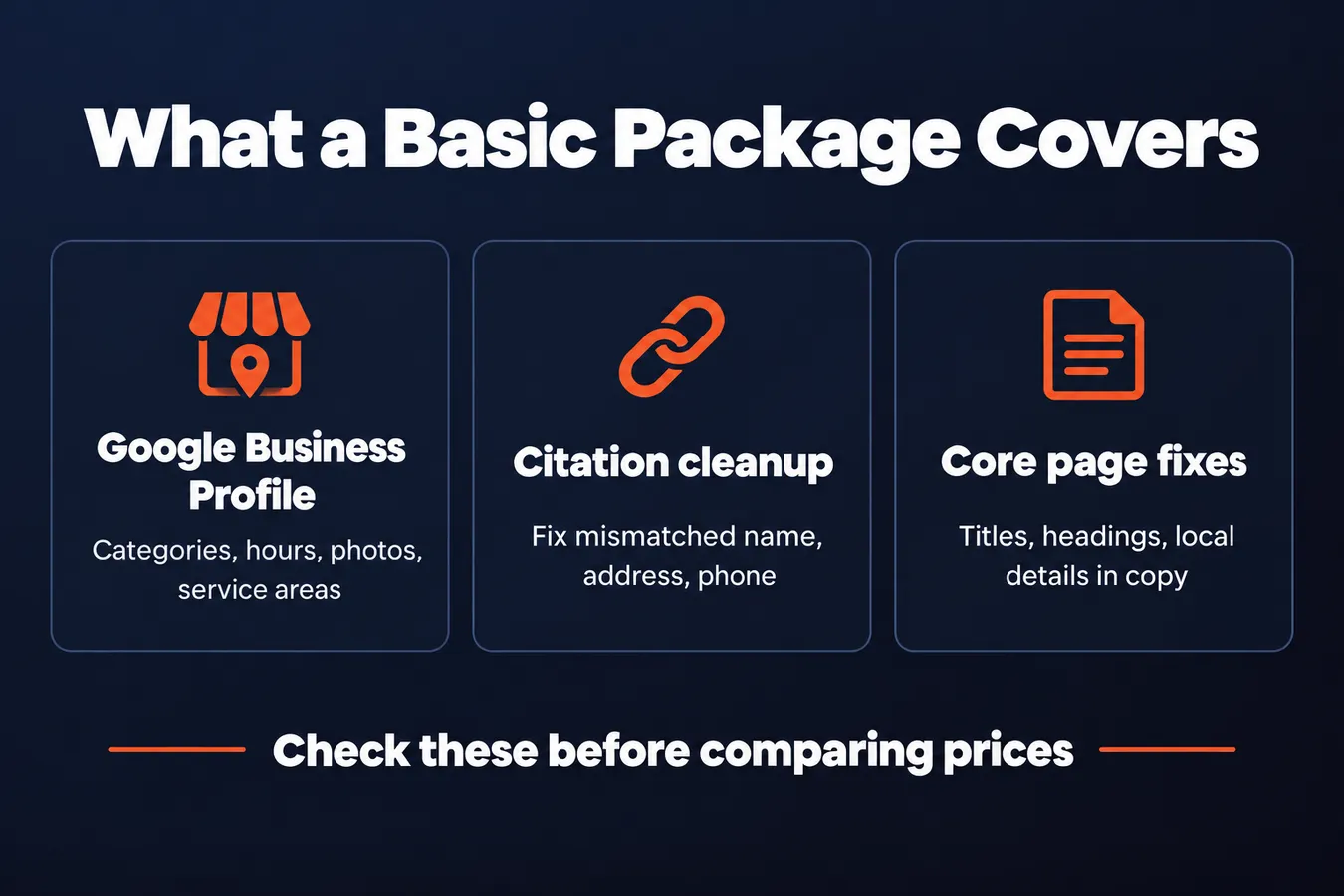
A fair entry package should cover three things.
First, your Google Business Profile. Setup is the easy part: correct categories, accurate hours, service areas, photos, and a description that matches what you actually do. Upkeep is the part that gets skipped. Someone needs to post updates, answer reviews, and catch changes to your listing before a wrong phone number sits there for months.
Second, citation cleanup. Your business name, address and phone number appear on directories across the web, and they often disagree with each other. A good package finds the mismatches and fixes the ones that matter most. It isn't glamorous, but it quietly holds your local rankings together.
Third, basic on-page fixes to your core service pages. That usually means the page title, the main heading, the local details written into the copy, and a separate page for each service rather than one catch-all page. You aren't paying for a blog here. You're paying for the pages people land on when they search for what you sell, and for those pages to say the right things.
Reporting should show what actually matters.
Traffic totals look nice in a dashboard, but they don't tell you whether the phone rang. A monthly report for a local business should show calls, direction requests from your listing, and where you rank for the main local searches that bring in customers in your town. If a report is mostly sessions and bounce rate, ask for the other numbers.
When you compare packages, check that the list above is included before you check the price. Two packages at the same monthly fee can be doing very different work.
What Changes at the Mid-Tier Level
The mid-tier is where maintenance turns into building. The entry tier keeps your listings clean and your website technically sound. The mid-tier adds the pages and posts that give search engines something new to rank each month.
That means regular new content aimed at local search terms. Service area pages are the obvious example: a page for each town or neighbourhood you serve, with real detail about the work you do there. Useful posts help too, like a piece on parking near a job site or the common repairs in older houses on a particular street.
Thin pages with the town name swapped in don't work, and most agencies know it.
Reviews are the part agencies tend to play down. For a local business, reviews often matter more than the on-page work, because they appear in the map pack and they're what people read before they call. A good mid-tier package sets up a simple process for asking customers for reviews, and it covers replying to every one, good and bad. Replies are short, specific and written by a person who cares, and each one is written to fit the review it answers.
Where's the line between a useful mid-tier and a bloated one? I'd say it's the number of pieces, and the hours behind them matter far less. If the package promises 20 new pages a month for a plumber in one town, the pages will be padded, and Google will notice before your customers do. A mid-tier that delivers four or five strong pages, a steady review routine and clear monthly reporting is more than enough for most local businesses.
What a Full-Service Package Adds
The top tier goes deeper. Most of the extra cost goes into links and technical upkeep, the two areas cheaper packages skip.
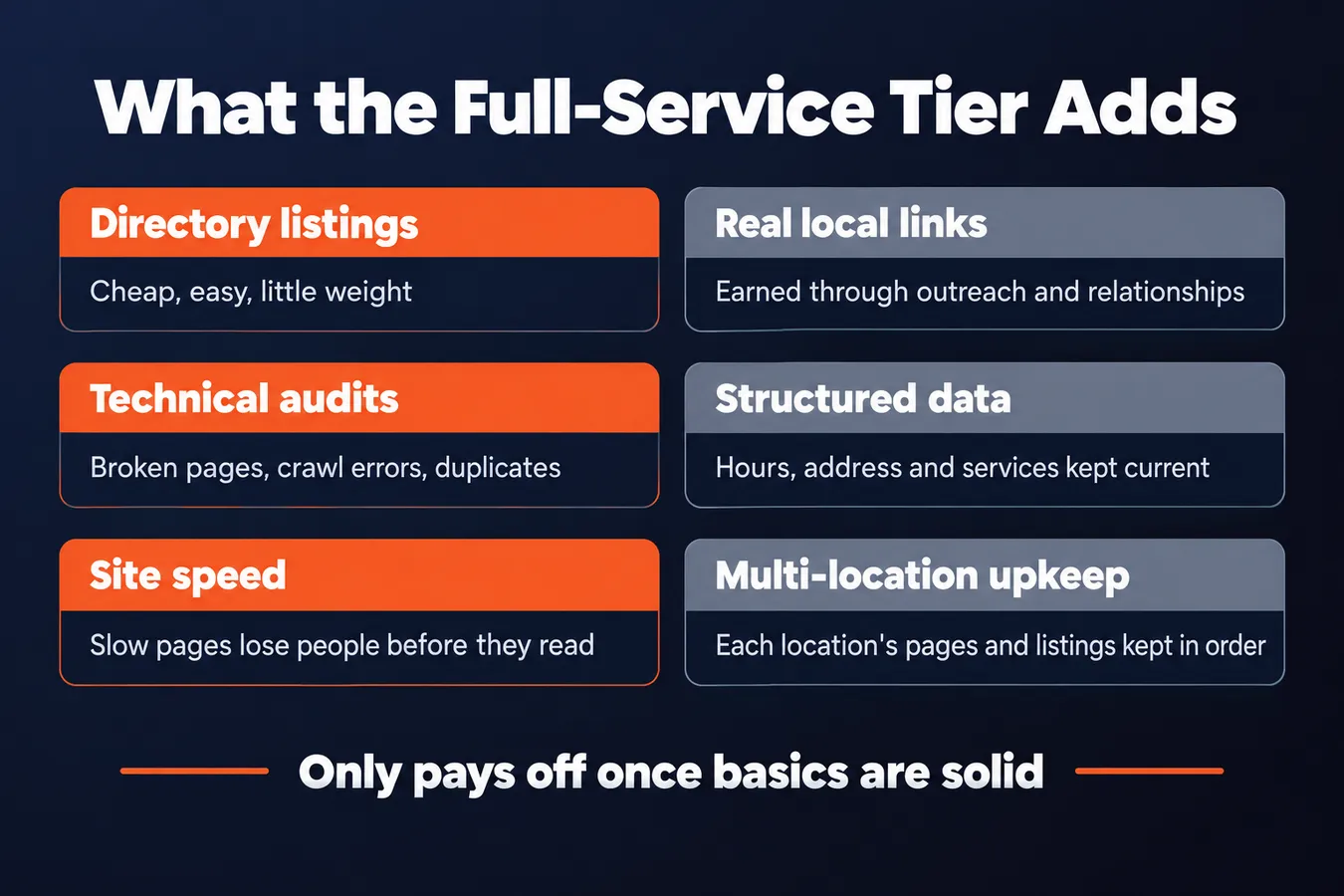
Link building is the big difference. Good links are earned through outreach: a local newspaper picks up a story, a supplier lists you, or a chamber of commerce or trade group links to your site. That takes real effort and real relationships.
A few real local links beat a pile of directory listings. Directories are cheap and easy to get, but they carry little weight and rarely send people to you. Three links from sites your local customers actually read will do more for you than thirty listings that no one visits.
Technical work is the other half. A full-service package usually includes audits on a schedule, repeated over time. Someone looks for broken pages, crawl errors and duplicate content, then fixes what they find. Structured data (the markup that tells search engines your hours, address and services) gets added and kept current. Site speed gets tuned too, because a slow page loses people before they read a word.
This tier only pays off when the basics are already solid. If your business info is a mess or your pages are thin, paying for link building is like polishing a car with no engine.
It makes sense for multi-location businesses, where every location needs its own pages, listings and local links kept in order. It also makes sense in competitive markets, where other firms in town are already doing this work and you need to match them to stay visible.
If you run one shop in a small town with little competition, you probably don't need it. A solid local package will handle the job, and you can keep the difference.
What Cheap Packages Usually Leave Out
Cheap packages are easy to sell because they look complete on paper. The gaps show up in three places: work that's hard to measure, line items that say almost nothing, and contract terms that few buyers read closely.
Work That Gets Dropped First
The first thing to go is anything you can't put a tidy number on. Content quality review is a good example. Someone has to read the pages, check that they answer what a searcher actually wants, and fix the thin ones. That takes time, and it doesn't produce a neat monthly graph.
Conversion tracking is the other one. If the package doesn't mention calls, form fills or direction requests tied to your search traffic, no one is checking whether any of it turns into business. Ask the provider directly whether that's included.
Vague Line Items
"Optimization" with no count attached tells you nothing. Optimization of what, and how many times? Ten pages or two? Five citations or fifty?
A proposal worth reading names the units. It says how many pages get on-page work each month, how many posts get written, how many citations or links get built, and what gets reported. If a line item has no number next to it, ask for one.
Contract Terms to Check
Minimum length is the first thing to look at. Many low-priced packages lock you in for six or twelve months. Search work takes a few months to show anything, so a short term matters less than a clear exit, but a long lock-in on a cheap plan can cost you more than you'd expect.
Next, check the cancellation notice. Thirty days is common, and anything much longer is worth questioning before you sign.
The Google Business Profile is the one that matters most to a local business. Make sure the profile is registered under your own Google account, with you as the owner. If the agency holds the only login, you lose your listing the day you leave. Get owner access in writing before anything else starts.
How to Compare Two Proposals Side by Side
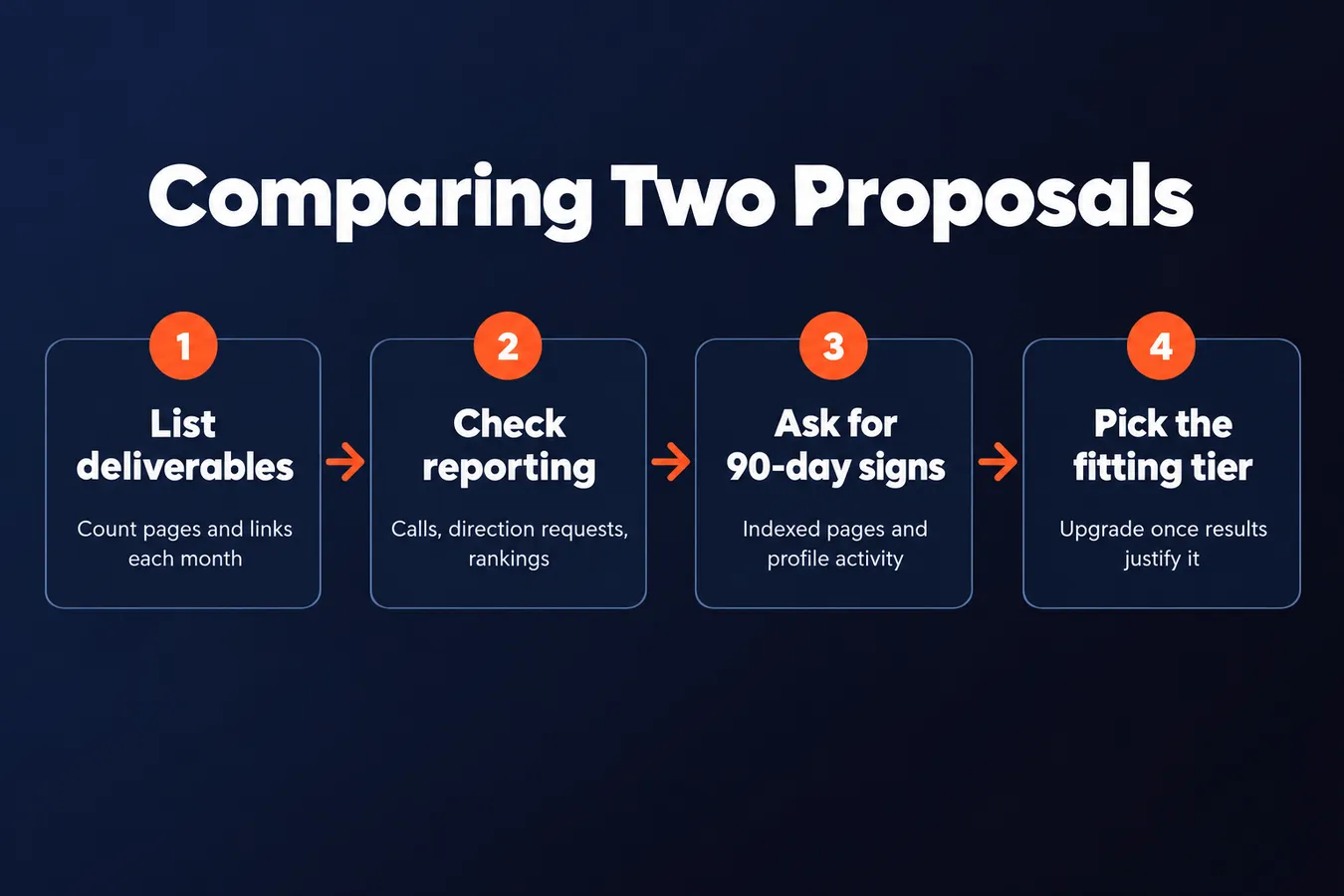
Quotes are hard to compare because every agency words things differently. One says "content creation," another says "blog posts," and a third just says "on-page work." Before you look at prices, put the deliverables into one list.
Count them, page by page and month by month. If one proposal promises 4 new service pages and the other promises 2, that difference is real and easy to see. Write down how many pages each one touches and how many links each one builds in a month. Then the numbers do the comparing for you.
Look at the monthly view, and skip the yearly total. A package that looks cheaper on paper can end up doing less work once you divide it out. Ask what you actually get each month and set those side by side.
Next, ask what the reporting will show. A good agency should be able to tell you which rankings, calls, direction requests or form fills they'll track, and how often you'll see them. If the answer is a vague "we'll send you a dashboard," push for specifics.
Also ask how you'll know things are moving in the first three months. Early on, you won't see big revenue jumps, and anyone promising them is guessing. You should expect things like pages getting indexed, Google Business Profile activity rising, and rankings for a handful of target keywords starting to shift. If the agency can't name what they'll show you at the 90-day mark, I'd be wary.
Pick the tier that fits the work you need now. Don't buy the top package because it sounds more serious. If your site has five pages and a Google Business Profile that's half-finished, you probably need the foundation work before the big content push.
Then move up when the results justify it. The first tier might clean up your listings and get your core pages working, and then you're ready to add more location pages or a steady blog schedule. Upgrading after proof is almost always a better bet than paying for capacity you can't use yet.
Frequently asked questions
What should a basic local SEO package include?
Start with your Google Business Profile: categories, hours, service areas, photos, and regular posts and review replies. Add citation cleanup to fix mismatched name, address and phone details across directories. Then basic on-page fixes to your core service pages. If the list is missing, the price doesn't tell you much.
How do I compare two SEO proposals fairly?
Put the deliverables into one list first, counted page by page and month by month. If one proposal promises 4 new service pages and the other promises 2, that's a difference you can see. Compare the monthly work and ask what the reporting will show.
Do I need a full-service SEO package for my local business?
Probably not if you run one shop in a small town with little competition. A solid local package will handle the job. The top tier makes more sense for multi-location businesses or in competitive markets, and only once the basics are already solid.
Who should own my Google Business Profile?
You should. Make sure the profile is registered under your own Google account, with you as the owner. If the agency holds the only login, you lose your listing the day you leave. Get the owner access in writing before anything else starts.
Aha Studio
Get the next playbook first
New playbooks and LaunchWatch reports land in Growth Signals, the free newsletter, along with the case studies and how-tos I find worth stealing.
More in Costs, Pricing and Choosing Help
Explore the full Local SEO and Google Business Visibility hub