New from Anthony Hayes: Aha Studio
Get found by the people searching for what you sell.
Local SEO and Google Business Visibility › Set Up and Optimize Your Google Business Profile
Local SEO citations
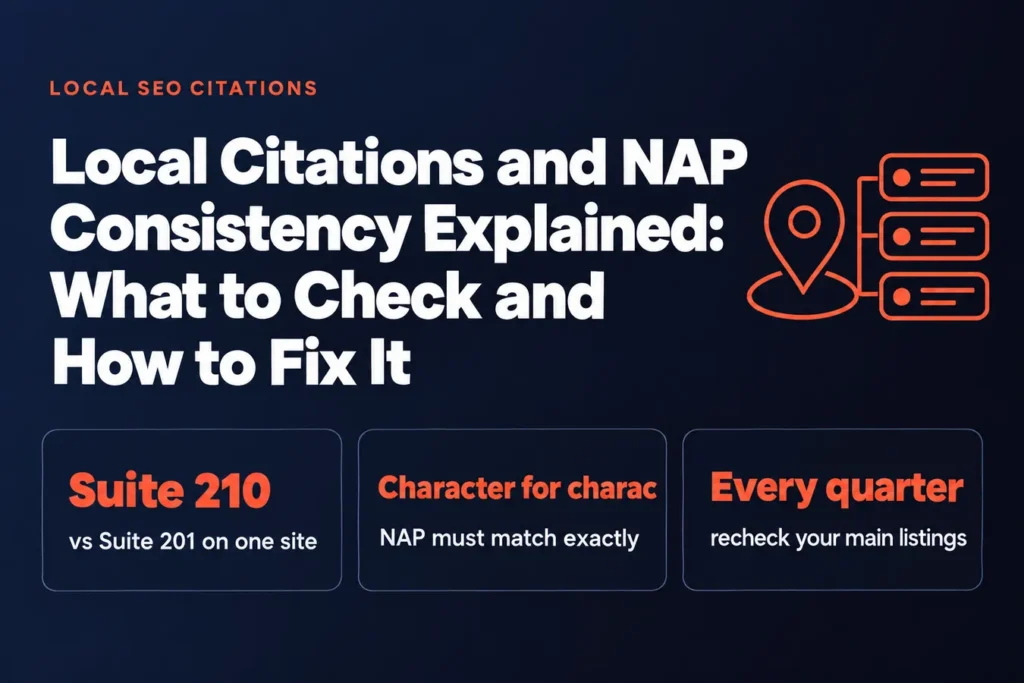
Local citations are every online mention of your business name, address and phone number, and NAP consistency means those three details match exactly everywhere they appear. A single mismatched suite number on one directory can split your listing data in two, so the fastest win is auditing the directories you never think to check.
A single wrong suite number on one directory is enough to split your listing data in two, and most businesses never see it because they only check their own website.
That's the trap. Your site says Suite 210, one directory says Suite 201, and a third still has the old phone number from before you moved. Search engines see three slightly different businesses instead of one.
This post shows you how to find those mismatches and fix them without tearing down everything you've built.
Local citations and NAP consistency, explained in plain terms: the name, address and phone details, where they show up, and why a small mismatch matters more than most owners expect.
I've spent years building marketing software, and listing data is one of those unglamorous jobs that quietly decides whether local customers can find you at all. Most of the problems I've seen were small. They were a stale phone number, an abbreviation everyone used differently, or a suite number that got dropped somewhere along the way.
Here's what's coming. We'll cover what citations and NAP mean, why consistency affects your visibility and trust, how to find conflicting listings across the web, how to fix them without starting from scratch, and the NAP mistakes that trip up most businesses.
Let's get into the first one.
Find this useful? Add us as a preferred source on Google and more of what we publish will show up in your results.
What Local Citations and NAP Consistency Actually Mean
A citation is any online mention of your business's name, address and phone number. It doesn't have to be a directory listing. A mention on a local news site, a chamber of commerce page, a supplier's website or a social profile all count, as long as those details appear together.
NAP is shorthand for name, address and phone. NAP consistency means those fields match across every source where your business appears. Match means character for character, not "close enough."
That's a stricter test than most people expect. Search engines and directories treat each source as a separate record. They compare those records to decide whether they describe the same business. When the details line up, the business looks solid. When they don't, the records look like they might belong to two different companies.
Small differences count as conflicts:
- "Main St" against "Main Street"
- A missing suite number
- "Ste 200" against "Suite 200"
- A phone number written with dashes in one place and dots in another (a smaller conflict, and an easier one to clean up)
I know it sounds fussy. A person reading "Main St" and "Main Street" knows they're the same road. The matching systems aren't reading for meaning, though. They compare strings, and a string that doesn't match is a string that needs checking.
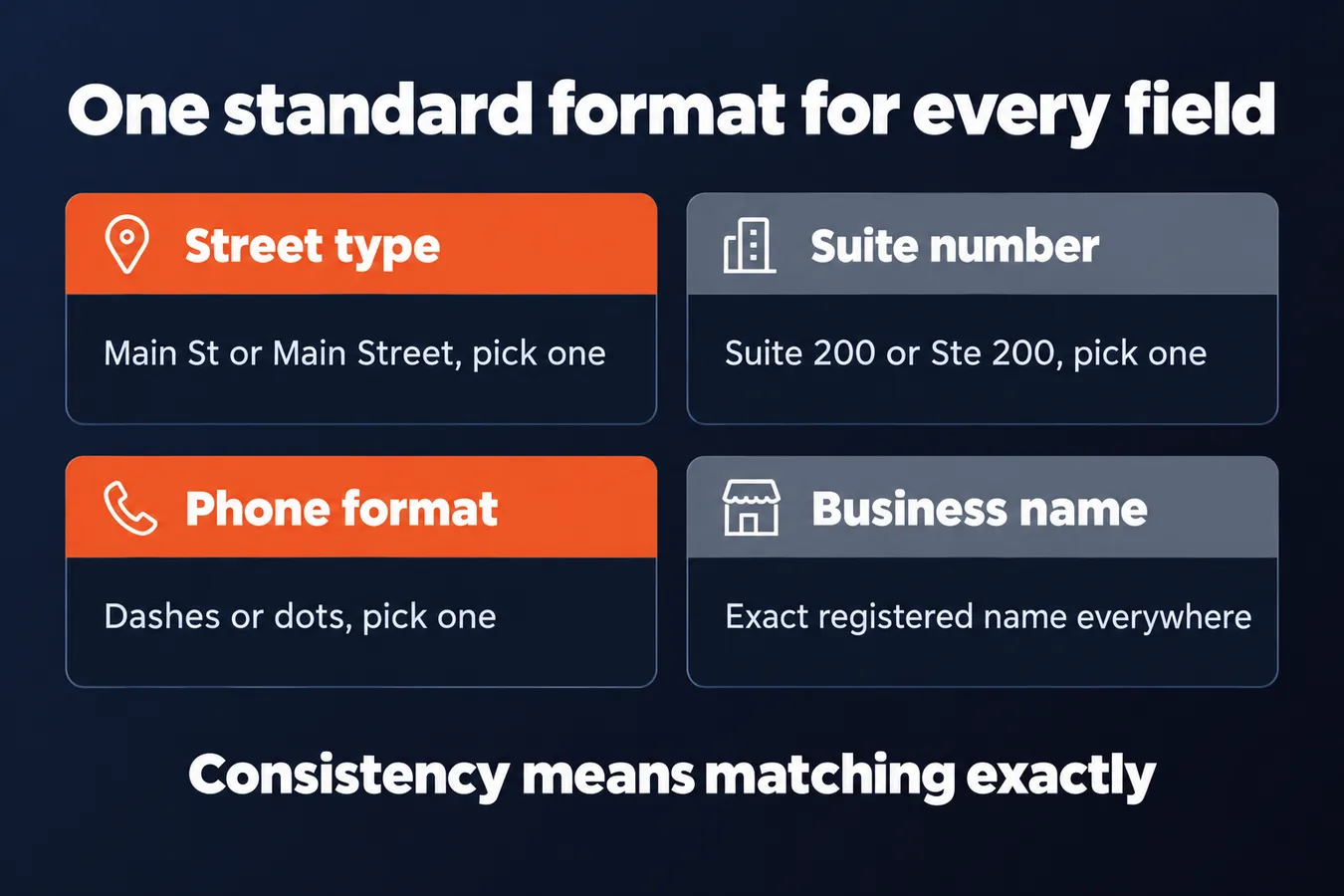
Pick one format for each field and use it everywhere. Your business name should match exactly what appears on your storefront or official registration. Your address should follow the same abbreviations and punctuation every time. Your phone number should appear in one format only.
That's the core of local SEO citation work. Everything else is finding the places where your details drifted and bringing them back into line.
Common NAP variations and the standard to pick
| Field | Conflicting variations | Consistent choice |
|---|---|---|
| Street type | Main St, Main Street | One style only |
| Suite number | Suite 200, Ste 200, #200 | One style only |
| Phone format | Dashes in one place, dots in another | One format only |
| Business name | Name differs from storefront | Exact registered name |
Why Consistent Listings Affect Your Local Visibility and Trust
Search engines build a picture of your business by pulling data from everywhere it appears online. Your website, your Google Business Profile, directories, review sites and social pages all feed into that picture. When those sources agree on your name, address and phone number, the search engine can say with some confidence that this is the business and this is where it sits.
When they disagree, that confidence drops. A suite number in one place and no suite number in another, or "Ave" versus "Avenue," can look to a machine like two different businesses, or a business that moved and didn't tell anyone. The search engine has to guess, and guessing isn't a strong position for a local business to be in.
Customers run into the same problem. Someone finds you in one directory with a phone number that rang a dead line two years ago, then calls it. That lead is gone, and you may never know it happened.
A wrong number on a listing doesn't just lose you one call. It sends that call to whoever is now holding the old number, and that person is probably not a customer you want.
I've seen the same pattern more than once: a business changes its phone number, updates its website, and forgets the directory that still shows the old one. Nobody notices until the calls stop coming in.
Be clear about what citations can and can't do. They're one signal among many. Consistent listings can help a business that is already solid, but on their own they won't push a weak business to the top of results. Cleaning up a directory won't fix a thin website or a profile that no one maintains. Think of consistency as clearing the path: it's useful, but it doesn't carry you forward by itself.
How to Find Conflicting Listings Across the Web
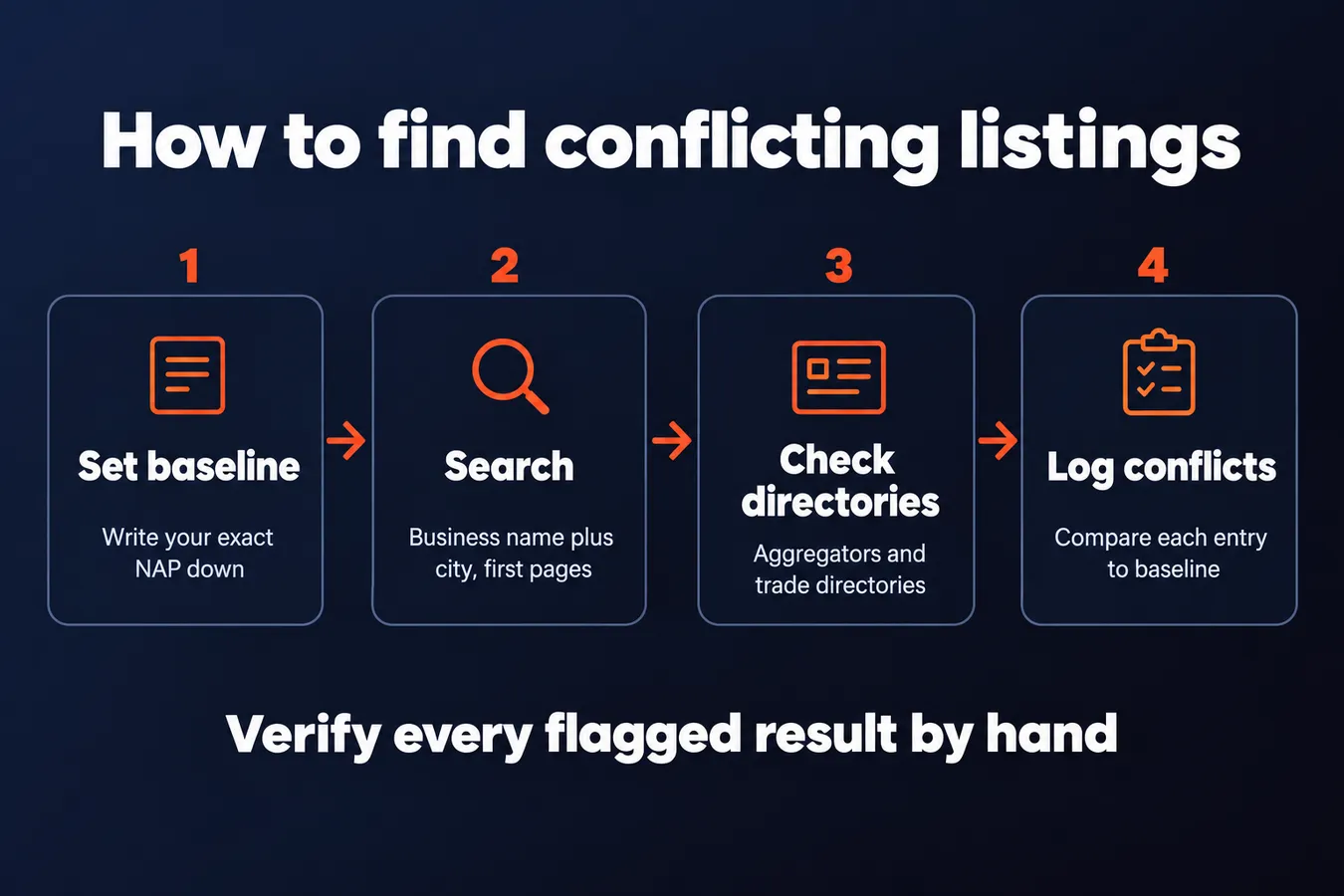
Before you search for anything, write down your NAP exactly as it should appear. Put down the business name, the street address and the phone number, and include your preferred abbreviations. If you go by "St" instead of "Street," or "Ste 200" instead of "Suite 200," write that down too. This is your baseline, and every other check gets measured against it.
Next, search your business name plus your city. Go through the first few pages of results and note every listing you find, including the ones you didn't expect. Old directory entries and profiles someone created years ago tend to show up here.
Then check the major data aggregators and the industry directories that matter for your trade. Those sites feed information to other sites, so one wrong entry there can spread. Work through them one at a time and log what each one says.
If you have many locations or a long list of directories, a citation checker can scan them at scale, which saves a lot of clicking. Treat its output as a list of leads that still need a decision. These tools miss things, especially listings that format your address differently or sites they can't read well, so open each flagged result yourself and confirm it by hand before you change anything.
Keep the spreadsheet you build from this. It becomes your fix list for the next step.
How to Fix Conflicting Citations Without Starting From Scratch
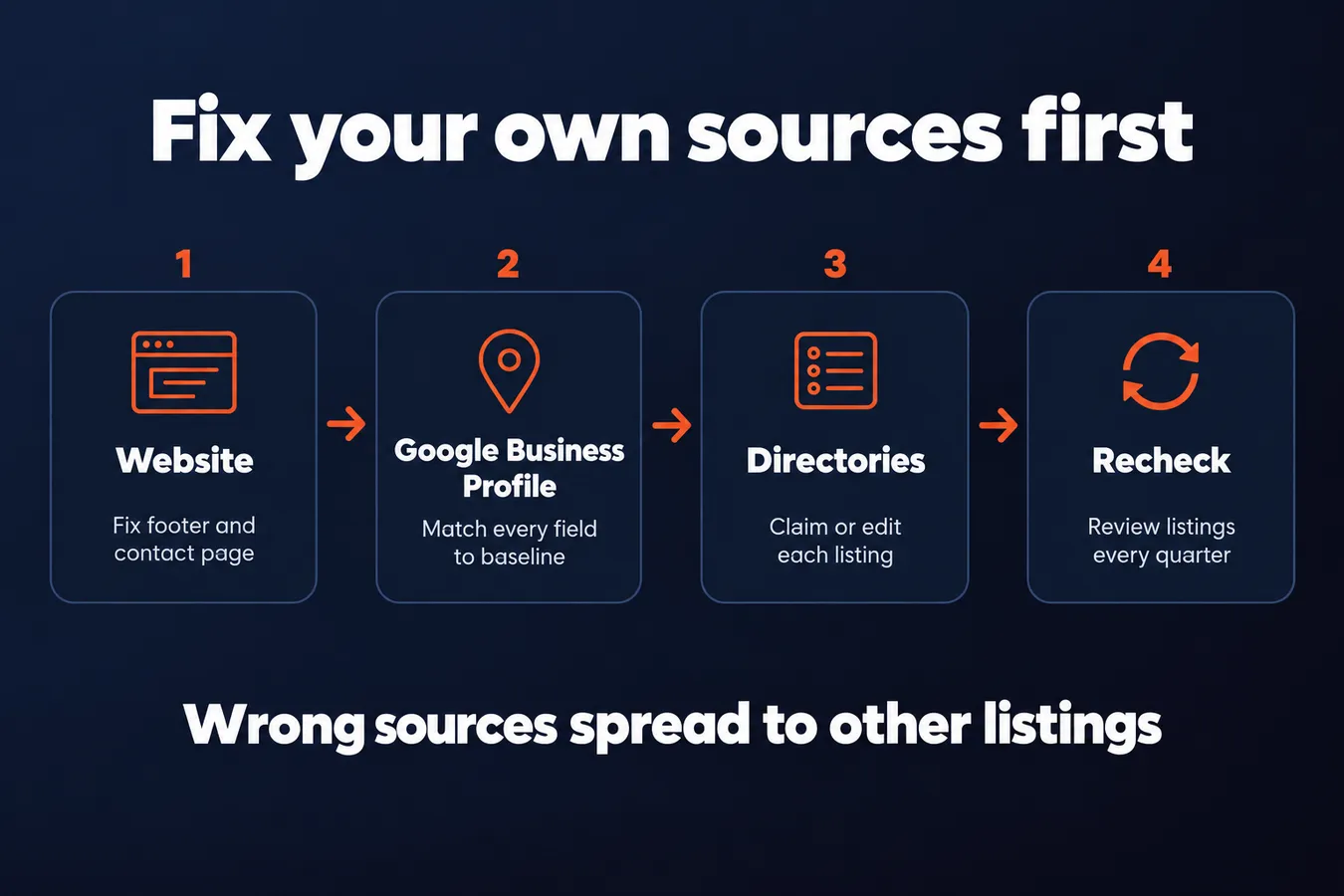
Start with your own sources. Before you touch a single directory, fix your website and your Google Business Profile. Many of the other listings on the web were copied from one of those two sources at some point, so a wrong address on your site will keep showing up everywhere else.
Check your website's footer, contact page and schema markup. Then open your Google Business Profile and compare every field against the name, address and phone number you actually use. If those two match, you've already removed the source of most of the mess.
Once your own sources are right, move on to the directories.
Work through each platform directly. Claim the listing if it exists but you haven't managed it, or edit it if you already have access. Most directories let you suggest changes, and a few will ask for proof, usually a utility bill or business registration document.
Take a screenshot of each listing before you change it, and another after the change is saved. It sounds like busywork, but it helps when a platform rejects an edit, when a duplicate listing appears, or when you need to show a client exactly what was wrong last month. I keep those before and after shots in one folder per business, named by date.
Then set a recurring check, because listings drift.
A merger, a rebrand, a new suite number or a phone number change can bring old data straight back. Sometimes a directory re-syncs from an older source and overwrites a fix you made months ago. I'd put a reminder on the calendar every quarter and run through the main listings again, rather than assuming the first round stuck.
Where listing data comes from and what to do first
| Source | Role in consistency | Action |
|---|---|---|
| Your website | Feeds other listings | Fix footer and contact page first |
| Google Business Profile | Core profile others copy | Compare every field to baseline |
| Industry directories | Can spread wrong data | Claim or edit each listing |
| Old directory profiles | Often keep outdated details | Check and correct or remove |
Common NAP Mistakes and How to Avoid Them
Most NAP conflicts come from a handful of small errors. They look harmless on their own, but search engines and directories read each variation as a separate fact, so they add up fast.
The first is abbreviation drift. One listing says "Street," another says "St.", and a third says "St" with no period. Suite numbers cause the same trouble: "Suite 200," "Ste 200," "#200" and "200" all point to the same office, but they don't match each other. Pick one style for every suite and stick to it.
Old phone numbers are the sneaky one. You changed numbers two years ago, updated your website and your Google Business Profile, and forgot about the directory you signed up for in 2014. That old number is still sitting there, quietly contradicting you. Check the older directories as well as the big ones.
Duplicate listings usually come from people. A former employee creates a profile, a previous agency builds a second one under a slightly different name, and a staff member signs up for a directory on their own. Now your reviews and data are split across two or three records, and none of them looks as strong as one complete listing would.
So what's the fix? Choose one standard format for your business name, address and phone number, then apply it everywhere. That includes your own website footer, which is the place people forget. If your footer says "Main St." and your directories say "Main Street," you've already created a mismatch, even if you didn't mean to.
Write the format down once and keep it in one place. Anyone who updates a listing later should copy from that document instead of from memory.
Frequently asked questions
What's the difference between a citation and a listing?
Every listing is a citation, but not every citation is a listing. A directory profile is one kind of listing. A mention of your name, address and phone number on a local news site, a chamber of commerce page or a supplier's website also counts as a citation, as long as all three details appear together. When you audit, look beyond the directories you signed up for.
How do I check NAP consistency?
Write down your name, address and phone number exactly as they should appear, including your preferred abbreviations. Then search your business name plus your city, go through the first few pages of results, and check the main aggregators and directories for your trade. Log what each one says, then compare every entry against your baseline, character for character.
Should I use a citation checker tool?
A citation checker helps when you have many locations or a long list of directories, because it saves a lot of clicking. Treat its output as a list of leads you still need to verify. These tools can miss listings that format your address differently, so open each flagged result yourself and confirm it by hand before you change anything.
How often should I recheck my listings?
I'd put a reminder on the calendar every quarter and run through the main listings again. A merger, a rebrand, a new suite number or a phone number change can bring old data back, and some directories re-sync from older sources and overwrite fixes you made months ago. Don't assume the first round of corrections stuck.
Aha Studio
Get the next playbook first
New playbooks and LaunchWatch reports land in Growth Signals, the free newsletter, along with the case studies and how-tos I find worth stealing.
More in Set Up and Optimize Your Google Business Profile
- Google Business Profile for Local SEO: 15 Setup Steps That Affect Ranking
- Choosing Categories and Services on Your Google Business Profile: What to Pick and Why
- Local SEO Google Reviews: How to Get More, Respond Well, and Stay Within the Rules
Explore the full Local SEO and Google Business Visibility hub