Keyword Research › Keyword Prioritization and Competitor Analysis
Keyword Cannibalization
Learn how to spot planned pages that serve the same search need and assign that need to one primary URL. The key is to compare what searchers want, not just the words used in each page idea.
Two pages can mention the same keyword without competing, while 2 pages with different wording can compete if they serve the same search need.
That difference is key to avoiding keyword cannibalization when planning pages. Matching phrases alone won’t tell you whether 2 URLs belong to one topic or need separate jobs.
You’ll get a URL-by-URL plan for finding overlap and giving each search need a clear home.
I’m Tony Hayes. I’ve been building marketing software since 2011, and I now build everything with AI, without writing code myself.
We’ll start with the search needs behind your ideas, then compare intent, choose a primary URL and plan the linking and technical signals around it.
Then we’ll review the plan before publishing and as the site grows. You’ll have a clear way to spot overlapping plans and assign each search need to the right URL.
The steps at a glance:
- List the search needs behind your page ideas
- Compare planned pages for intent overlap
- Assign one primary URL to each search need
- Plan internal links and technical signals
- Review overlap before publishing and as the site grows
Find this useful? Add us as a preferred source on Google and more of what we publish will show up in your results.
Step 1: List the search needs behind your page ideas
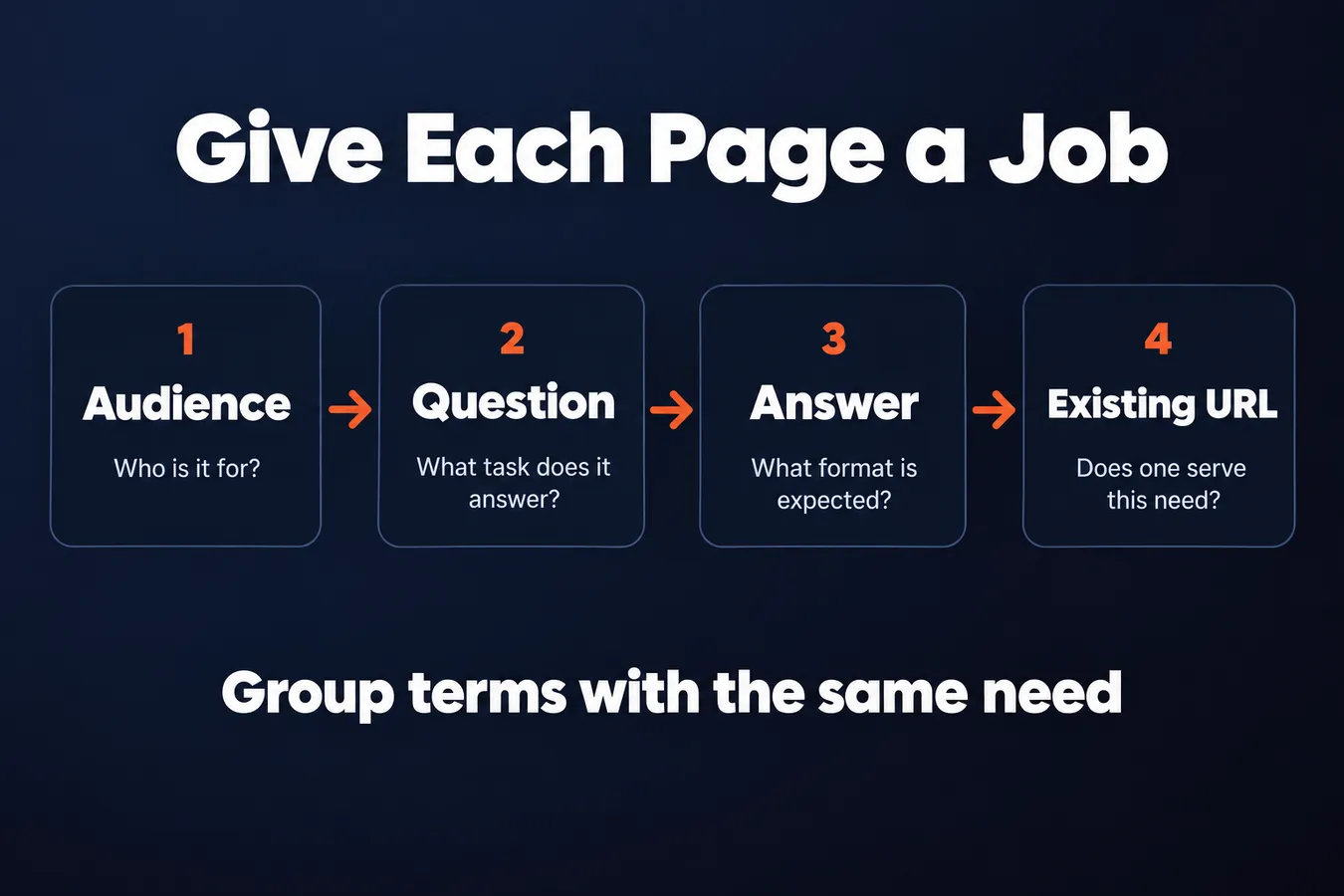
Start with an inventory. Write down every proposed URL, who it’s for, and the question or task it answers. You’re giving each one a job before assigning keywords or creating content.
A clear list of jobs keeps your plan from turning into a pile of similar pages.
Now, look at the search needs behind those ideas. Group close keyword variations when they point to the same need. If someone searching each term expects the same kind of answer, those keywords likely belong on one page.
Separate terms when the searcher expects a different type of answer. A page that explains a concept and one that helps someone complete a task have different jobs, even if their keywords look similar. That distinction helps you avoid keyword cannibalization, where multiple URLs on your website compete for similar search intent and traffic.
Choose URLs by the need they serve, then give each need one home.
Use keyword prioritization to decide which needs matter most to your business. The related guide, How to Prioritize Keywords for Your Business, covers that decision in more detail.
Competitor analysis adds context. Look at the pages other sites use to answer a search, but don’t copy their site structure as your plan. Google and other search engines can rank multiple pages for related keywords, but your SEO strategy should make each one’s purpose clear through its content and internal links.
Use this checklist for each idea:
- Who is the intended user?
- What question or task does the content address?
- What answer and format does that user expect?
- Does an existing URL already serve that need?
Step 2: Compare planned pages for intent overlap
Put similar ideas side by side while they’re still easy to change. Compare the audience, purpose, format, and expected answer for each one.
The key question: Would both pages satisfy the same searcher?
If the answer is yes, plan one stronger page for that need. Two URLs covering the same ground can create keyword cannibalization, with each competing for attention in Google search and making your site harder to navigate.
Shared keywords alone are a weak signal. Two pages can use the same keyword naturally when they serve different needs. A broad guide and a page focused on a specific task, for example, may share terms while giving visitors distinct answers.
Look at what the visitor expects to do after the search. Are they learning about a topic, comparing options, or trying to complete a particular task? If the planned content answers the same question in the same format, those ideas probably belong together.
Give each search need one clear URL.
Repeated content can also make for a poor user experience. Visitors shouldn’t have to choose between near-identical answers on your website, and internal links shouldn’t send them to multiple URLs that serve the same purpose.
I’ve been building marketing software since 2011, and I plan pages around the job each one needs to do. That keeps the content focused and gives every page a clear place in the site.
This comparison focuses on intent and helps you identify keyword cannibalization before content is written and competing URLs muddy your SEO strategy.
Page planning checks
| Compare | Same need | Different need |
|---|---|---|
| Audience | Consider combining | Separate page jobs |
| Purpose | Consider combining | Separate page jobs |
| Expected answer | Consider combining | Separate page jobs |
| Format | Consider combining | Separate page jobs |
Step 3: Assign one primary URL to each search need
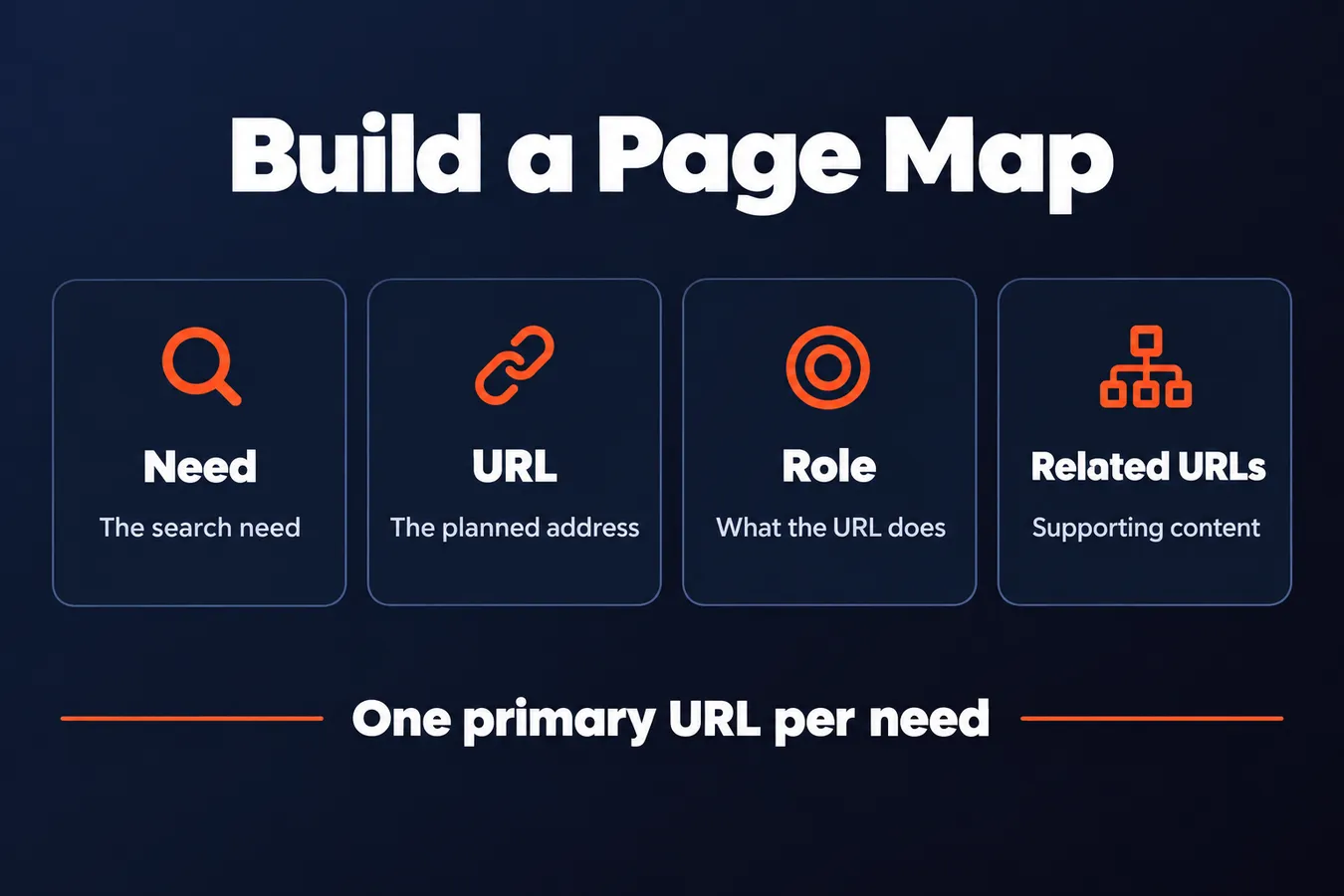
Once you’ve grouped similar keywords by search need, give each need one primary URL. Record the planned address, its main purpose, and the supporting topics that belong in the content.
One search need, one primary URL.
I use a page map to keep those decisions visible. A simple table works: need, planned URL, role, and related URLs. The role explains what the URL is there to do, while the related URLs show where supporting content sits across the site.
A related URL should have its own job. It might answer a narrower question, or it might support a broader guide. If several pages target the same need with similar content, the plan has a cannibalization risk before anyone writes a word.
Keep the roles clear. The primary URL owns the main search need; related content covers its specific angle and links internally where it makes sense. That gives writers a shared direction and gives Google a clearer set of pages to rank for different searches.
Keep the map current as the plan changes.
When someone proposes a new page, add it to the map and check its need, role, and related URLs against the existing content. I build marketing software with AI, so I pay close attention to whether another writer or AI worker can understand where a topic belongs without guessing. A current page map gives them that answer.
This step connects keyword research to the actual website structure. The work in prioritizing keywords and comparing competitors helps shape the plan; the map turns it into URL-level decisions. That’s how you keep multiple pages focused on distinct needs and reduce the chance that your own content competes for the same search and ranking.
Step 4: Plan internal links and technical signals
Once you’ve assigned each search need to a primary URL, make those relationships clear across your website. Internal linking helps visitors find the right content and gives search engines context about how the site fits together.
Use descriptive anchor text that reflects the role of the destination. If one URL answers a broad question and another covers a specific detail, the anchor text should make that distinction clear.
Point links toward the URL you want visitors to reach.
When a URL is your primary home for a search need, link to it from relevant content on your site. Sending internal links to multiple similar URLs can muddy the path for visitors and make your plan harder to follow.
Canonicals address a different issue. Use a canonical tag when similar or duplicate URLs need a preferred version, and make sure the selected address matches the one you intend search engines to treat as primary.
A canonical is a technical signal. It doesn’t decide whether two planned URLs deserve to exist. If each serves a distinct search need, keep the roles clear in your content and internal linking. If they cover the same need, settle the URL plan first, then use a canonical where duplicate or similar URLs require one.
That distinction keeps the work grounded in the plan. Clear roles come first; technical signals reinforce them.
Step 5: Review overlap before publishing and as the site grows
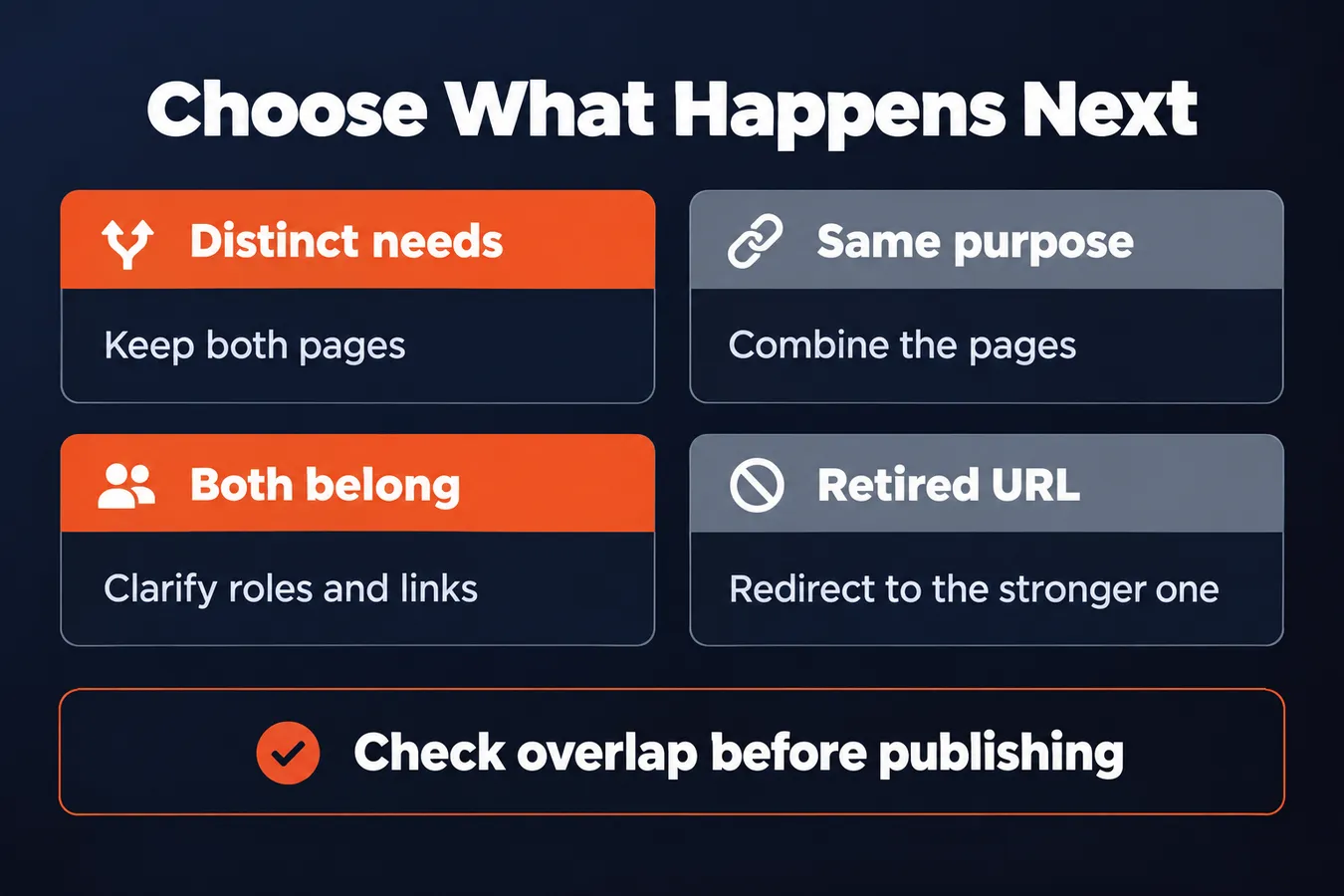
Before you publish, compare the new URL with those already in your map. Check whether an existing page serves the same audience, meets the same need, and promises the same answer.
If all 3 match, pause and decide which URL should own that search need.
After publishing, check Google Search Console or your search reporting tool for queries where multiple pages appear. Then check whether the intended URL is showing and earning clicks. Google Search Console can help you review query and URL performance.
A page map helps you catch planned overlap. Search performance shows you where the live website has developed it anyway.
Look for patterns that may point to keyword cannibalization: rankings dropping across similar pages, lower click-through rates, or backlinks spread across URLs that cover the same ground. One query appearing for multiple pages doesn’t prove a problem by itself. Check whether those pages answer the same need and whether the right one is getting traffic.
Give every page a clear job, then act on the overlap you find.
Keep both pages when they serve distinct needs. Combine them when their content and purpose largely match, then redirect the retired URL to the stronger one. If both still belong, adjust their roles and internal links so search engines and visitors can tell what each is for.
Frequently asked questions
What is keyword cannibalization?
Keyword cannibalization happens when multiple pages on your site compete for similar search intent and traffic. The pages might use different wording, but if they answer the same question for the same searcher, they may be serving the same need.
How do I tell whether 2 pages are competing?
Compare their audience, purpose, format, and expected answer. Ask whether both pages would satisfy the same searcher. If they meet the same need in the same way, plan one stronger page for that search need. Shared keywords alone don't prove a problem.
How should I assign keywords to URLs?
Group keyword variations when they point to the same search need, then assign that need one primary URL. Record the need, URL, page role, and related URLs in a page map. Give related pages their own specific job and link them to the primary page where it makes sense.
Should I combine pages that target similar keywords?
Combine pages when their content and purpose largely match, then redirect the retired URL to the stronger page. Keep both when they serve distinct needs, and clarify their roles and internal links. A query appearing for multiple pages alone doesn't prove cannibalization.
When should I use a canonical tag for overlapping pages?
Use a canonical when similar or duplicate URLs need a preferred version, and make sure it points to the URL you intend search engines to treat as primary. Decide whether the pages deserve separate roles first. A canonical reinforces the URL plan; it doesn't make that decision for you.
My Take: For me, the page map is the practical part: it shows the search need, the primary URL, the page’s role, and the related URLs. When I build with AI workers, I want another writer or worker to understand where a topic belongs without guessing. A clear map gives them that direction. I’d rather settle those page roles while I’m planning than discover later that several URLs were built to answer the same question.
Aha Studio
Get the next playbook first
New playbooks and LaunchWatch reports land in Growth Signals, the free newsletter, along with the case studies and how-tos I find worth stealing.