New from Anthony Hayes: Aha Studio
Get found by the people searching for what you sell.
QuickTip · 4 minute read
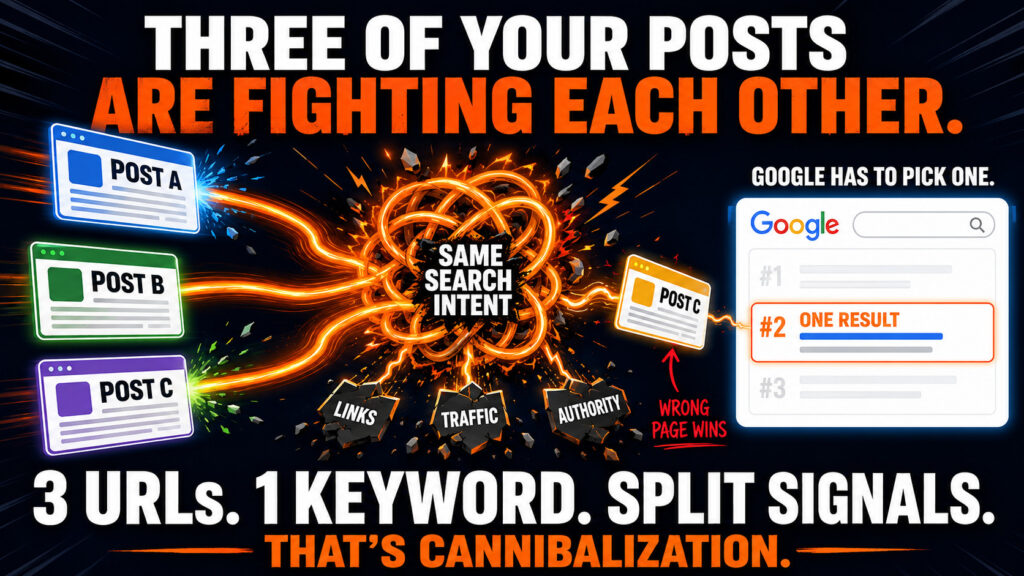
If three of your posts chase the same search, Google picks one and it is often the wrong one. Here is how to find those fights on your own site in about ten minutes, and the order to fix them in.
Find this useful? Add us as a preferred source on Google and more of what we publish will show up in your results.
Why two good posts can beat each other
You wrote a solid post on a topic. Later you wrote another one from a slightly different angle. Maybe a buying guide too. Each is fine on its own.
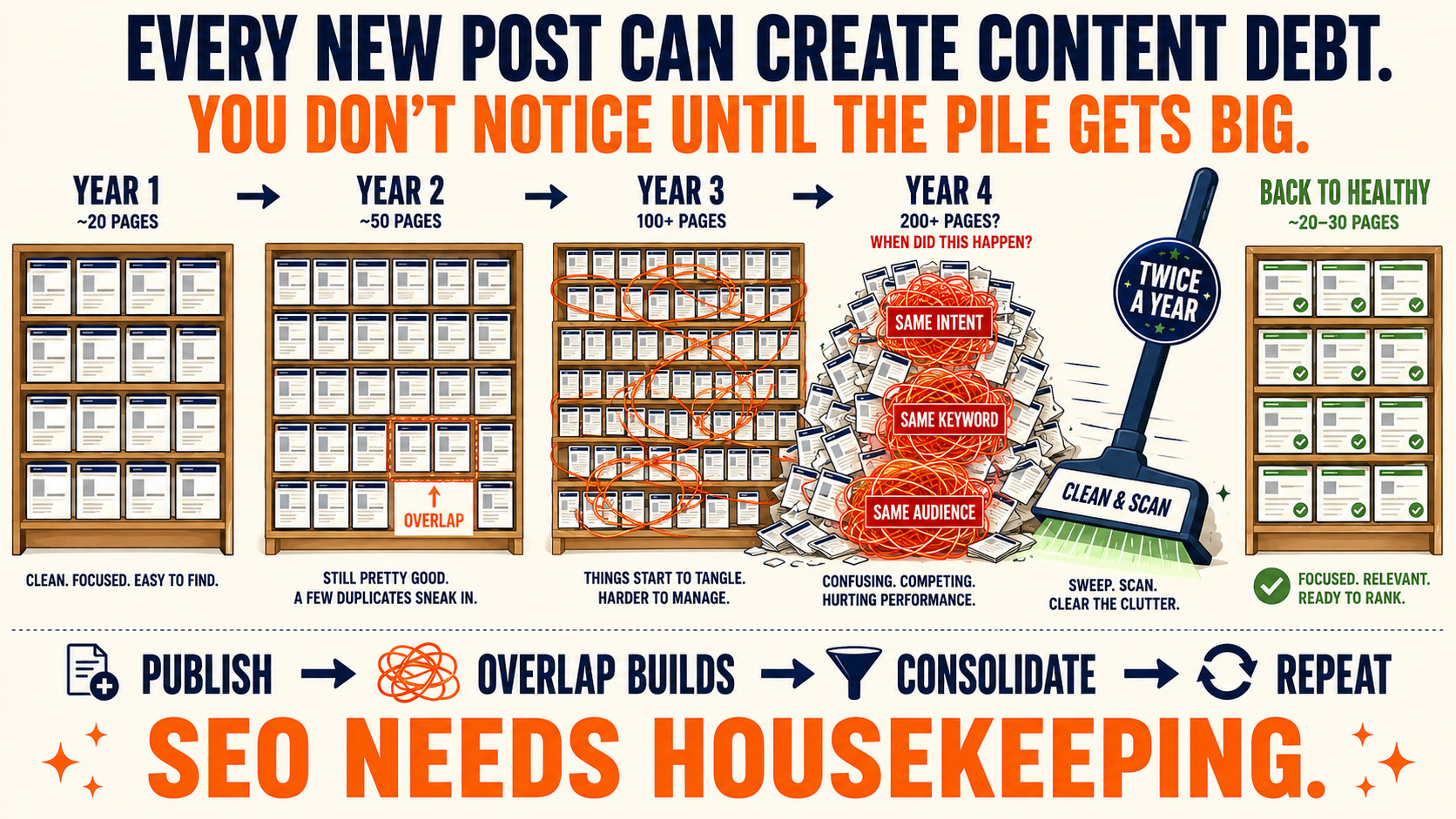
But Google will only show one of them for a given search, so it has to choose. It does not choose the way you would. It often picks the thinnest one, or it flips between them week to week, and neither ever settles. Meanwhile every link and every signal you have earned is split across three URLs instead of stacking on one.
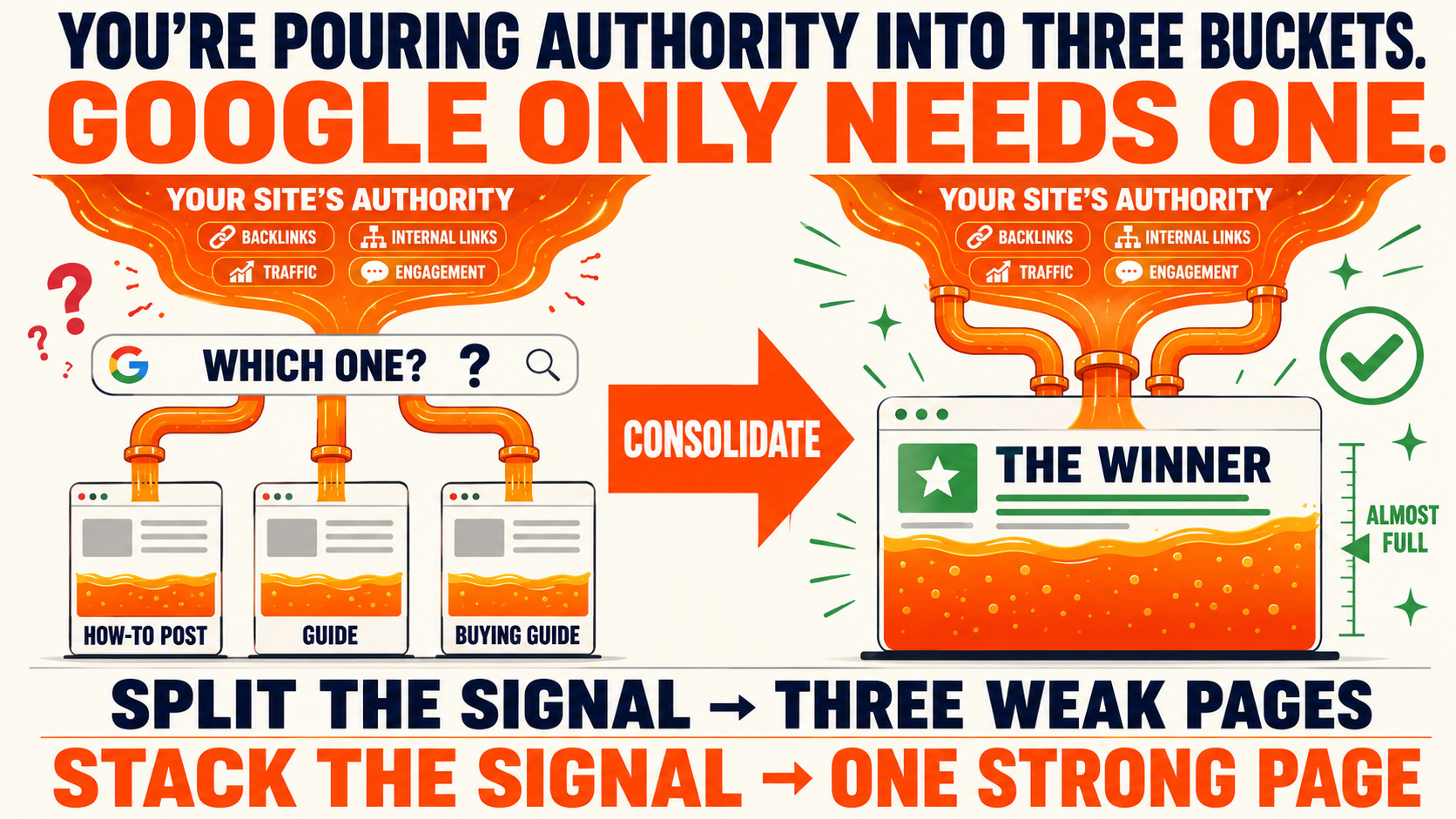
That is keyword cannibalization. It is one of the most common reasons a site with genuinely good content sits still.
Find them, then fix them in this order
Tick these off as you go. Your progress is remembered on this device.
301 redirect the losers to the winner. Do not delete them, or you throw away the links they earned.0 of 8 done
The step everyone gets wrong
Choosing the winner. The instinct is to keep the newest post, because it feels the most current. That is usually the wrong call.
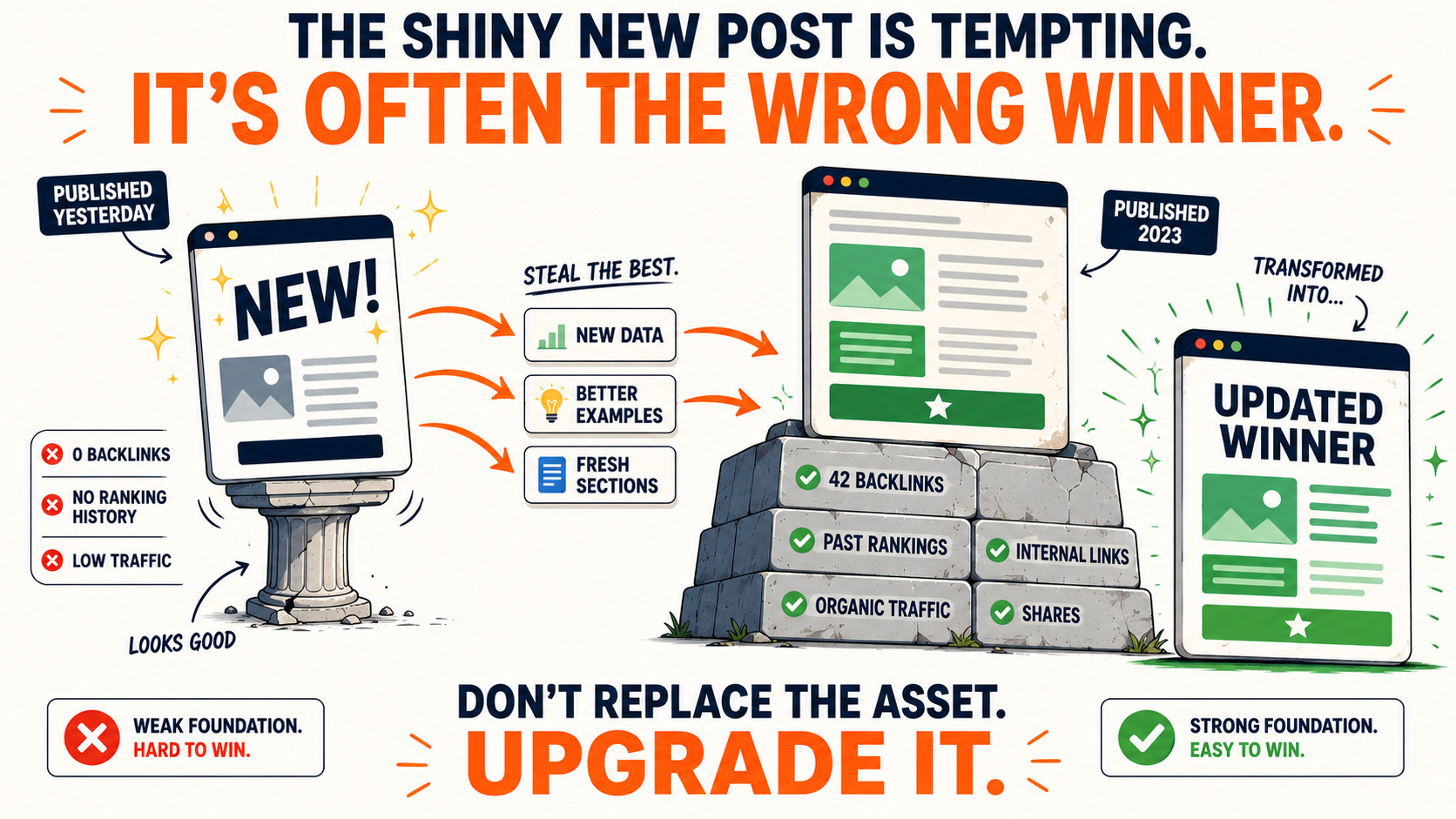
Keep the page that has already earned something: the one with the links, the one that has ranked before, the one people have shared. Then bring the newer writing into it. You end up with one page carrying all the authority instead of a fresh page starting from nothing while the strong one gets redirected into the ground.
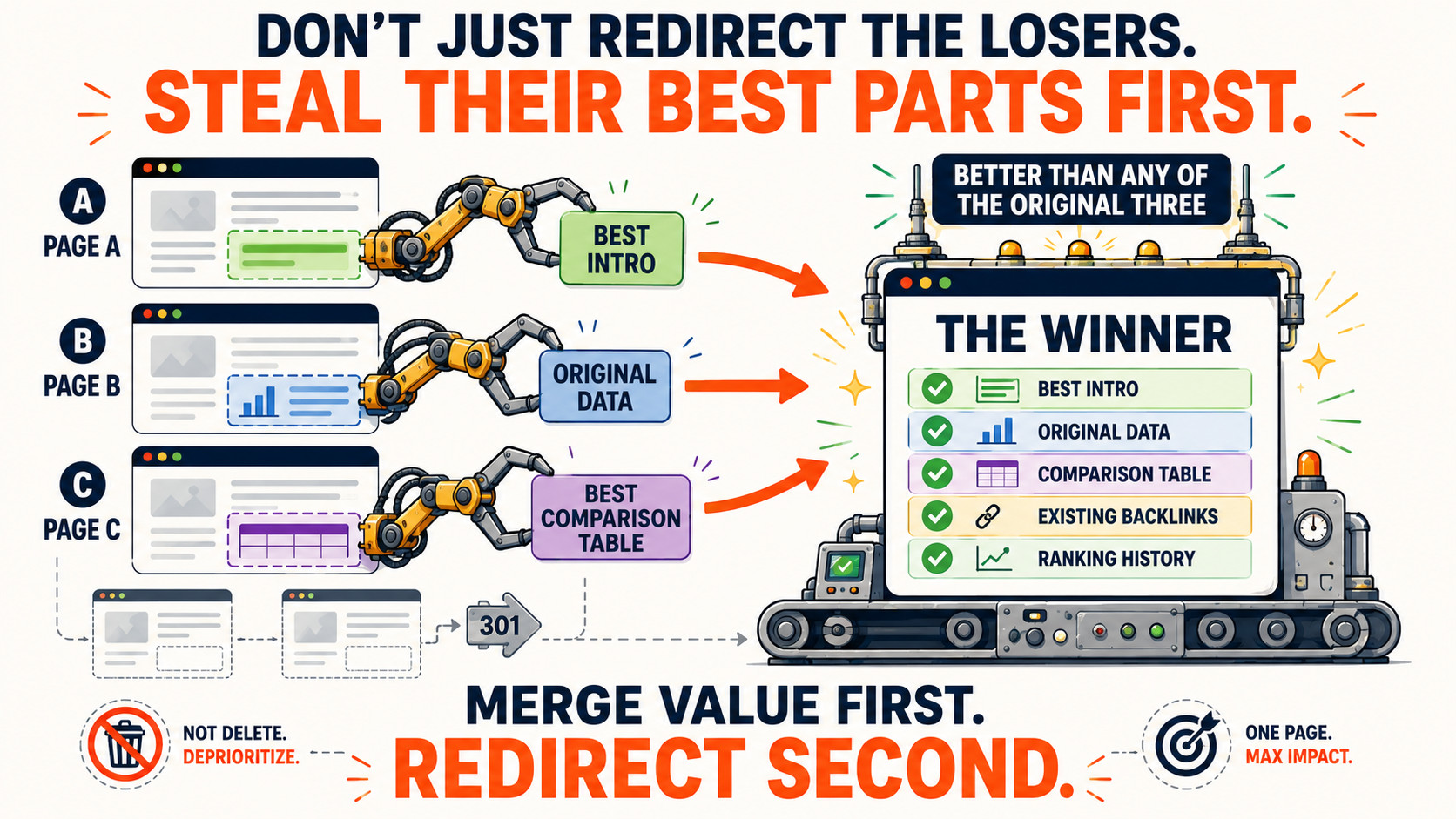
And redirect rather than delete. A 301 hands the old page’s credit to the new one. Deleting throws it in the bin.
How often is worth doing this
Twice a year is plenty for most sites, plus once after any big content push. Cannibalization builds up quietly as you publish, so it is a maintenance job rather than a one-off. If you have been publishing for a few years and have never checked, expect to find three or four groups on the first pass.
Free tool
Check your own site in ten minutes
Cannibalization Spotter finds the pages on your site competing with each other and gives you the consolidation plan for each group. It runs on your machine, your URLs are never uploaded, and there is no API key to buy.