New from Anthony Hayes: Aha Studio
Get found by the people searching for what you sell.
In the last post I put my projections on the record and promised to come back and tell you what actually happened, even if I missed. This is that follow-up. It is part two of the same story that started with a tweet about free DR data.
I am going to be straight, because that is the whole point of writing these. The plan changed, the first launch did better than I had any right to expect in some ways, and I personally left a large chunk of sales on the table in others. All of it is useful, so here is the honest version.
Find this useful? Add us as a preferred source on Google and more of what we publish will show up in your results.
First, the plan I wrote down, and what I actually did
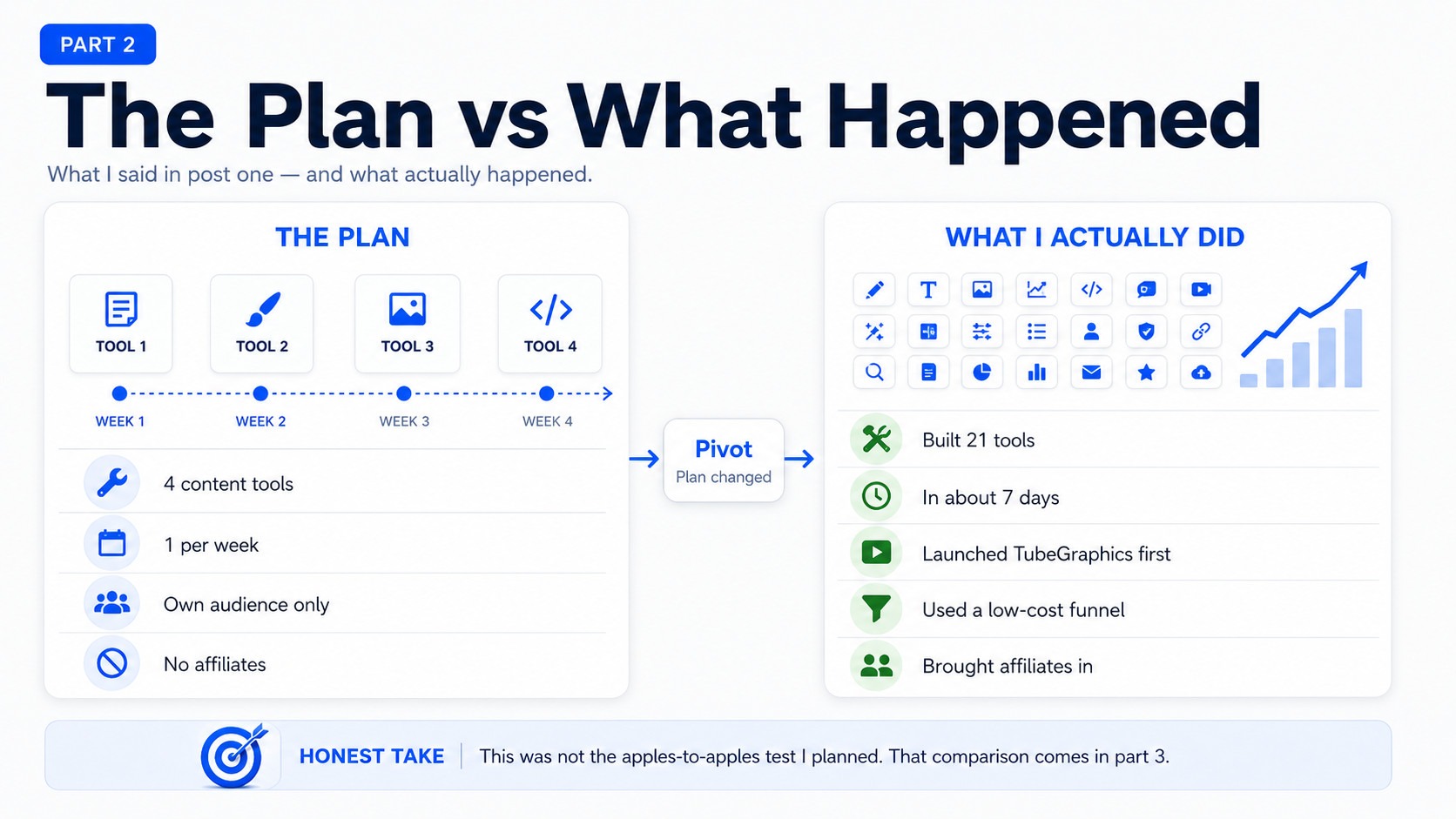
In post one I said I would release four content tools, one a week, to my own audience only, with no affiliates, so I could get a clean read on each tool. Here is what really happened.
I got into a build run I did not expect. Instead of four tools I built twenty-one in about seven days. And instead of opening with one of those four content tools to my own list, I opened with a different tool entirely, TubeGraphics, as a deliberately low-cost funnel, and I did bring affiliates in.
So these are not the apples-to-apples test of the projections I made last time. That test is still coming as the content tools launch, and I will settle it in part three. What changed my mind was a bigger idea about how to build the business, and I will explain it below. First, the scoreboard.
The first real numbers
This was the TubeGraphics launch on WarriorPlus. As I write this the launch has a few hours left to run, so these are close to final, not final.
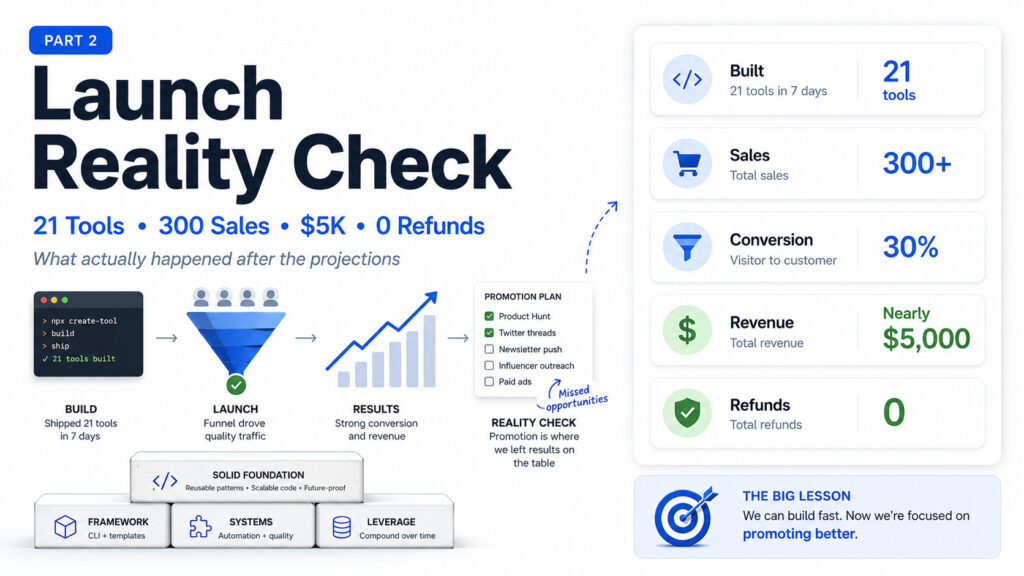
- Funnel sales: 288, and climbing. It should clear 300 before the cart closes.
- Conversion rate: 30%.
- Earnings per click: $4.74.
- Refunds: zero.
- Total revenue: approaching $5,000.
- Affiliate sales: roughly 80 of the total.
These are my numbers from one launch. They are not typical, they are not a promise, and they are not advice. Plenty of launches do less. I am putting them here because the first post made a promise to show real figures, and a number you can see beats a claim you cannot.
Want to run your own version? Drop in your visitors, conversion rate, and average value per buyer and the calculator does the launch math for you. It is also a live example of the kind of small interactive tool I build into posts.
The one I care about most is the zero. Zero refunds on a few hundred sales tells me the tool did what the page said it would. That is the cheapest trust you can buy, and on a project that is really about building a buyers list, it is the number I most want to protect.
The build behind it
Here is the detail that still surprises me, the same way the three-days line did in the first post.
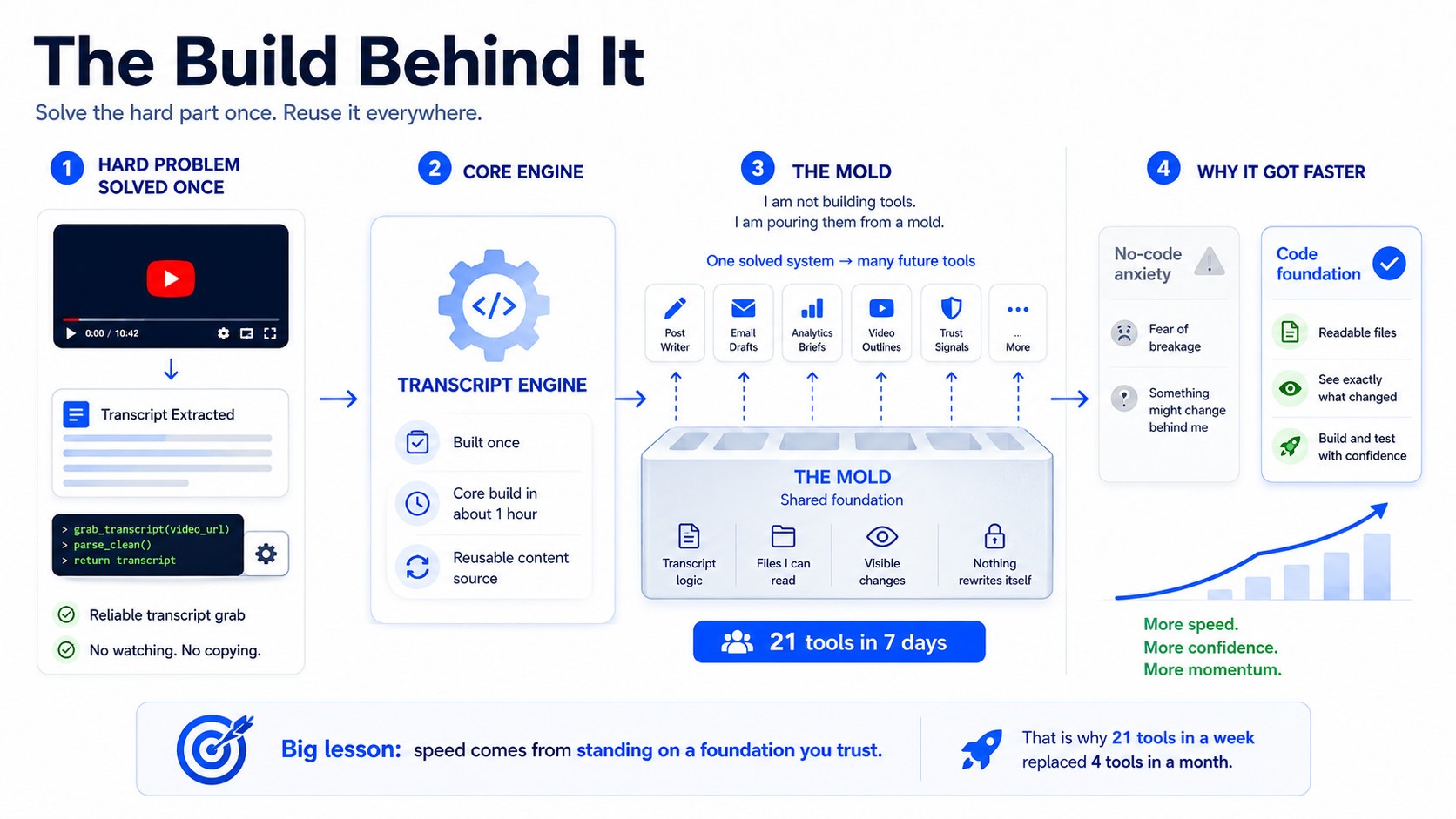
Once I had solved the hard technical piece, grabbing a YouTube transcript reliably without the user watching the video or copying anything, the core build of the tool took about an hour. And that transcript engine is now baked in. Any future tool that needs a transcript as a content source already has it. I solved it once and I own it forever.
That is the same lesson as last time, taken further. I am not building tools. I am pouring them from a mold, and every hard problem I solve becomes part of the mold.
I will name the foundation this time, because it is the real lesson. I build these in Claude Code, not on the no-code platform I used before. When I built on Base44 I had a low hum of dread, that something would break or get overwritten while I was not looking. In Claude Code my heart is not in my mouth when I build and test. The code sits in files I can read, I can see exactly what changed, and nothing rewrites itself behind me. That feeling is why I built twenty-one tools in a week instead of four in a month. You move fast when you are not afraid of the thing you are standing on.
What I got wrong, and it was all me
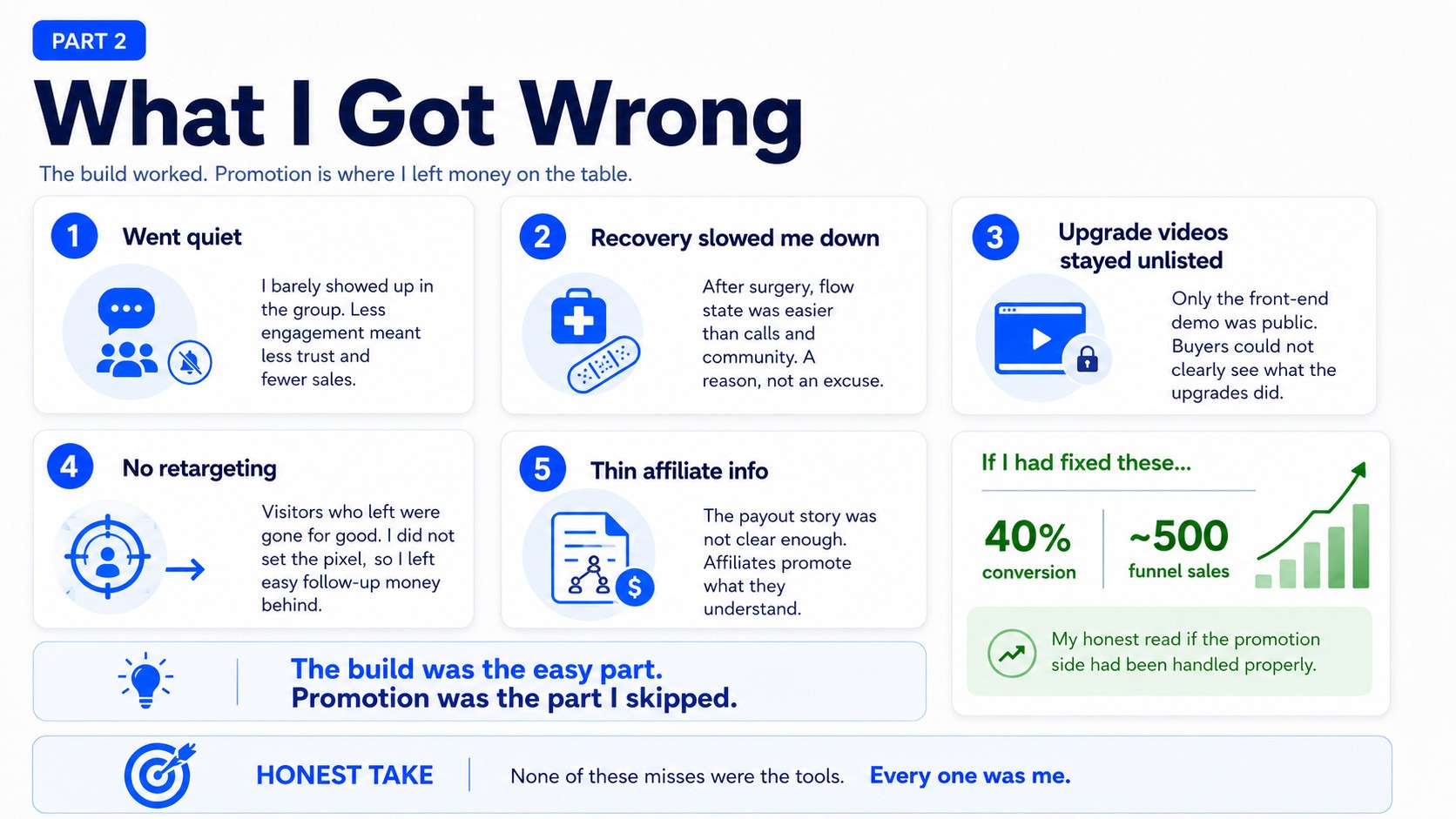
This is the part I would want to read, so here it is without the spin. None of these were the tools. Every one was me.
1. I went quiet. I have a WhatsApp group that usually drives more sales and builds trust when I show up and engage. For this launch I barely did. That is the single biggest miss.
2. I had a reason, and it is still a reason, not an excuse. I had surgery on my head two weeks ago and I have been out of touch since. I am being open about that because it is the honest context for why I was not in the group and not on calls. It is also why I disappeared into the build. Flow state was easier than people for a couple of weeks.
3. My videos were not ready in public. Only the first TubeGraphics front-end demo was public. The order-bump and OTO feature videos are still sitting unlisted. Buyers could not see what the upgrades actually did, which is a direct hit on take rate through the funnel.
4. I ran no retargeting. None. Every visitor who looked and left was gone for good. That is free money I chose not to collect, simply by not setting a pixel.
5. My affiliate information was thin. The offer did not make it clear enough that even though this is a low-cost funnel, the front end and the order bump both pay 70%, and there is recurring commission inside the funnel. Affiliates promote what they understand, and I did not make it easy.
My honest read is this. If I had shown up in the group, made the upgrade videos public, set up retargeting, and given affiliates a clear reason to push, I believe this lands around 40% conversion and somewhere near 500 funnel sales. The build was the easy part. The promotion was the part I skipped, and the numbers show it.
What this is really part of
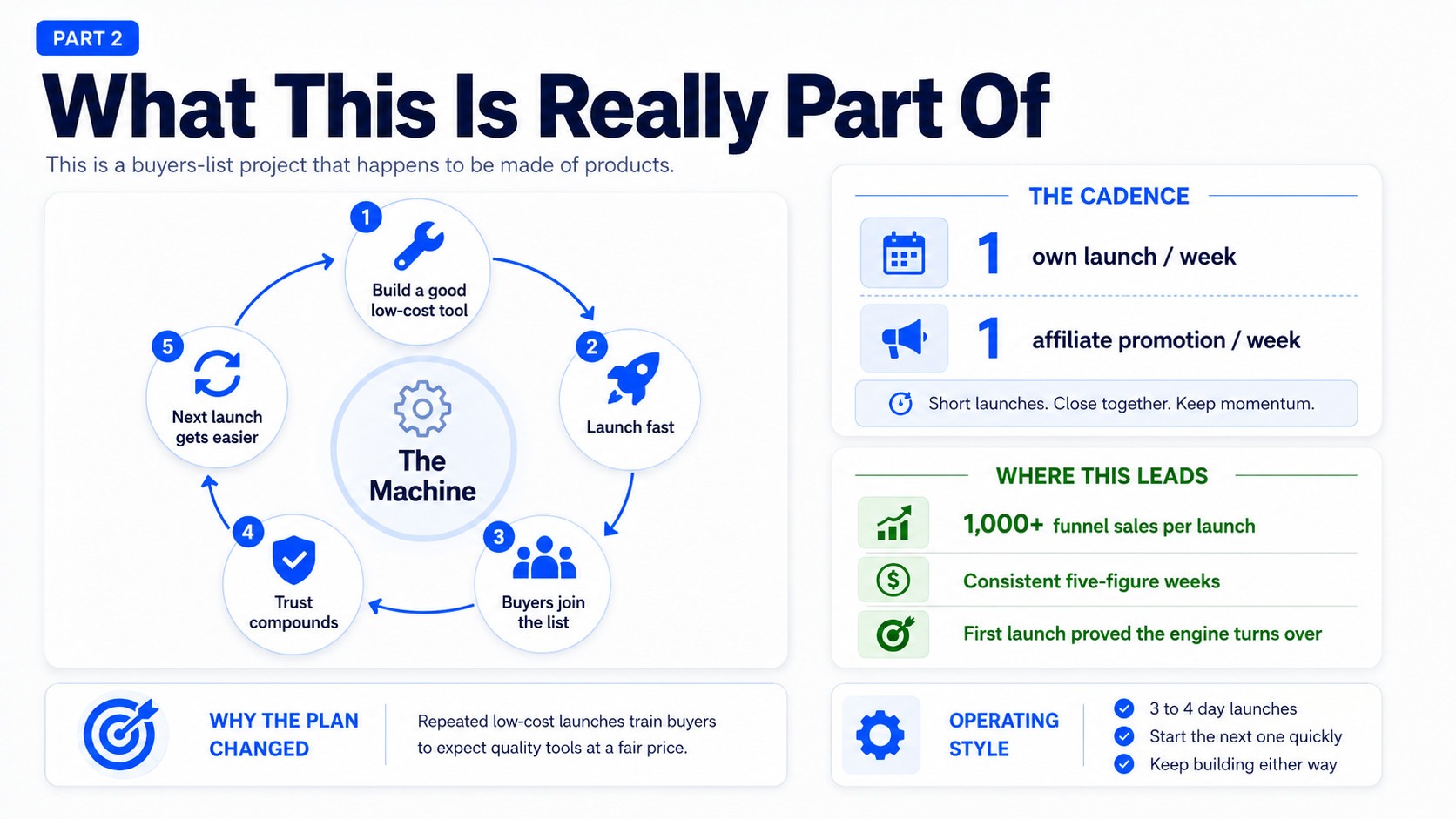
So why open with a cheap tool and affiliates instead of the plan from post one? Because the plan underneath the plan changed, for the better.
This is a buyers-list project that happens to be made of products. The strategy is repeated low-cost launches, close together, each one a genuinely good tool at a price where people buy without overthinking it. Do that enough and you train an audience to expect quality tools at a fair price from me, so the next launch is easier than the last.
The cadence I am aiming for is one of my own launches a week, plus one affiliate promotion a week where I go all in on someone else’s launch. There is a specific way I approach those affiliate promotions that I will cover in the next post. The goal of the whole machine is regular 1,000-plus funnel sales per launch, and from there, consistent five-figure weeks. This first launch is the proof that the engine turns over. Now I have to actually drive it.
If that means shorter launches, in and out in three or four days and the next one the day after, I will do that. I am not going to stop building either way.
A note for affiliates, and an experiment I am running in public
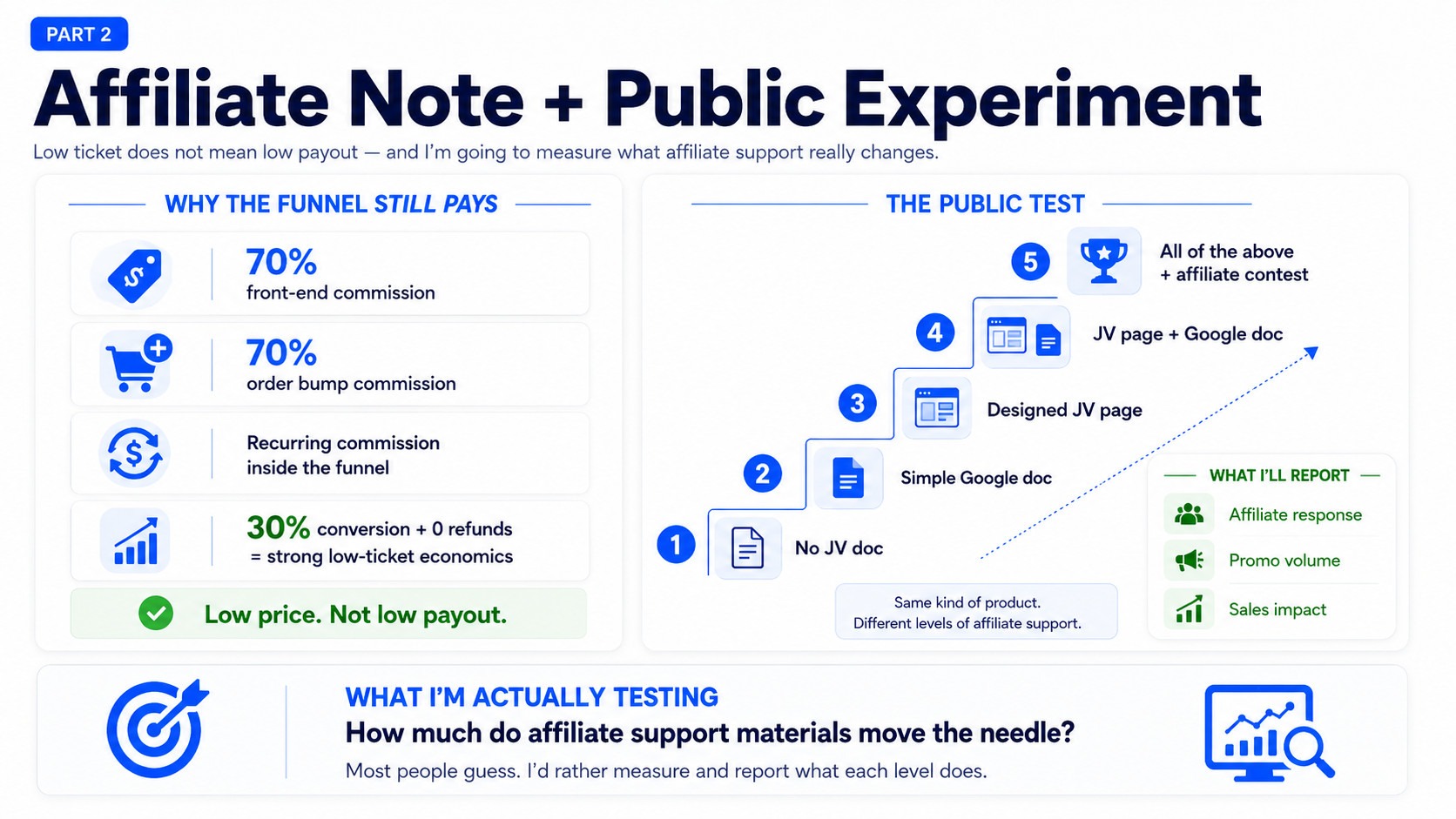
If you promote launches, here is the part I should have made obvious the first time. Yes, the funnel is low cost. The front end and the order bump both pay 70%, and there is recurring commission in the funnel. Low ticket does not mean low payout when the funnel converts at 30% with no refunds.
I am also going to test, in the open, how much affiliate support materials actually move the needle. I will run it as a ladder over the coming launches and document each step:
- No JV doc at all (where I just was).
- A simple Google doc with the essentials.
- A full designed JV page.
- A full JV page plus the Google doc.
- All of that plus an affiliate contest.
Same kind of product, different levels of affiliate support, and I will report what each one does. Most people guess at this. I would rather measure it.
The quiet bonus buyers do not know about yet
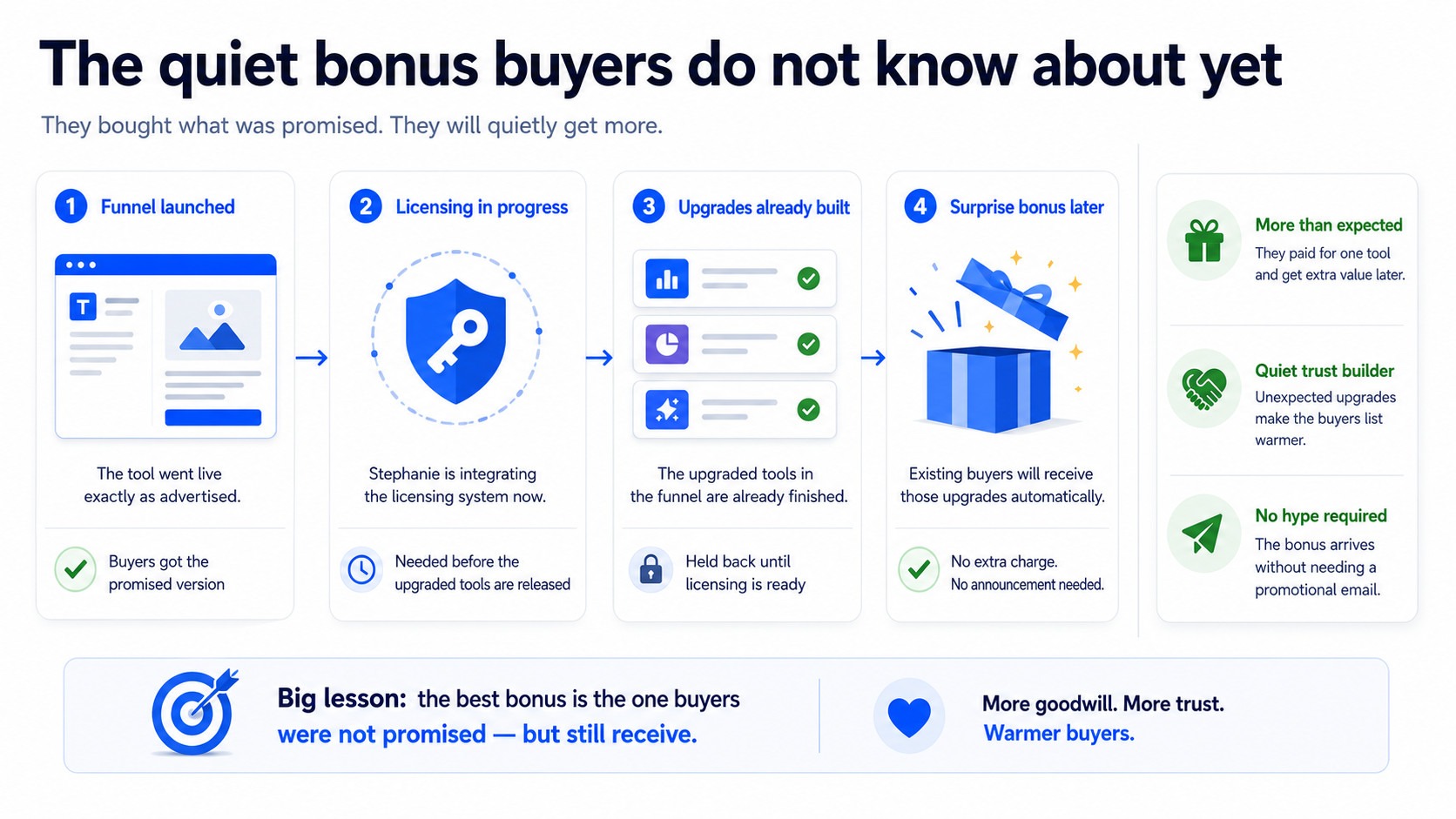
One more honest note. I launched this funnel before the licensing system was fully integrated, because my daughter Stephanie is setting that up now. I have already built out the upgraded tools in the funnel, but I am holding the updates until the licensing is in. When it lands, existing buyers will get those upgrades as an unannounced bonus. They bought the tool that was advertised. They will get more than they paid for, with no email telling them to expect it. That is the kind of surprise that keeps a buyers list warm.
The team, and dogfooding
This is not a solo show anymore, and I want to credit the people doing the work. Stephanie is on the licensing build. Shae handles support. And I have a small team of two using these tools daily to build out the new anthonyhayes blog. That last part matters more than it sounds. We build the tools, then we use them on our own site first, which means every tool gets tested, broken, tweaked, and improved by the people who made it before anyone else relies on it.
What is next
The next post is the one I am genuinely looking forward to writing, because it is the lever I did not pull on this launch: how I approach affiliate promotions, including the contest timing strategy I use to make the most of someone else’s launch. If the promotion side is where I left money on the table this time, that post is the playbook for not doing it again.
Skyscraper AI launches tomorrow. I will keep documenting all of it, the wins and the misses, because the misses are where the useful part lives.