New from Anthony Hayes: Aha Studio
Get found by the people searching for what you sell.
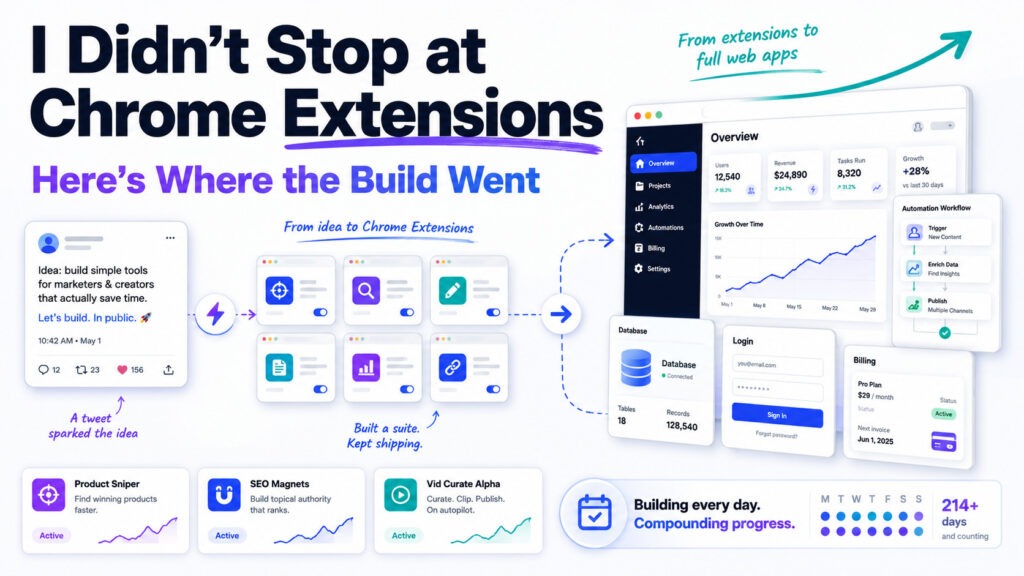
In part one I told you how a single tweet turned into a suite of Chrome extensions in three days. In part two I gave you the first real numbers from the launch, the wins and the mistakes both. This is the part most build-in-public stories skip: what happened after the launch week ended and the excitement wore off.
I kept building. Almost every day since.
This is a progress report, not a victory lap. The full sales reconciliation, where I settle the projections I put on the record in part one, is coming as its own post. This one is about something I find more interesting anyway: how far the work has come, and what building this way every day has actually taught me.
Find this useful? Add us as a preferred source on Google and more of what we publish will show up in your results.
The tools kept coming
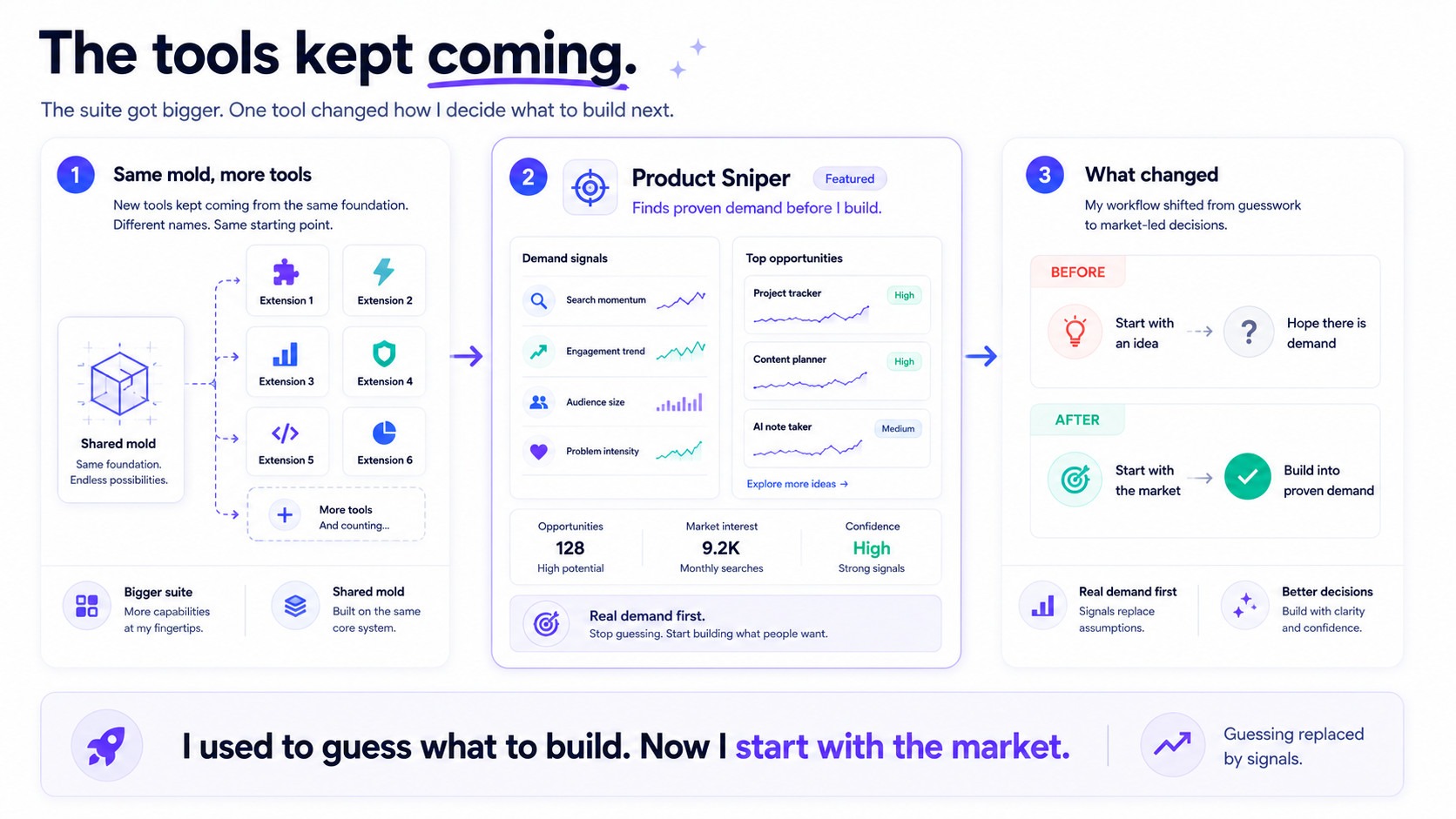
After that first batch of extensions, I did not stop to admire them. I kept pouring new ones from the same mold. The suite is a lot bigger now than it was in part one.
One of them surprised me more than the rest, so I will name it but keep the details to myself for now: Product Sniper. The short version is that it tells me what to build or promote next by finding real, proven demand before I write a single line of code. It changed the order I do things in. I used to start with an idea and hope there was a market. Now I start with the market and build into it.
I used to guess what to build. Now I have a tool that tells me what people are already asking for.
How it works is the part I am keeping back until it is released. But the effect on the way I work is the honest headline, so that is the part worth sharing.
The level-up: from extensions to full web apps
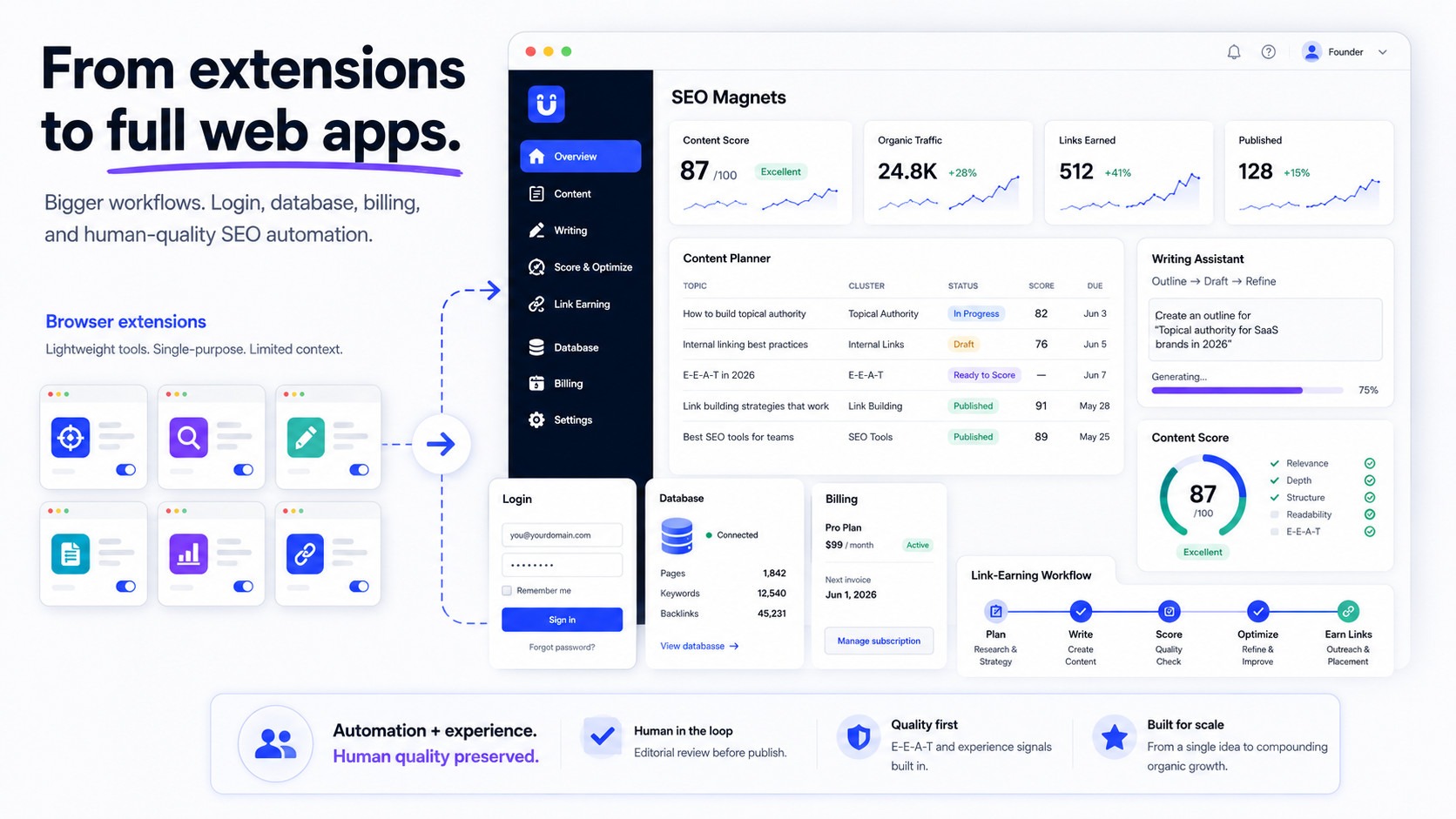
Here is the real shift since part two. I moved from browser extensions into full web apps. Proper software with a login, a database, and billing. A different kind of build, and a bigger one.
The flagship of this phase is SEO Magnets. It is a white-hat SEO tool, and I built it to be as automated as I could make it without losing the one thing that actually matters in 2026: the human quality and the experience and expertise that Google and the AI engines reward. It plans the content, helps write it, scores and optimizes it, and helps you earn the links, in one place.
Automated to the edge of where automation would start costing me the human signal Google rewards. Not one step past it.
There is a lot under the hood that I am keeping to myself for now. What I will say is that this is the direction the whole business is moving. Extensions are brilliant for doing one job fast. Web apps are where the bigger, connected workflows live.
Rebuilding the best of my old tools, better
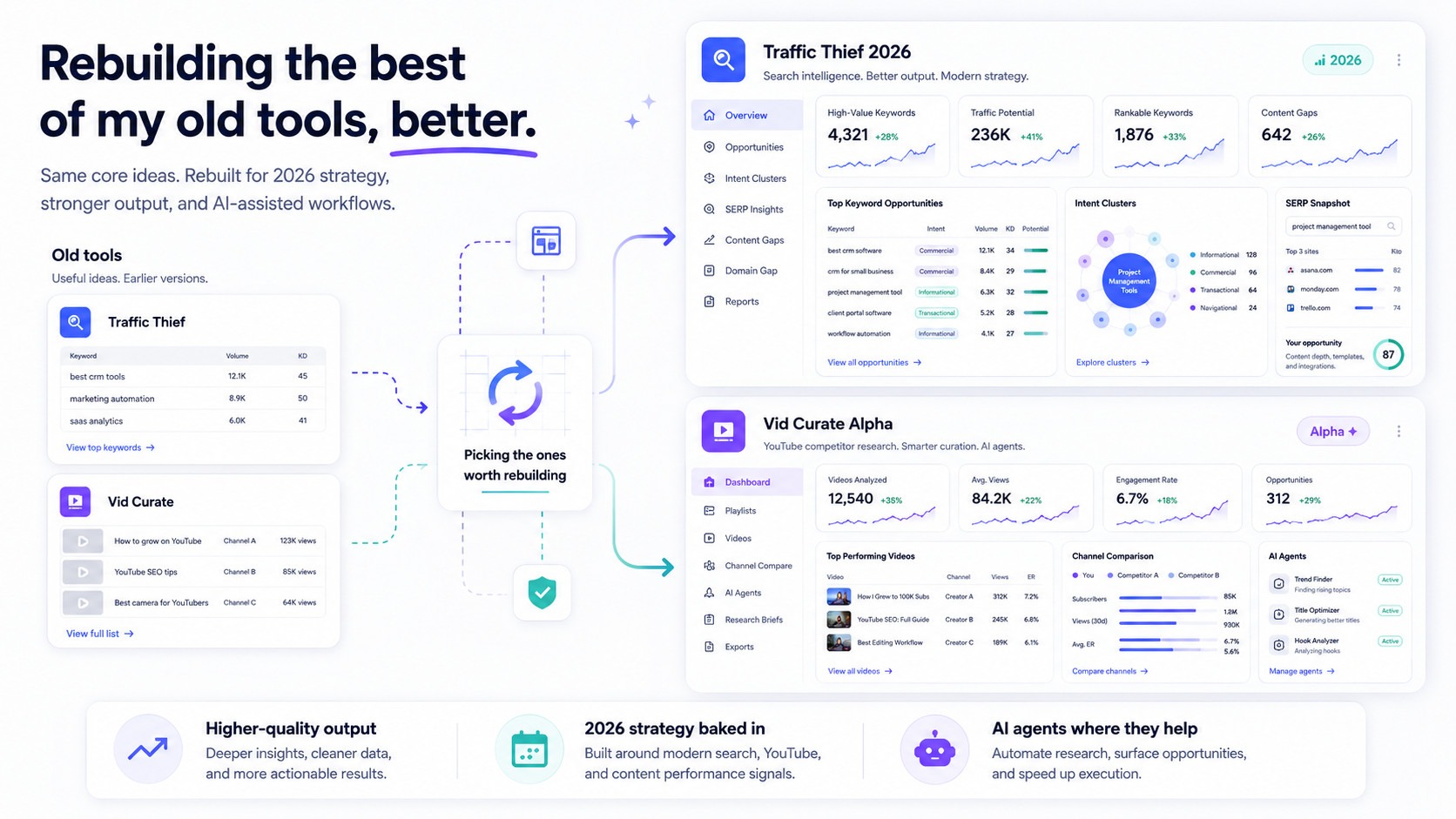
There is another thread running through all of this that I think is worth being open about. I am rebuilding tools my previous developer made, as much better versions, with 2026 strategy baked in and far higher quality output.
I cannot rebuild all of them, so I am picking the ones worth it.
You might already know the first one. Traffic Thief launched about three years ago and got around at the time. The tease here is simple, because the name is already familiar: the 2026 rebuild is a far better tool, with much better output than the original. Same core idea, rebuilt properly for how search works now.
The next one in line is Vid Curate Alpha. It started life as a YouTube playlist builder and optimizer, but we quickly worked out it was actually a great YouTube competitor research tool. The 2026 version leans hard into that, with AI agents built in. I will show more when it is ready.
A small gift for the people who back me
One more thing, for the people who have been along for this. I built a tool called OKF, and I am about to give it away free to the members of my Fightback Traffic Systems WhatsApp group soon. No catch. If you want it, that is the room to be in.
What building this way actually taught me
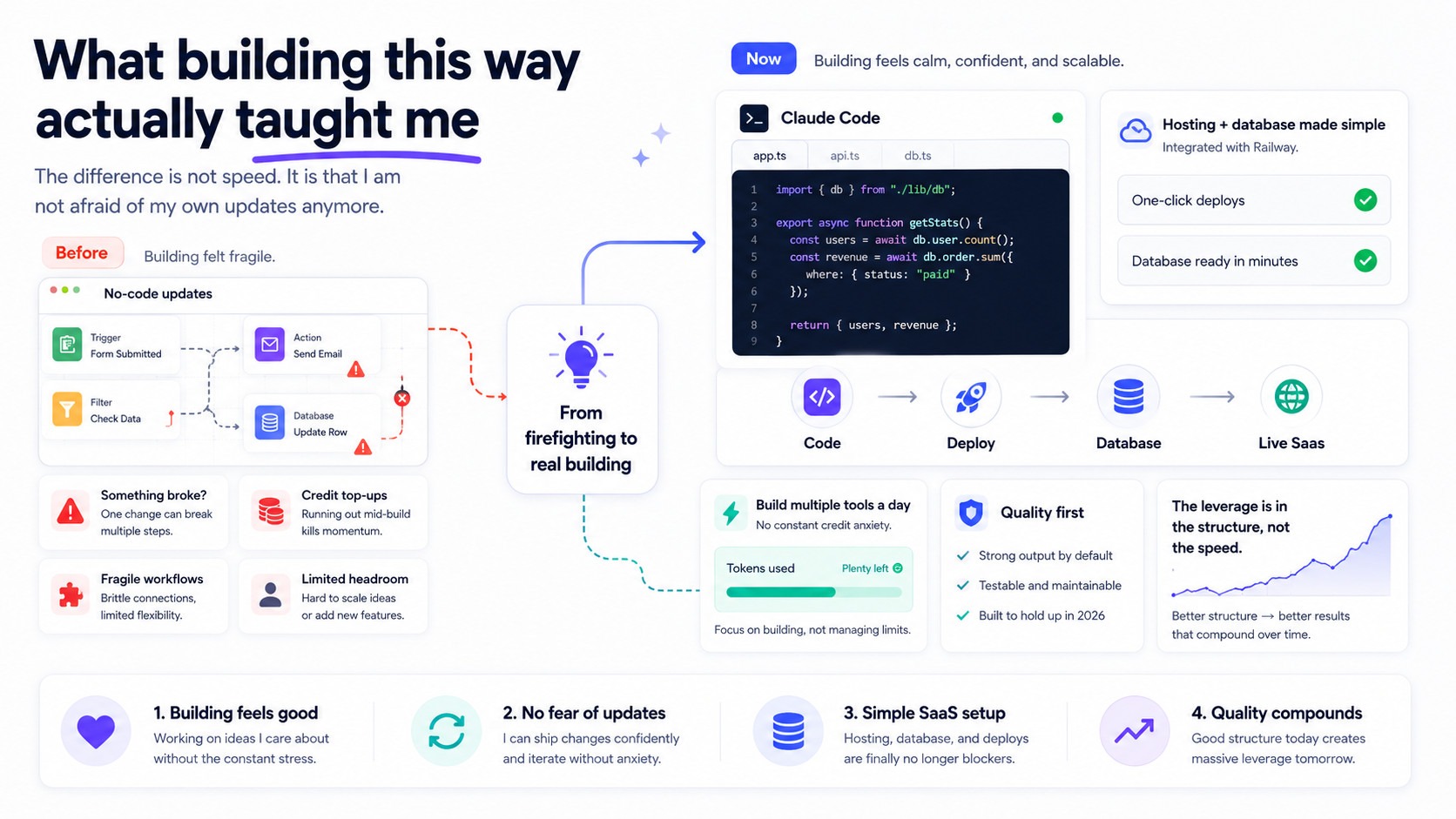
This is the part I most wanted to write, because the lessons are not really about the tools. They are about the way the work feels now, and why that changed.
- Claude Code is genuinely great to work with. For the first time, the building itself feels good, not just the finished result.
- My heart is not in my mouth anymore. When I built on a no-code platform, every update, big or small, had me wondering what previously working thing had just quietly broken. That low hum of dread is gone.
- I still rate Base44. It is a good tool and it has its place. It just does not come close to Claude Code for the day to day work of building.
- Hosting and databases got simple. A clean integration with Railway.app makes standing up a real SaaS app surprisingly painless. That is a big part of why the jump to web apps actually happened instead of staying on the to-do list.
- I am not burning credits the way I used to. After working in Perplexity, where the token top-ups were constant and I ran out fast, Claude Code lets me build multiple tools a day without that anxiety hanging over every session.
- The whole thing is built on quality. From the tools, to the output of those tools, to making sure all of it holds up in 2026 without me fearing the next algorithm change. That is the standard, not a slogan.
- This is how vibe coding was supposed to feel. Because I am not firefighting breakages, I can take any tool as far as I want it to go. The ceiling is my ideas, not my nerve.
- And the quality compounds. The structures I baked into the tools, especially for content output, mean the output is strong by default, every time, not just when I get lucky. The leverage is in the structure, not the speed.
The difference is not speed. It is that I am not afraid of my own updates anymore.
Where the focus goes now
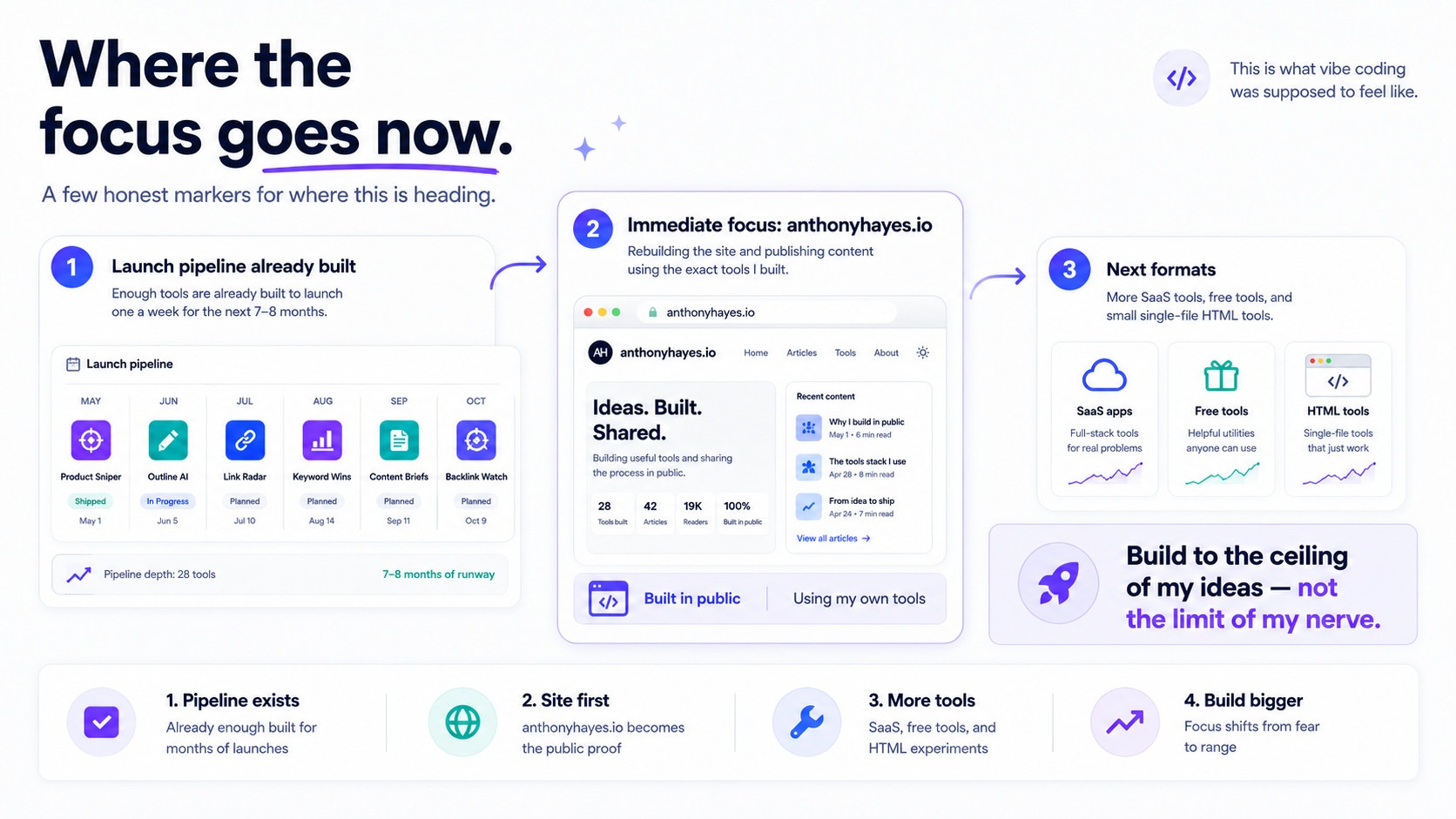
A few honest markers for where this is heading.
I have already built enough tools to launch one a week on WarriorPlus for the next seven or eight months. That is not a plan I am hoping to fill. The pipeline already exists.
The immediate focus is the new website. I am rebuilding anthonyhayes.me on the anthonyhayes.io address, and I am producing its content with the exact tools I built. I am eating my own cooking, on purpose, in public.
After that, more SaaS tools, and free tools for the site, including some small single-file HTML tools, which is the next format I am testing. That is all I will say on those for now.
This is what vibe coding was supposed to feel like. I build to the ceiling of my ideas, not the limit of my nerve.
The through-line
A tweet became a suite. The suite became web apps. And now those same tools are building the website itself. The one constant through all of it is that I build something every day, and I hold it to a quality bar I am not willing to drop.
If you want to follow the rest of it as it happens, two places. The Growth Signals newsletter is where I write these up. And the Fightback Traffic Systems WhatsApp group is where the live updates land first, and where the free OKF tool is about to drop.
I will keep building. See you in the next one.